MAVEN: Seeing Mars as an exoplanet

20180408_Planetary_Report_PDF_v38n01Results from MAVEN have provided a detailed understanding of the evolution of the Martian atmosphere and the history of its climate.

In a Planetary Report article, published by The Planetary Society, MAVEN Principal Investigator Bruce Jakosky and Deputy PI Dave Brain, from the University of Colorado Boulder’s Laboratory for Atmospheric and Space Physics, consider how atmospheric escape processes might operate on exoplanets, using Mars as a proxy. [More at link, including a free downloadable PDF copy of the issue]

Posted in Reports | Tagged , , , , , | Comments Off

Curiosity update: Tell us more, we want to help!

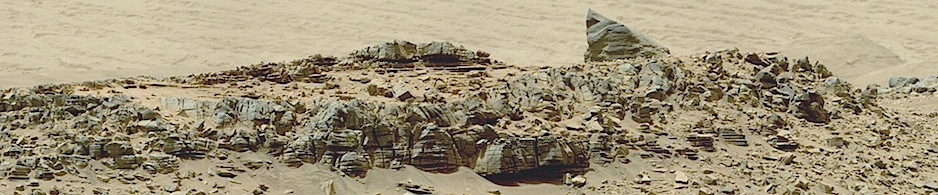
2171MR0116930010105700E01_DXXXSols 2175-76, September 19, 2018, update by MSL project scientist Ashwin Vasavada: Over the past few days, engineers here at JPL have been working to address an issue on Curiosity that is preventing it from sending much of the science and engineering data stored in its memory. The rover remains in its normal mode and is otherwise healthy and responsive.

The issue first appeared Saturday night while Curiosity was running through the weekend plan. Besides transmitting data recorded in its memory, the rover can transmit “real-time” data when it links to a relay orbiter or Deep Space Network antenna. These real-time data are transmitting normally, and include various details about the rover’s status. Engineers are expanding the details the rover transmits in these real-time data to better diagnose the issue. Because the amount of data coming down is limited, it might take some time for the engineering team to diagnose the problem.

On Monday and Tuesday, engineers discussed which real-time details would be the most useful to have. They also commanded the rover to turn off science instruments that were still on, since their data are not being stored. They’re also preparing to use the rover’s backup computer in case they need to use it to diagnose the primary computer. That backup computer was the rover’s primary one until Sol 200, when it experienced both a hardware failure and software issue that have since been addressed… [More at link]

Note from JPL: These updates may be less frequent until science operations resume.
Posted in Reports | Tagged , , , , , , , , | Comments Off

HiRISE: Rough texture, dark dunes

tumblr_pf0mvaGR5H1rlz4gso1_1280Rough texture, dark dunes. There is a variety of substrate textures in this image, including a ridge-groove corrugation that is reminiscent of some features in Gale Crater.

Beautiful Mars series. [More at links]

Posted in Reports | Tagged , , , , , , , , , | Comments Off

Opportunity: Attempting contact multiple times a day

NASA Mars Exploration Rover Status Report, September 12, 2018: The Opportunity team is increasing the frequency of commands it beams to the rover via the dishes of NASA’s Deep Space Network from three times a week to multiple times per day.

No signal from Opportunity has been heard since Sol 5111 (June 10, 2018). It is expected that Opportunity has experienced a low-power fault and perhaps, a mission clock fault and then an up-loss timer fault. The dust storm on Mars continues its decay with atmospheric opacity (tau) over the rover site now below 1.5. The project has been listening for the rover over a broader range of times using the Deep Space Network Radio Science Receiver.

The project has also begun the commanding “sweep and beeps” to address a possible complexity with certain conditions within the mission clock fault. The first “sweep and beeps” were sent on Sol 5202 (Sept. 11, 2018)… [More at link]

Posted in Reports | Tagged , , , , , , , , , , | Comments Off

HiRISE: This speckled landscape

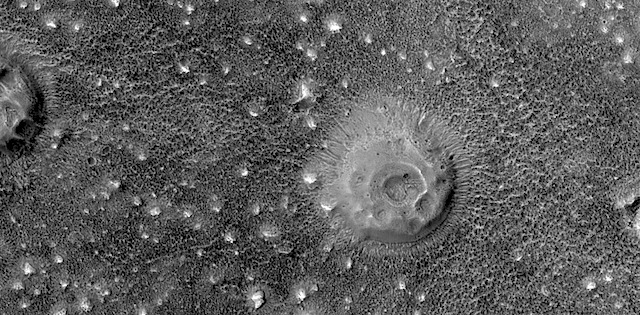
tumblr_pf2hqbDksG1rlz4gso1_1280This speckled landscape. In addition to the bright rock, there are mounds with pits at their summits.

Beautiful Mars series. [More at links]

Posted in Reports | Tagged , , , , , , , , | Comments Off

THEMIS: Ice-rich clouds over Arsia Mons’ caldera

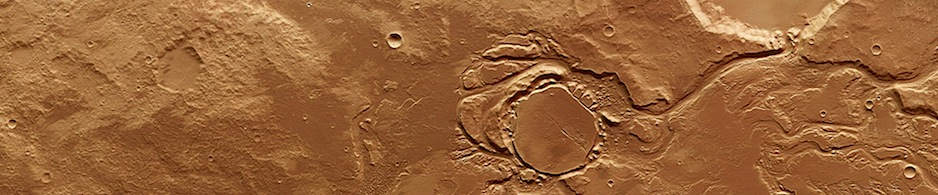
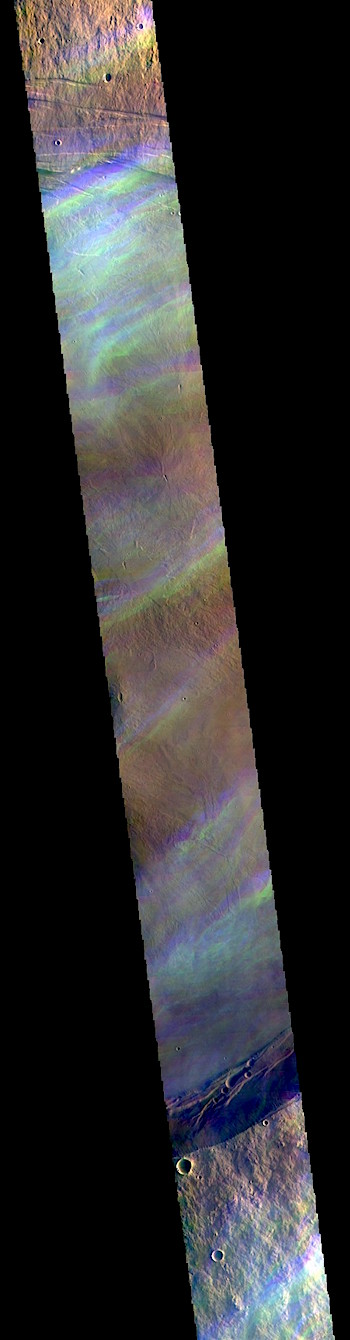
Ice-rich clouds over Arsia Mons (THEMIS_IOTD_20180919)THEMIS Image of the Day, September 19, 2018. The THEMIS VIS camera contains 5 filters. The data from different filters can be combined in multiple ways to create a false color image. These false color images may reveal subtle variations of the surface not easily identified in a single band image.

The 5 filters are collected with a short delay between them. In creating false color images of the surface, the surface is stable and each filter image is overlaid and “connected” based of the location of identical surface features. However, when there is movement occurring during the delay, the filters don’t overlay well.

In this case the movement is seen as bands of blue and yellow. These are ice rich clouds over the summit of Arsia Mons. The altitude of the clouds and speed they are blown by the wind is enough that there is significant difference in cloud locations between the short delay separating the filters. Imaging transient clouds allows for study of the atmosphere of Mars.

See more THEMIS Images of the Day by geological subject.

Posted in Reports | Tagged , , , , , , , , , , | Comments Off

HiRISE: Seeing through the dusty air

ESP_056190_2235Mars has been enveloped in dusty haze, but the sensitivity of HiRISE enables imaging of surface features through a moderate level of haze.

This image shows a fresh impact crater in the northern middle latitudes. A technique called “pixel binning” was needed to improve the signal, but it is still the highest-resolution image ever acquired at this location… [More at link]

Posted in Reports | Tagged , , , , , , , , , | Comments Off

THEMIS: Terra Sabaea crater in false color

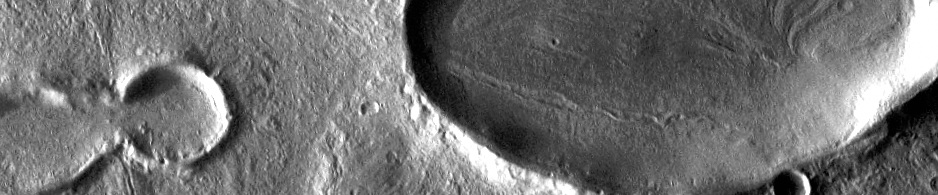
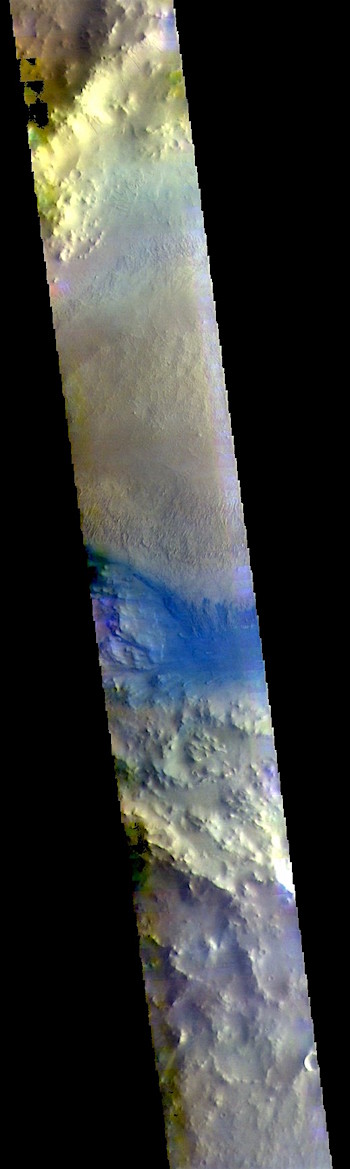
Terra Sabaea crater in false color (THEMIS_IOTD_20180918)THEMIS Image of the Day, September 18, 2018. Part of a large crater fills the center of this VIS image. In this false color image the dark blue material is basaltic sand. The sands are located between the crater rim and a large mound of material on the floor of the crater.

The THEMIS VIS camera contains 5 filters. The data from different filters can be combined in multiple ways to create a false color image. These false color images may reveal subtle variations of the surface not easily identified in a single band image.

See more THEMIS Images of the Day by geological subject.

Posted in Reports | Tagged , , , , , , , , , | Comments Off

HiRISE: Sand sea monitoring

tumblr_pf2h5bBj5z1rlz4gso2_1280Sand sea monitoring. This ocean of dunes is located within central Juventae Chasma.

Beautiful Mars series. [More at links]

Posted in Reports | Tagged , , , , , , , , , | Comments Off

Curiosity update: Who’d have thought that Ridge rocks could be so hard

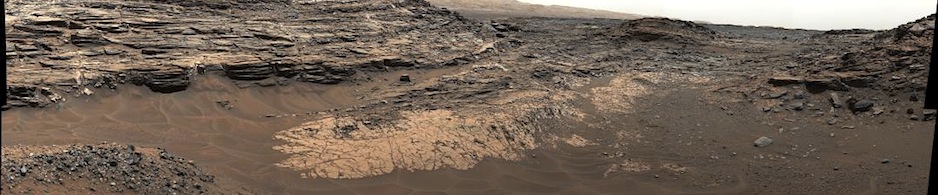
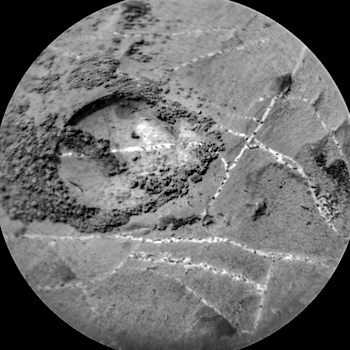
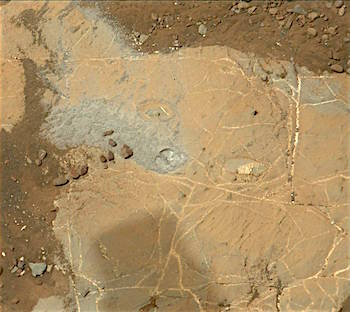
CR0_590135105PRC_F0722464CCAM01170L1Sols 2172-74, September 17, 2018, update by MSL scientist Vivian Sun: Last night we learned that our drill attempt on “Inverness” was not successful, reaching only 4 mm into the rock. Today’s tactical team bounced back from this news and quickly assembled a plan to move on. This proved to be a busy day for the whole team, including me as the Geology Keeper of the Plan!

Our first order of business was discussing where to drive next. The grey Jura member is a top priority for sampling and understanding the geologic history of the Vera Rubin Ridge, so we felt it was imperative to try again. We ultimately decided to return to the “Lake Orcadie” region, where we previously attempted to drill on Sol 1977. In the past attempt, we were able to reach 10 mm depth using rotary only, so we are hopeful that this next attempt will reach sampling depths with the new percussion-enhanced drill capabilities…. [More at link]

Posted in Reports | Tagged , , , , , , , , , , , , , | Comments Off