

-
Recent Posts
Archives
Links
general
mission instruments
- CRISM: Compact Reconnaissance Imaging Spectrometer for Mars
- CTX: Context Camera
- HiRISE: High Resolution Imaging Science Experiment
- MARSIS: Mars Advanced Radar for Subsurface and Ionosphere Sounding
- SHARAD: Shallow Radar
- THEMIS: Thermal Emission Imaging System
missions
- All Mars missions list
- Curiosity rover
- ExoMars
- Hope (al-Amal) orbiter
- InSight
- Mars Atmosphere and Volatile Evolution Mission (MAVEN)
- Mars Exploration Rovers (MER)
- Mars Express (MEX)
- Mars Odyssey
- Mars Orbiter Mission (MOM) / Mangalyaan
- Mars Reconnaissance Orbiter (MRO)
- Mars Science Laboratory (MSL)
- Perseverance Rover
- Tianwen-1 orbiter/rover
news
Monthly Archives: July 2018
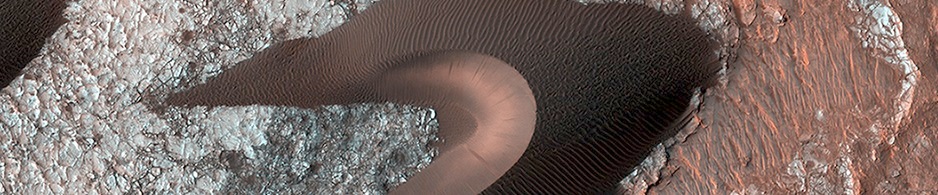
HiRISE: Down in Proctor Crater
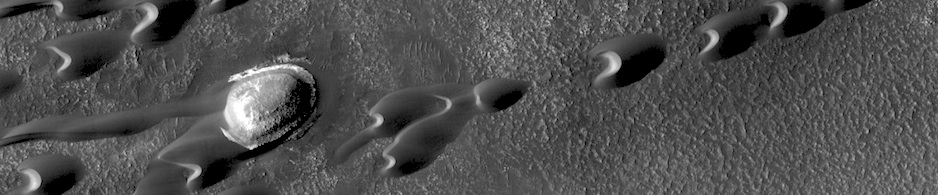
Down in Proctor Crater. Proctor Crater is 168 kilometers in diameter, and its massive dune field has been imaged by us for several years to track changes over time. Beautiful Mars series. [More at links]
Posted in Reports
Tagged Beautiful Mars, dunes, High Resolution Imaging Science Experiment, HiRISE, Mars Reconnaissance Orbiter, MRO, NASA, Proctor Crater, sand dunes, University of Arizona
Comments Off
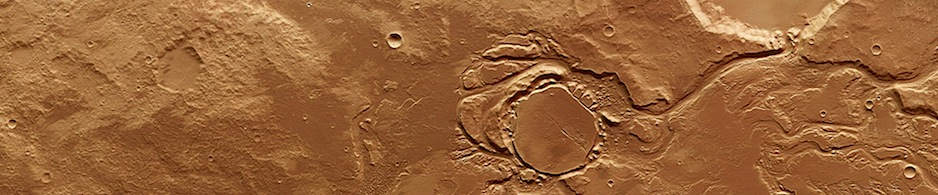
THEMIS: Winding channels of Elysium Fossae
THEMIS Image of the Day, July 16, 2018. Today’s VIS image shows part of one of the Elysium Fossae on the western flank of the Elysium volcanic complex. The fossae have both a tectonic and volcanic origin. The linear fractures, … Continue reading
Posted in Reports
Tagged Arizona State University, ASU, Elysium Fossae, Elysium Planitia, lava flows, Mars Odyssey, NASA, tectonics, THEMIS, THEMIS Image of the Day, Thermal Emission Imaging System, volcanics
Comments Off
Curiosity update: Let the drill fest begin!
Sols 2110-12, July 13, 2018, update by MSL scientist Lauren Edgar: Drilling on another planet is no easy feat, and each time we have the opportunity to do so on Mars feels pretty special. The focus of the weekend three-sol … Continue reading
Posted in Reports
Tagged Aeolis Mons, Curiosity, Gale Crater, Mars Science Laboratory, Mount Sharp, MSL, Murray Formation, NASA, Vera Rubin Ridge, Voyageurs
Comments Off
Curiosity update: Voyageurs
Sol 2109, July 12, 2018, update by MSL scientist Abigail Fraeman: I first became involved with Curiosity shortly after starting my third year of graduate school in the fall of 2011. My graduate advisor was selected to join the mission … Continue reading
Posted in Reports
Tagged Aeolis Mons, Curiosity, Gale Crater, Mars Science Laboratory, Mount Sharp, MSL, Murray Formation, NASA, Stranraer, Vera Rubin Ridge, Voyageurs
Comments Off
HiRISE: Lava-coated craters
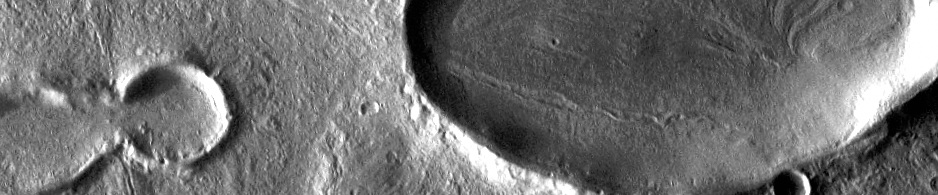
Lava-coated craters. The larger crater looks normal–dimpled depression with a protruding rim barely covered by lava which later deflated. The smaller depression looks deeper and steeper-sided, and the rim does not protrude, so it is probably below the level of … Continue reading
Posted in Reports
Tagged Beautiful Mars, craters, Elysium Planitia, High Resolution Imaging Science Experiment, HiRISE, lava flows, Mars Reconnaissance Orbiter, MRO, NASA, University of Arizona, volcanics
Comments Off
Walking on Mars: JPL von Karman Lecture
Virtual and augmented reality promise to transport us to places that we can only imagine. When joined with spacecraft and robots, these technologies will extend humanity’s presence to real destinations that are equally fantastic. NASA’s Operations Laboratory at JPL is … Continue reading
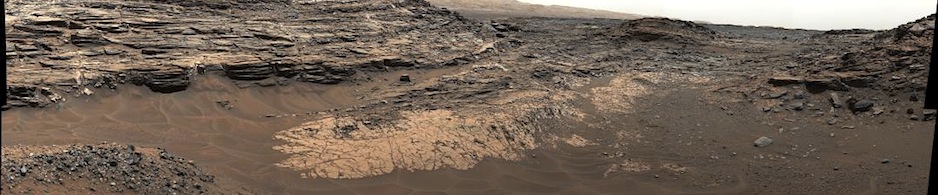
Curiosity: Getting ready to drill
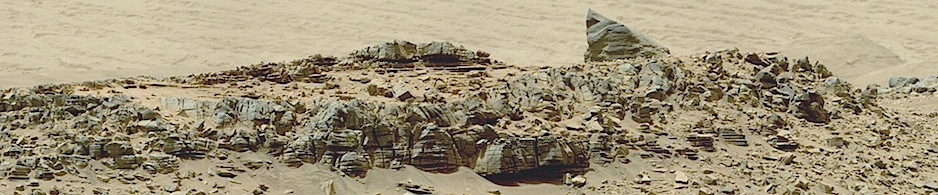
Sol 2108, July 12, 2018. With Curiosity now parked at its next drill site, the rover prepares. In the foreground is the targeted area. Click the image (6 MB) to enlarge it. Sol 2108 raw images (from all cameras).
Posted in Reports
Tagged Aeolis Mons, Curiosity, Gale Crater, Mars Science Laboratory, Mount Sharp, MSL, Murray Formation, NASA, Vera Rubin Ridge
Comments Off
HiRISE: Jamming with the ‘spiders’ from Mars
During winter at the South Pole of Mars, a carbon dioxide ice cap covers the region and as the sun returns in the spring, “spiders” begin to emerge from the landscape. But these aren’t actual spiders. We call it “araneiform … Continue reading
Posted in Reports
Tagged High Resolution Imaging Science Experiment, HiRISE, Mars Reconnaissance Orbiter, MRO, NASA, south polar ice cap, spiders, University of Arizona
Comments Off