



-
Recent Posts
Archives
Links
general
mission instruments
- CRISM: Compact Reconnaissance Imaging Spectrometer for Mars
- CTX: Context Camera
- HiRISE: High Resolution Imaging Science Experiment
- MARSIS: Mars Advanced Radar for Subsurface and Ionosphere Sounding
- SHARAD: Shallow Radar
- THEMIS: Thermal Emission Imaging System
missions
- All Mars missions list
- Curiosity rover
- ExoMars
- Hope (al-Amal) orbiter
- InSight
- Mars Atmosphere and Volatile Evolution Mission (MAVEN)
- Mars Exploration Rovers (MER)
- Mars Express (MEX)
- Mars Odyssey
- Mars Orbiter Mission (MOM) / Mangalyaan
- Mars Reconnaissance Orbiter (MRO)
- Mars Science Laboratory (MSL)
- Perseverance Rover
- Tianwen-1 orbiter/rover
news
Monthly Archives: September 2018
HiRISE: Fan with inverted channels
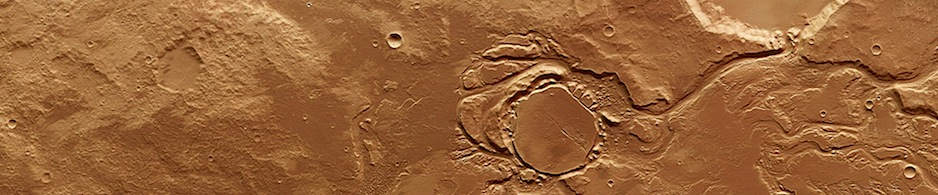
This image shows inverted channels within a fan whose origin could be either fluvial (produced by the action of a stream) or alluvial (created by sedimentary deposits). If the fan is alluvial, then it formed on dry land. If the … Continue reading
Posted in Reports
Tagged alluvial fan deposits, fluvial landforms, High Resolution Imaging Science Experiment, HiRISE, inverted channels, inverted topography, Mars Reconnaissance Orbiter, MRO, NASA, University of Arizona
Comments Off
THEMIS: False color on Thaumasia Planum and Coracis Fossae
THEMIS Image of the Day, September 6, 2018. Today’s VIS image is located on the margin between Thaumasia Planum and Coracis Fossae. The THEMIS VIS camera contains 5 filters. The data from different filters can be combined in multiple ways … Continue reading
Posted in Reports
Tagged Arizona State University, ASU, Coracis Fossae, false color, Mars Odyssey, NASA, tectonics, Thaumasia Planum, THEMIS, THEMIS Image of the Day, Thermal Emission Imaging System
Comments Off
MARCI weather report, Aug 27-Sept 2, 2018
Dusty atmospheric conditions resulting from the planetary-encircling dust event continued to wane across much of Mars for the past week. Looking to the equatorial latitudes, a couple short-lived dust events were observed over North Central Noachis Terra. Further west, dust … Continue reading
Posted in Reports
Tagged atmosphere, clouds, dust, dust storms, global dust storms, haze, Malin Space Science Systems, MARCI, Mars Color Imager, Mars Reconnaissance Orbiter, MRO, MSSS, NASA, storms, weather, wind
Comments Off
Weather update from Gale Crater
Posted in Reports
Tagged Curiosity, dust storms, Gale Crater, global dust storms, Mars Science Laboratory, MSL, NASA, temperature, weather
Comments Off
HiRISE: Pitted cones: possible methane sources?
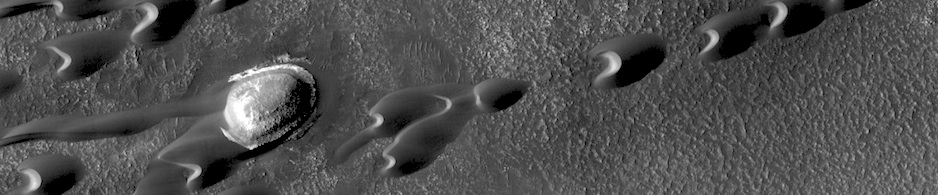
This observation shows relatively bright mounds scattered throughout darker and diverse surfaces in Chryse Planitia. These mounds are hundreds of meters in size. The largest of the mounds shows a central pit, similar to the collapsed craters found at the … Continue reading
Posted in Reports
Tagged Chryse Planitia, High Resolution Imaging Science Experiment, HiRISE, Mars Reconnaissance Orbiter, MRO, NASA, pitted mounds, rootless cones, Trace Gas Orbiter, University of Arizona
Comments Off
Curiosity: Heading south on the Ridge
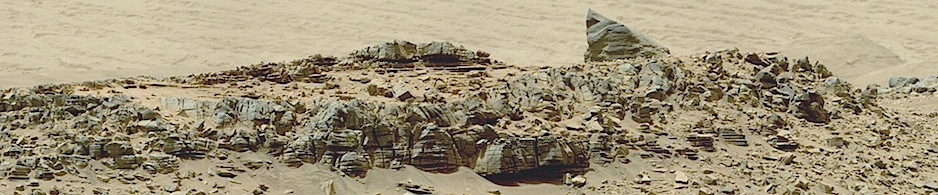
Sol 2161, September 4, 2018. After a 32-meter (105 foot) drive southward, Curiosity stopped and took its standard Navcam panorama. Above: Looking back to the north, where clearing skies are gradually lifting the haze. Below: Looking southward, with rolling terrain … Continue reading
Posted in Reports
Tagged Aeolis Mons, Curiosity, Gale Crater, Mars Science Laboratory, Mount Sharp, MSL, Murray Formation, NASA, Vera Rubin Ridge
Comments Off
Webcast on Curiosity and Mars, September 6
The Lunar and Planetary Institute (LPI) in Houston is presenting a webcast by Kirsten Siebach (Rice University) on the subject of Curiosity and our evolving view of Mars. The talk, which is part of LPI’s Cosmic Explorations Speaker Series, will … Continue reading
Posted in Reports
Tagged Curiosity, LPI, Lunar and Planetary Institute, Mars, Mars Science Laboratory, MSL
Comments Off
HiRISE: Crater gullies and fractures in Acidalia Planitia
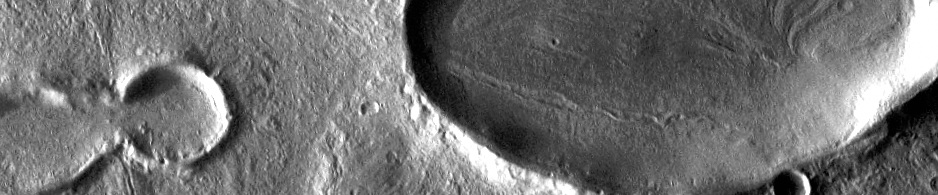
This image shows the gullied western slopes of an unnamed crater (about 10 kilometers wide) in Acidalia Planitia. These slopes have gone through a complicated history of gully erosion of the bedrock layers in the upper section, followed by the … Continue reading
Posted in Reports
Tagged Acidalia Planitia, gullies, High Resolution Imaging Science Experiment, HiRISE, Mars Reconnaissance Orbiter, MRO, NASA, tectonics, University of Arizona
Comments Off
The largest delta on Mars?
Planetary Geomorphology Image of the Month, September 1, 2018: Jacob Adler (Arizona State University). Ancient river deltas are found in many locations on Mars [see Di Achile & Hynek, 2010 and references therein], and are formed as sediment drops out … Continue reading
Posted in Reports
Tagged alluvial fan deposits, alluvial fans, deltas, fluvial deposits, fluvial landforms, fluvial processes, Hypanis Valles
Comments Off