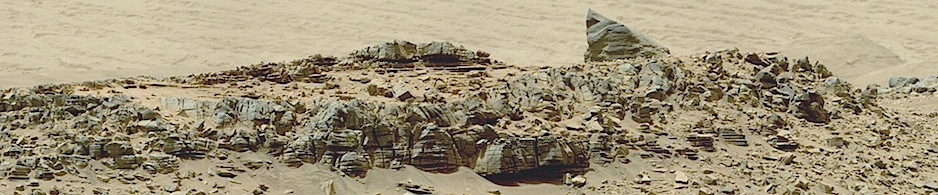





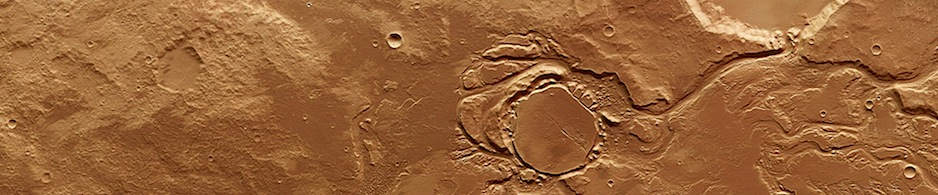
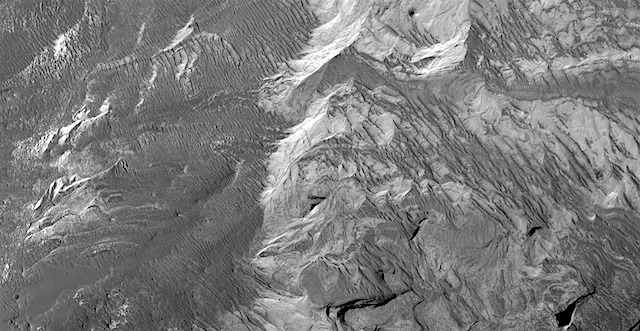
 Light-toned layered deposits along northeast Melas Chasma wallrock. With this image, we’re looking for layering and fracture patterns to understand deposition process.
Beautiful Mars series. [More at links]
Light-toned layered deposits along northeast Melas Chasma wallrock. With this image, we’re looking for layering and fracture patterns to understand deposition process.
Beautiful Mars series. [More at links]
 A new series of videos introduces some of the people leading NASA’s InSight, the agency’s next mission to Mars.
“Behind the Spacecraft” profiles the men and women working on the first mission ever dedicated to studying Mars’ deep interior. The InSight spacecraft is on its way to a Nov. 26 landing on the Red Planet. All the videos are available today and will be spotlighted on social media each week over the next three months.
The InSight profiles include:
• Troy Hudson, a scientist turned engineer with space art tattoos
• Marleen Sundgaard, the daughter of migrant workers who was inspired to look to the stars
• Ravi Prakash, a spacecraft engineer who applied his skills to combat international poverty
[More at link]
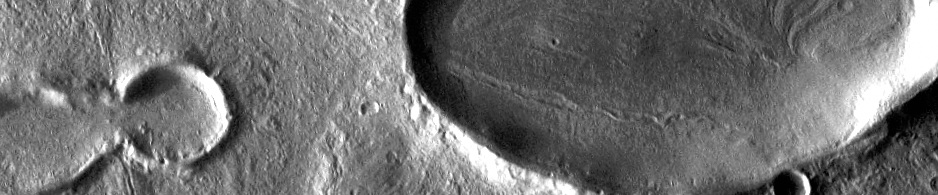
 THEMIS Image of the Day, August 3, 2018. This VIS image is located in the region between northern Terra Sabaea and Utopia Planitia.
This unnamed crater contains a small, dark dune field. Darkness suggests the dunes are dust-free, hence probably active at present.
The crater rim is heavily eroded and it appears that some downslope movement on the interior of the rim may have included a volatile component such as ice.
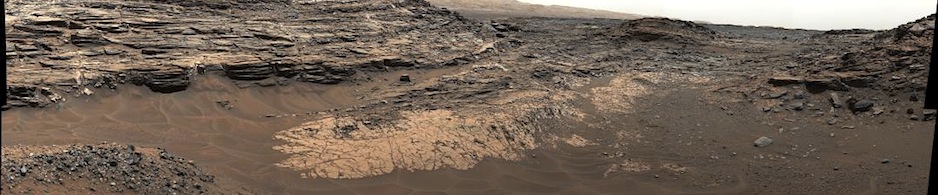
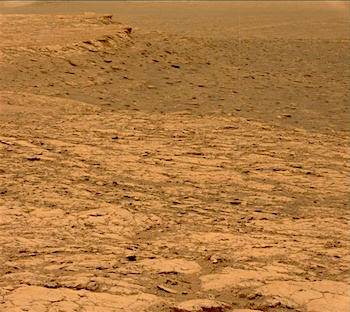 Sol 2129, August 1, 2018, update by MSL scientist Lauren Edgar: Curiosity is currently on her way to a potentially softer rock target to drill in the Pettegrove Point member of Vera Rubin Ridge. Today was a late slide sol, which means we had to wait until 11am PDT for the downlink to arrive. Unfortunately, we didn’t get our downlink today from MRO. I was the SOWG Chair today, and it was an interesting morning as we had to quickly adjust the plan without knowing the current state of the rover. However, the team turned it around and made the most of the untargeted remote sensing sol. The geology theme group planned several autonomously… [More at link]
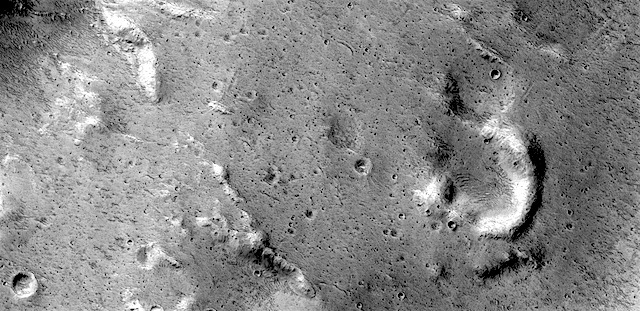 Tributary valleys near Shalbatana Vallis. One of the justifications for taking this image was to look for inner valley features such as terraces.
Beautiful Mars series. [More at links]
 August 1, 2018: Dust Storm Wanes, Opportunity Sleeps, Team Prepares Recovery Strategy: Opportunity may be seeing the light again, a little sunlight that is.
As the veteran Mars Exploration Rover (MER) slept in Endeavour Crater’s Perseverance Valley under the thick cloud of dust that has blanketed the Red Planet for the last six weeks, scientists who are studying the monster storm that forced the robot field geologist into its hibernation mode are now reporting the tempest has peaked. (…)
The MER ops team, however, isn’t sitting around as they wait, but rather working even harder, if that’s possible. The team officials are hard at work putting together the recovery strategy plan for when Opportunity phones home, assuming, of course, that she does, and other team members are contributing to that process in whatever ways they can. (…)
What the MER team knows for certain is what they still don’t know. “There are many different scenarios and many different possibilities when it comes to what state, what condition Opportunity is in,” said Lever. “I’ve shot back and forth between all the different scenarios, but we’re guessing here. We will not have any answers until we hear from Opportunity and get some actual data,” he reiterated… [More at link]
 In 2004, a year after Europe’s first mission to Mars was launched, the flight dynamics team at ESA’s operations centre encountered a serious problem. New computer models showed a worrying fate for the Mars Express spacecraft if mission controllers continued with their plans to deploy its giant MARSIS (Mars Advanced Radar for Subsurface and Ionosphere Sounding) radar.
This extremely sensitive radar instrument spans 40 metres across once fully extended, making it longer than a Space Shuttle orbiter and was built with the direct intention of finding water beneath Mars’ surface… Two ‘radar booms’, 20-metre long hollow cylinders, 2.5 centimetres in diameter, and one 7-metre boom, were folded up in a box like a concertina. Once the box was opened, all of the stored elastic energy from the glass fibre booms would be released, a little like a jack-in-the-box, and they would lock into a straight line.
New and updated computer models, however, showed that these long rods would swing back and forth upon release with an even greater amplitude than previously thought, potentially coming into close contact with the delicate parts of the Mars Express body. (…)
On 25 July 2018, fifteen years after its launch, it was confirmed that data from years of Mars Express’ observations were telling us something remarkable. Hidden beneath Mars’ south pole is a pond of liquid water, buried under layers of ice and dust.
The presence of liquid water at the base of the polar ice caps had long been suspected, but until now evidence from MARSIS had remained inconclusive. It has taken the persistence of scientists working with this subsurface-probing instrument over years, developing new techniques in order to collect as much high-resolution data as possible to confirm such an exciting conclusion. [More at link]
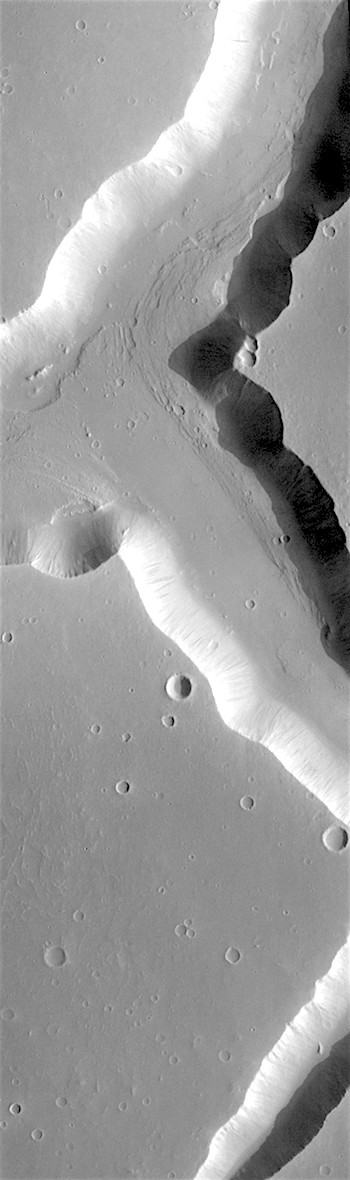 THEMIS Image of the Day, August 2, 2018. The right angle intersections in this VIS image are some of the graben that form Sacra Fossae. The fossae are located on the margin of Lunae Planum near the beginning of Kasei Valles.
The depressed floors show a few signs of flow along them, possibly from groundwater released when the ground broke open.
Graben are depressions caused by parallel faults where a block of material drops down along the fault face.
 An inverted channel on elevated terrain. Interesting fluvial processes that might help improve our understanding of the deposits in the Medusae Fossae Formation.
Beautiful Mars series. [More at links]
 During the past week, dust continued to gradually settle out of the martian atmosphere as part of the long decay phase of the planet-encircling dust event. Regional surface albedo features, such as Noachis, Syrtis, Cimmeria, and Sirenum became more prominent. Conditions also became slightly more clear over the receding seasonal south polar ice cap. Looking a bit further equatorward, tiny transient dust lifting events were spotted… [More at link, including video]