
Radar shows Mars atmosphere behaves as a single system

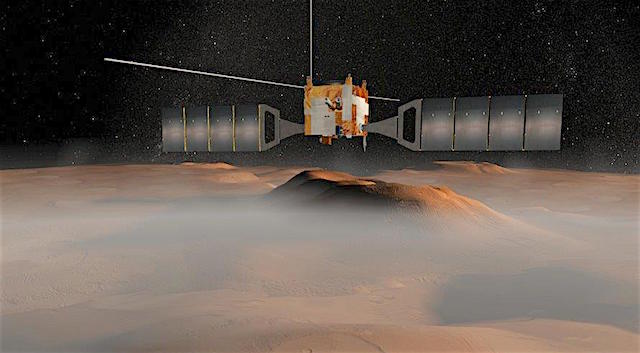
Mars-Express-spacecraft-NASA-smallNew research using a decade of data from ESA’s Mars Express has found clear signs of the complex martian atmosphere acting as a single, interconnected system, with processes occurring at low and mid levels significantly affecting those seen higher up.

Understanding the martian atmosphere is a key topic in planetary science, from its current status to its past history. Mars’ atmosphere continuously leaks out to space, and is a crucial factor in the planet’s past, present, and future habitability – or lack of it. The planet has lost the majority of its once much denser and wetter atmosphere, causing it to evolve into the dry, arid world we see today.

However, the tenuous atmosphere Mars has retained remains complex, and scientists are working to understand if and how the processes within it are connected over space and time.

A new study [published in the Journal of Geophysical Research] based on 10 years of data from the radar instrument on Mars Express now offers clear evidence of a sought-after link between the upper and lower atmospheres of the planet. While best known for probing the interior of Mars via radar sounding, the instrument has also gathered observations of the martian ionosphere since it began operating in 2005.

“The lower and middle levels of Mars’ atmosphere appear to be coupled to the upper levels: there’s a clear link between them throughout the martian year,” says lead author Beatriz Sánchez-Cano of the University of Leicester, UK…. [More at links]
Posted in Reports | Tagged , , , , , , | Comments Off

Curiosity: At the (very) Hard Rock Cafe

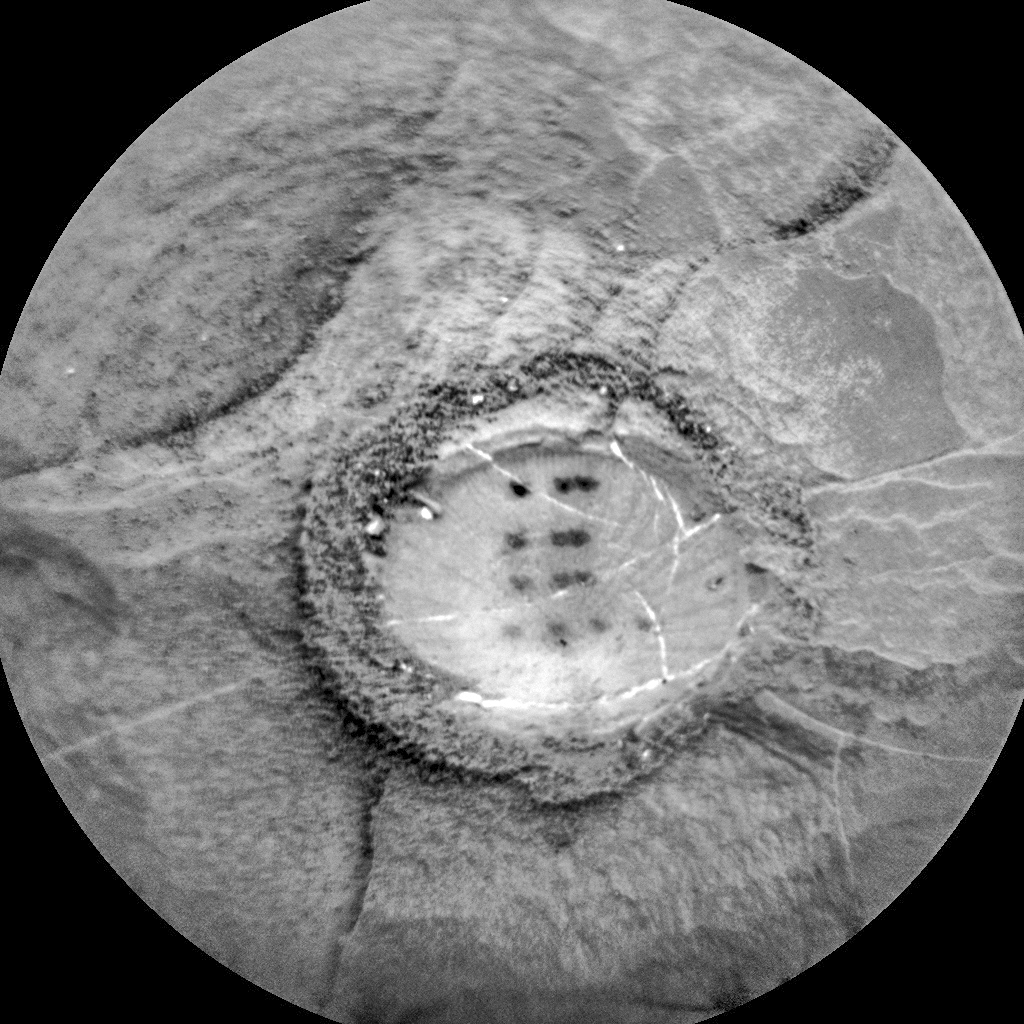
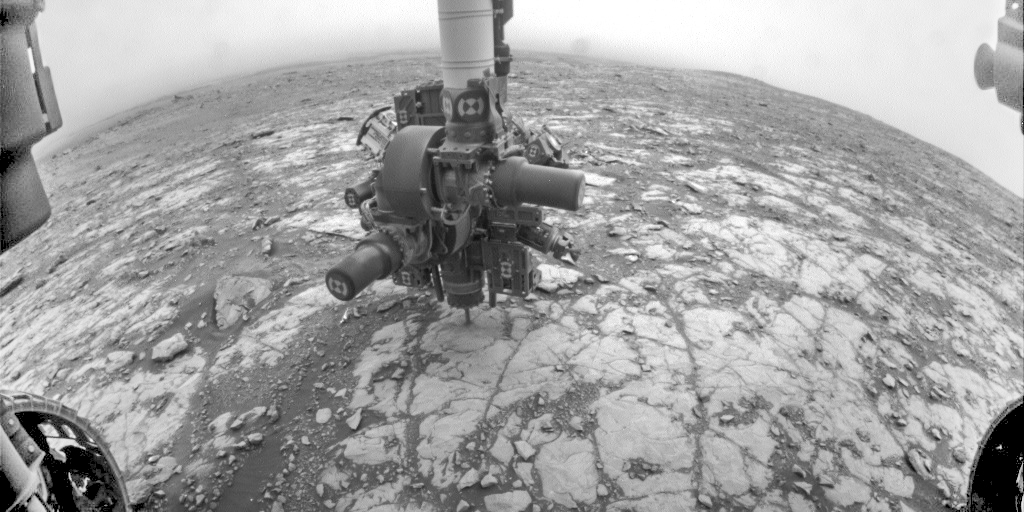
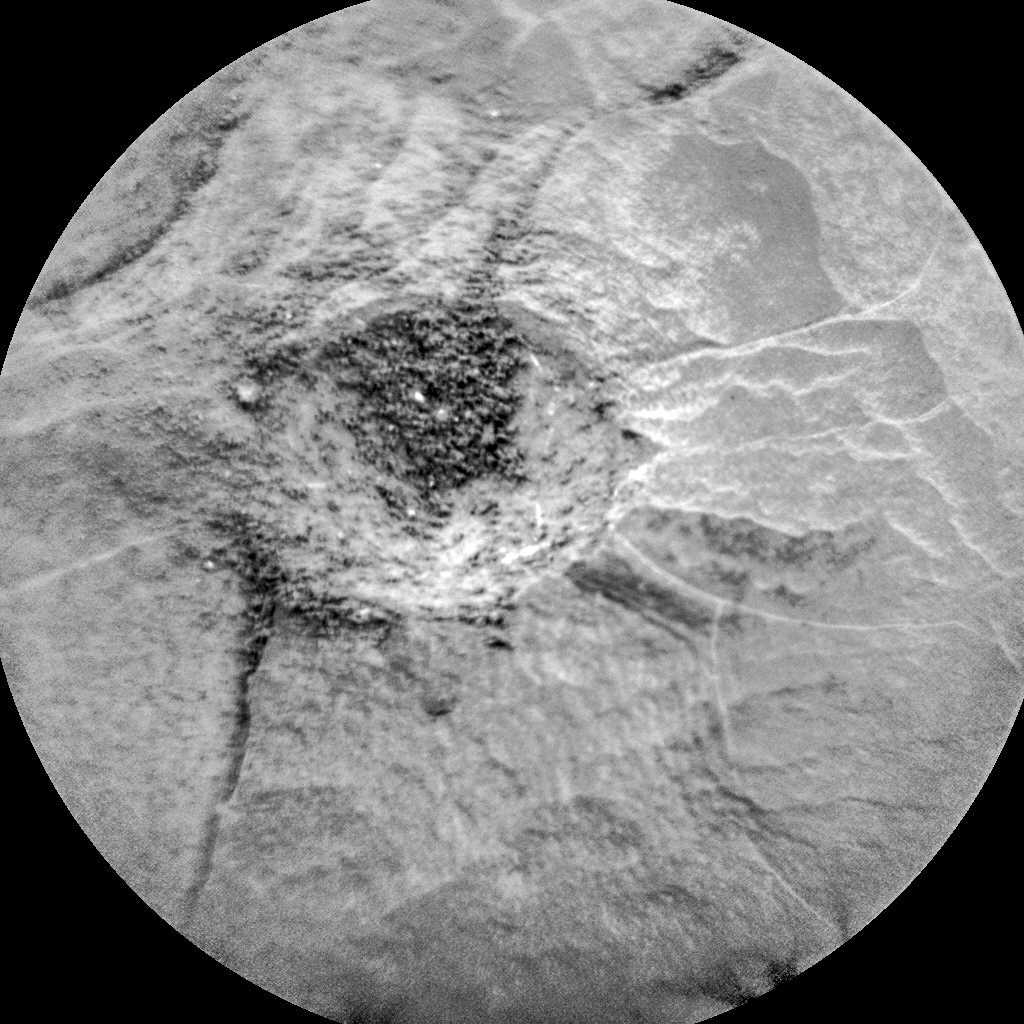
CR0_585172311PRC_F0712876CCAM01114L1Sol 2114, July 18, 2018. The first of two Remote Micro-Imager photos taken about 20 minutes apart shows how far Curiosity’s drill got when it tried to dig into the hematite-rich rock at the Voyageurs site: Not far.

CR0_585173737PRC_F0712876CCAM01114L1Then the ChemCam laser laid down a pattern of zaps, which blew out the tailings that had pooled in the shallow pit. When analyzed, the zaps may tell scientists more about the rock, including why it is so hard. Both images enlarge when clicked.

Sol 2114 raw images (from all cameras).

Posted in Reports | Tagged , , , , , , , , , | Comments Off

Light-toned Gale Crater rocks made by hot-spot volcanism?

gale-crater-mars-800x600In August 2012, the Mars Science Laboratory’s rover Curiosity landed at the base of Gale crater, a 5-kilometer-high mountain that formed when a meteor hit Mars billions of years ago. Using its 2-meter-long arm to drill into the planet’s surface, Curiosity scooped up and analyzed rock and soil samples, including some light-colored, crystal-studded rocks surprisingly similar to the ancient granitic rock that forms much of Earth’s continental crust.

The discovery made waves in the science community because it suggested that Mars might be the only known planet besides Earth possibly to have a continental crust. Mars traditionally is thought to be covered in denser, darker igneous rock similar to Earth’s oceanic crust, which is formed as volcanic magma sourced from Earth’s mantle cools.

Now, however, research [published in the Journal of Geophysical Research] by Arya Udry et al. contradicts that hypothesis. Instead of seeping up between tectonic plates, the team argues, the rocks could have formed through a process similar to one on Earth: intraplate, or “hot spot,” volcanism, found in places like Hawaii, Iceland, and the Canary Islands. In hot spot volcanism, magma does not need to find the boundaries or cracks between tectonic plates to rise to the surface. Instead, it merely pushes up and breaks through weaker, thinner areas of crust… [More at links]

Posted in Reports | Tagged , , , , , , , , , , , , , , | Comments Off

MARCI weather report, July 9-15, 2018

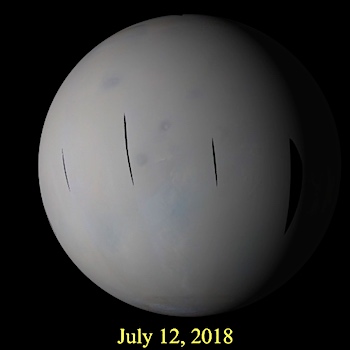
MARCI-July-12-2018Dusty conditions across Mars as the planet-encircling dust event dragged on for another week. Local-scale dust lifting was spotted over Solis-Sinai and along the developing north polar hood. Each afternoon, water-ice gravity wave (a.k.a. lee wave) clouds trailed from the topographic highs of Tempe Terra and Lyot Crater. Dust clouds and hazes lingered poleward… [More at link, including video]

Posted in Reports | Tagged , , , , , , , , , , , , , , , | Comments Off

HiRISE: Degraded crater and lineated flow in Deuteronilus Mensae

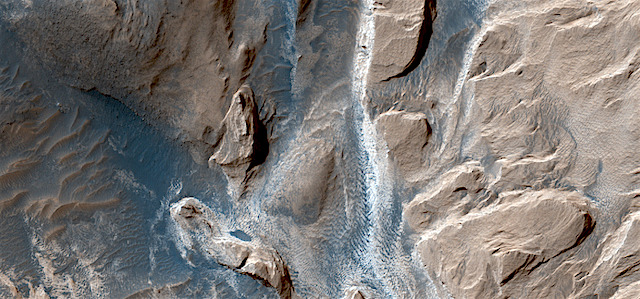
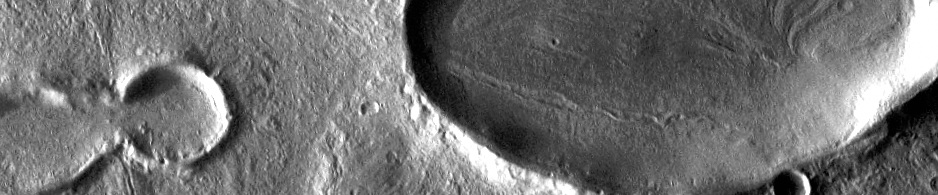
tumblr_pbrv4xAnv81rlz4gso1_1280A degraded crater and lineated flow in Deuteronilus Mensae. Beautiful Mars series. [More at links]

Posted in Reports | Tagged , , , , , , , , , | Comments Off

THEMIS: Hephaestus Fossae channel and crater

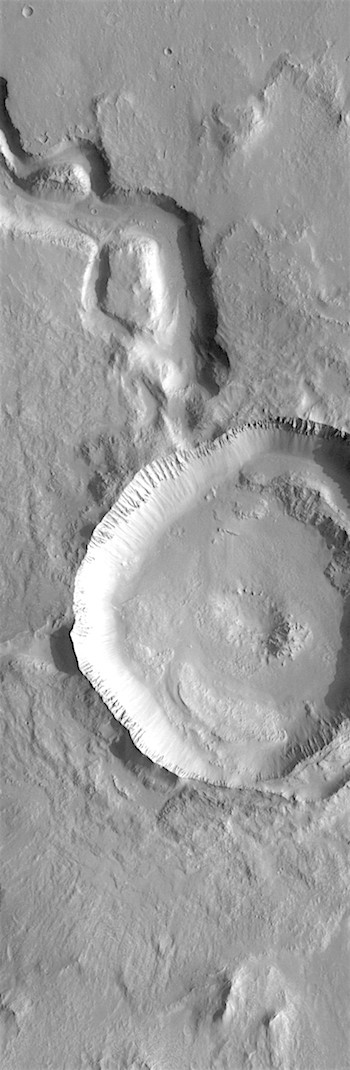
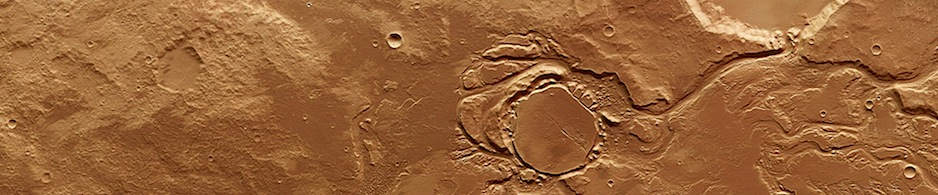
Hephaestus Fossae crater (THEMIS_IOTD_20180718)THEMIS Image of the Day, July 18, 2018. Today’s VIS image shows a crater on Hephaestus Fossae. The crater is fairly young, as there is only minimal modification of the crater floor.

While it appears that the crater sits of top of the channel, the creation of the crater may have also created the channel. The impact event would have caused subsurface heating, melting any subsurface ice in the region which would have created surface flow to form the channel.

More THEMIS Images of the Day by geological topic.

Posted in Reports | Tagged , , , , , , , , , | Comments Off

Curiosity update: Finishing up at the Voyageurs drill site

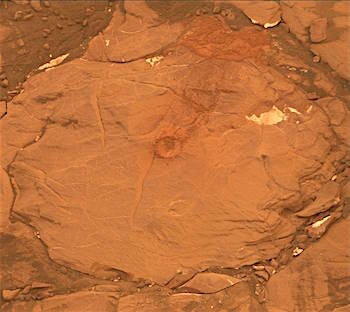
2112MR0112870010404675E01_DXXXSol 2114, July 17, 2018, update by MSL scientist Mark Salvatore: After our attempt to drill the Voyageurs target did not reach sufficient depth due to the impressive hardness of the rock , the team is beginning to finish up its activities at this location before heading a bit further uphill to find a more suitable (i.e., softer) drill target. All evidence suggests that this rock target is one of the hardest yet observed in Gale crater, a property that may be indicative of this entire section of the Vera Rubin Ridge. To a geologist, variations in rock hardness could indicate several different physical and chemical properties about a rock. It is important for us to further characterize and understand why this rock unit is so much harder than the underlying rocks within the Murray formation. Could this increased hardness be related to changes in water chemistry as the sedimentary rocks were being deposited? [More at link]

Posted in Reports | Tagged , , , , , , , , , | Comments Off

HiRISE: Monitoring slopes in Gale Crater

tumblr_pbq2s8Rn131rlz4gso2_1280Monitoring slopes in Gale Crater. This part of Gale Crater is south of where the rover Curiosity is.

Beautiful Mars series. [More at links]

Posted in Reports | Tagged , , , , , , , , | Comments Off

Curiosity update: Hard as a rock

FLB_584979535EDR_S0712876FHAZ00222M_-br2Sol 2113, July 16, 2018, update by MSL scientist Lauren Edgar: Unfortunately, we found out this morning that the “Voyageurs” drill target was a much harder rock than expected. While our drill plan executed perfectly, our bit stopped short of the full depth we need for sampling. The engineers are still evaluating the data to better understand the target. I had a busy morning as SOWG Chair, as the team had to come up with a new plan for today while thinking about our longer-term strategy. Ultimately, we decided to focus on contact science and documenting the mini drill hole in today’s plan.

The plan kicks off with several Navcam observations to monitor atmospheric opacity during the ongoing dust storm. Then we’ll take several Mastcam change detection observations to characterize the movement of sand, followed by several ChemCam observations to assess the diversity of color and… [More at link]

Posted in Reports | Tagged , , , , , , , , , | Comments Off

HiRISE: Scarp monitoring

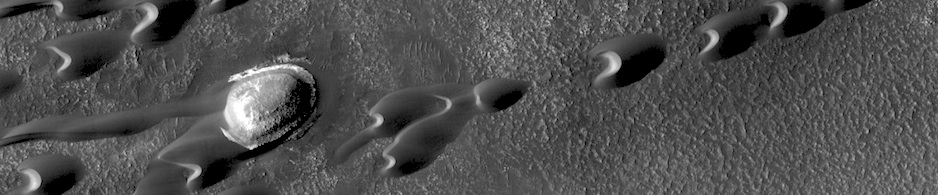
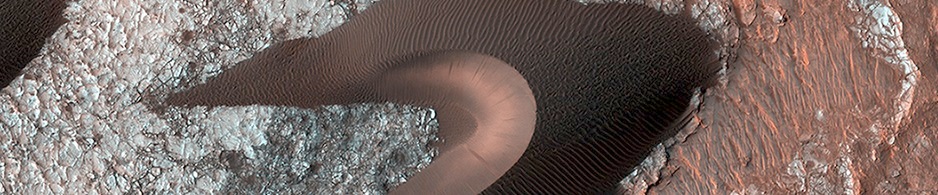
tumblr_pbq24z94In1rlz4gso2_1280Scarp monitoring. The “blue” in enhanced color could be seasonal frost or perhaps ground ice. We’ll be monitoring this site for one Mars year (two Earth years) to see any changes that helps us figure out what kind of ice this is.

Beautiful Mars series. [More at links]

Posted in Reports | Tagged , , , , , , , , , , | Comments Off