

Curiosity update: Stopped drive

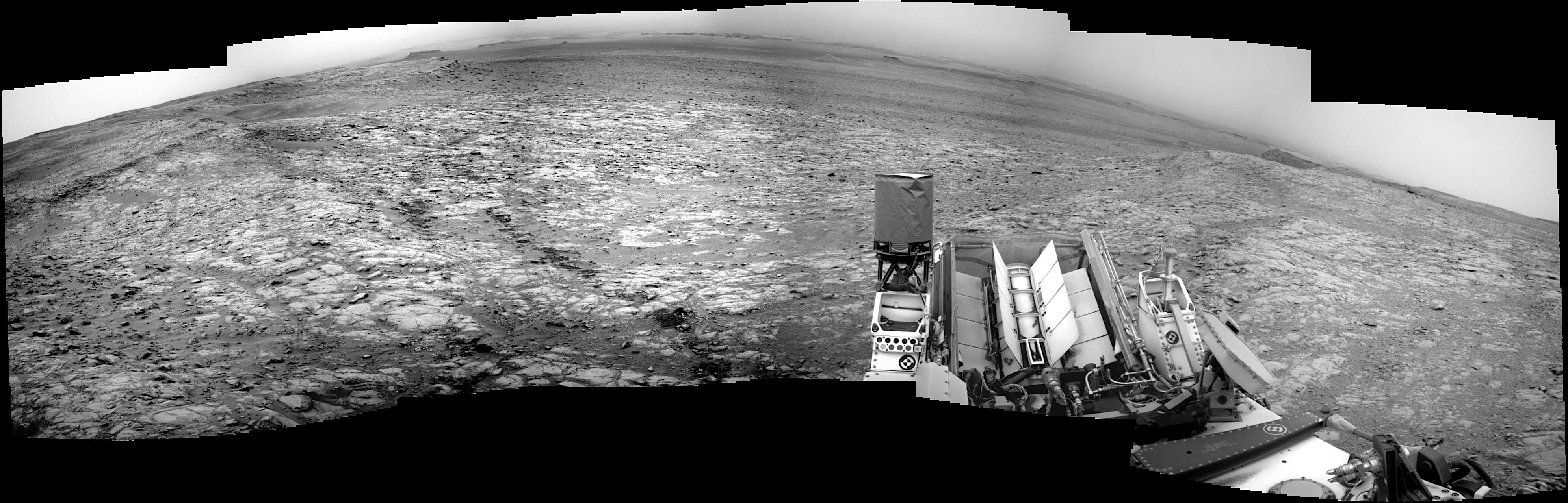
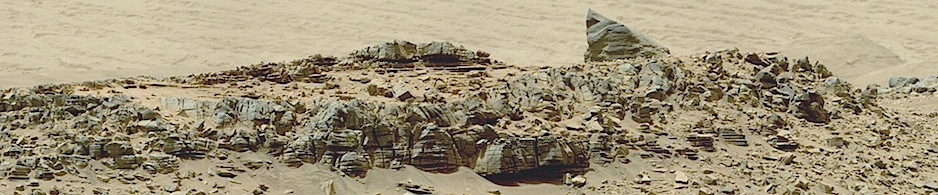
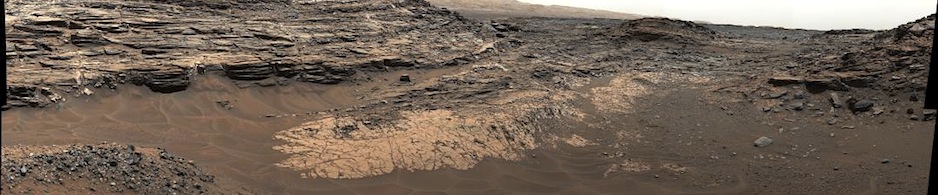
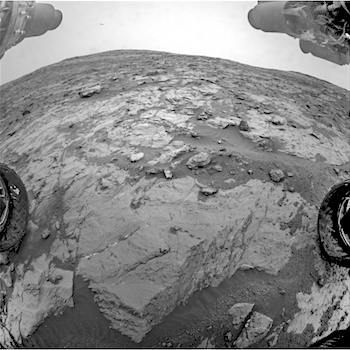
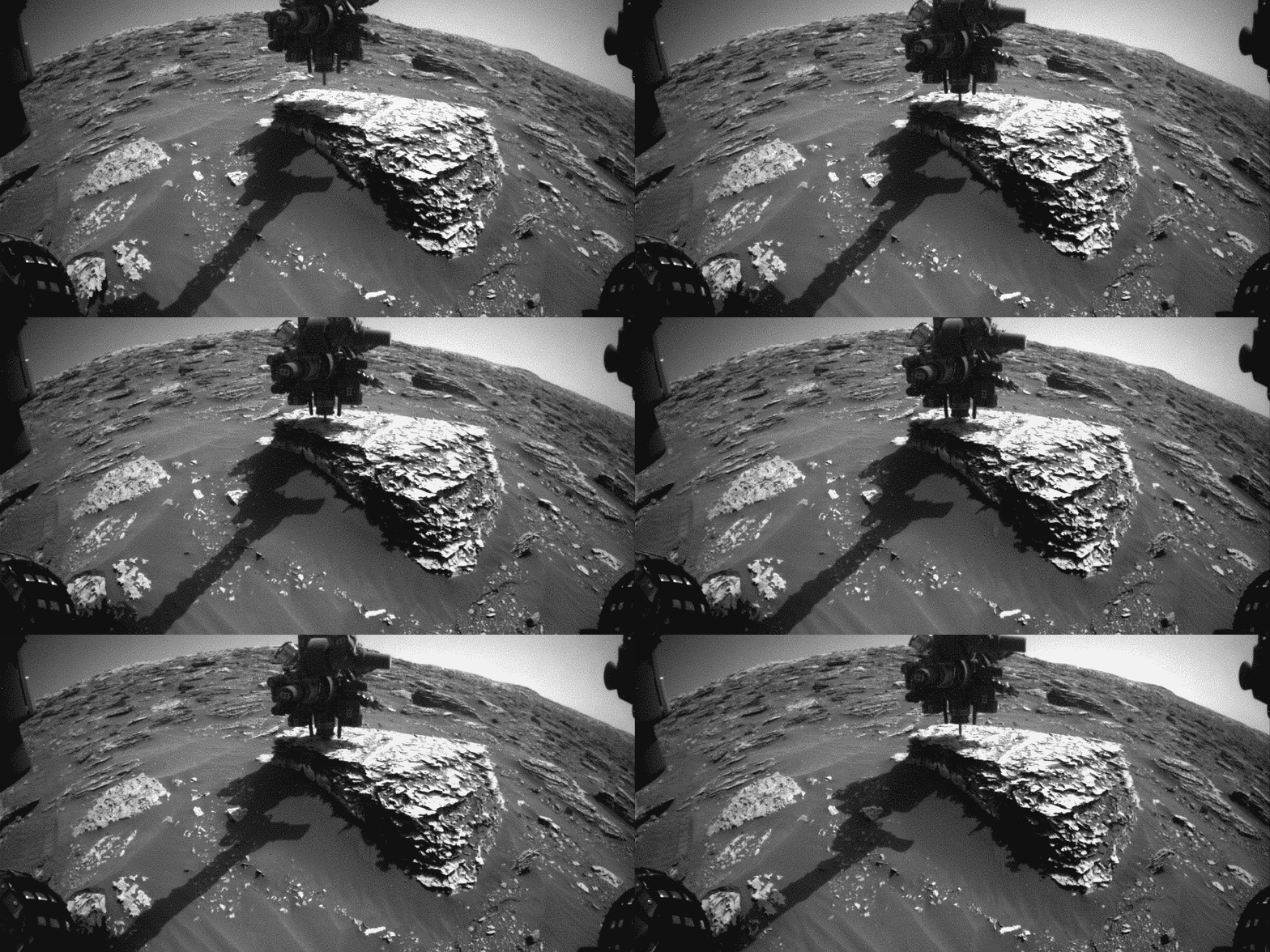
FRB_583484784EDR_F0711330FHAZ00302M_-br2Sols 2097-99, July 2, 2018, update by MSL scientist Christopher Edwards: Curiosity stopped its drive a bit earlier than anticipated. It so happens that the autonomous software onboard Curiosity designed to keep it driving safely kicked in and ended the drive short of the planned distance. When things like this happen, it’s a bit of a setback to science, but keeping the rover safe is priority number one. Not only did the drive stop short, but Curiosity actually ended up in a location where there wasn’t a good surface model, triggering the Slip Risk Assessment Process (SRAP) to fail. A failed SRAP means that Curiosity cannot safely carryout any arm-based activities, so the science team resorted to remote sensing activities using the cameras and ChemCam to continue to assess the Vera Rubin Ridge… [More at link]

Posted in Reports | Tagged , , , , , , , , | Comments Off

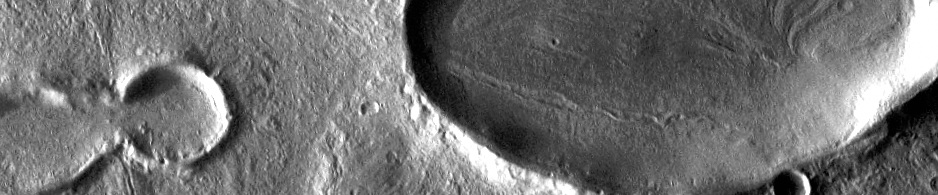
HiRISE: Possible valleys along a plateau in Noctis Labyrinthus

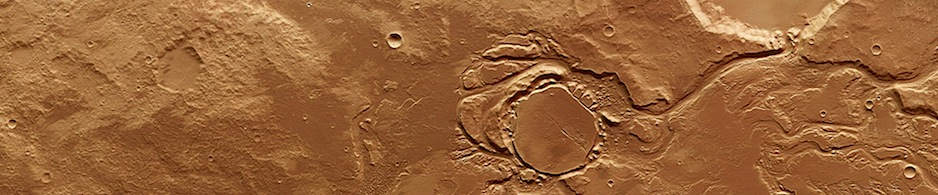
tumblr_pb3e9tkKIp1rlz4gso1_1280Possible valleys along a plateau in Noctis Labyrinthus. If there are valleys, this could explain why there are hydrated minerals only found along this portion.

Beautiful Mars series. [More at links]

Posted in Reports | Tagged , , , , , , , , | Comments Off

Return to drilling, sciencing the dust storm

20180629_duluth_drill_animation[From Emily Lakdawalla’s blog at The Planetary Society]

What a difference a few weeks can make! Suddenly, Curiosity is back to full field site operations, the kind it last enjoyed at the beginning of its traverse south from Murray buttes. A total of 562 sols elapsed between the previous successful drill at Sebina (sol 1495) and the newest drill site, Duluth (sol 2057). The rover successfully delivered sample to both laboratory instruments, CheMin and SAM, using its new feed-extended sample transfer (FEST) technique, took a self-portrait, and drove away on sol 2084. In all, it spent 30 days at Duluth — not bad, and likely to get much faster as long as nothing else breaks (knock wood). The team now plans as many as three more drill stops in the near future, up on top of Vera Rubin ridge.

The other main theme for this update is the global dust storm of Mars year 34. The storm began on the opposite side of Mars from Curiosity, and was first mentioned in a mission update during planning for sol 2074. Unlike poor solar-powered Opportunity, Curiosity doesn’t suffer any direct threat from a dust storm. There are some minor inconveniences, but any inconvenience is more than offset by the excitement of getting to study a global dust storm from the inside of it. Still, the whole Curiosity team is pulling for Opportunity to get through this. (Many team members, of course, serve both missions. I wonder if it feels good to use one rover to science the heck out of a storm that’s delivered a blow to the other one.) [More at link]

Posted in Reports | Tagged , , , , , , , , , , , | Comments Off

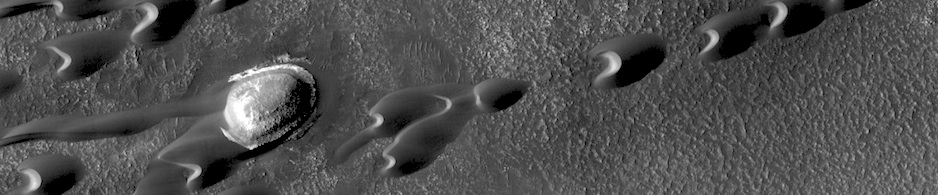
HiRISE: Megabreccia in NE Syrtis Major

tumblr_pawhflCLMe1rlz4gso2_1280Megabreccia in northeast Syrtis Major region. Northeast Syrtis Major is a landscape where a diverse sampling of aqueous and igneous geological processes are recorded in the rock at the surface. “‘Breccia” literally means “rubble” and implies a rock deposited very close to the source area. The pieces of rock are often angular in shape.

Beautiful Mars series. [More at links]

Posted in Reports | Tagged , , , , , , , , , | Comments Off

Curiosity: Rolling higher on the ridge

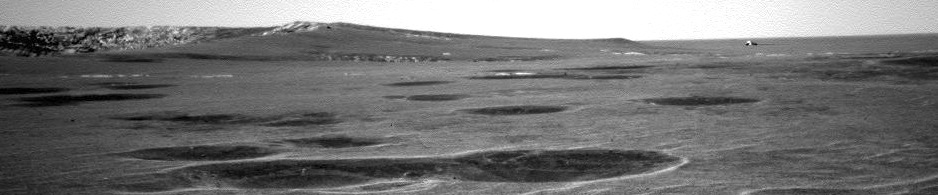
2098-navcam-southSol 2098, July 1, 2018. Curiosity is driving higher on Vera Rubin Ridge as it ascends a series of ledges. The view above looks south, with part of Mt Sharp’s profile dimly detectable in the haze at center left. Below, the view looks northward to the Murray Buttes. Both images enlarge when clicked.

Sol 2098 raw images (from all cameras).

2098-navcam-north

Posted in Reports | Tagged , , , , , , , , | Comments Off

HiRISE: A curious Curiosity

tumblr_pb3dvvL0ji1rlz4gso1_1280A curious Curiosity. This is a 2017 image of the rover Curiosity at Vera Rubin Ridge. The feature is named after an American astronomer who pioneered work on galaxy rotation rates. This image is at full resolution.

Beautiful Mars series. [More at links]

Posted in Reports | Tagged , , , , , , , , , , , | Comments Off

THEMIS: Utopian dust devil tracks

Utopian dust devil tracks (THEMIS_IOTD_20180702)THEMIS Image of the Day, July 2, 2018. Today’s VIS image shows dust devil tracks in Utopia Planitia. The tracks occur where dust devils have scoured the fine materials off the underlying surface. In some cases dust devils can create arced tracks. The ones in this image are mostly linear.

More THEMIS Images of the Day by geological topic.

Posted in Reports | Tagged , , , , , , , , | Comments Off

Mars valley networks traced to heavy rainfall

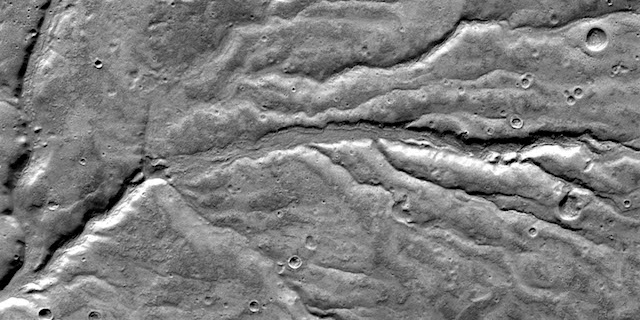
warrego-vallesAstonishingly similar: valley networks on Mars bear a strong resemblance to those in terrestrial arid landscapes. Researchers have been able to demonstrate this using the angles of river valley branches. From this, they infer that Mars had a primeval climate in which sporadic heavy precipitation eroded valleys.

The surface of Mars bears structures that resemble river networks on Earth. Scientists therefore assume that there must once have been enough water on the red planet to feed streams that incised channels into the subsoil.

For years, however, researchers have debated the origins of this water: was it rainwater that caused streams and rivers to swell? Or did ice in the soil melt due to volcanic activity, and seep out to form rivers? Each of these scenarios leads to a completely different conclusion about the climatic history of the red planet.

A new study [published in Science Advances] now suggests that the branching structure of the former river networks on Mars has parallels with terrestrial arid landscapes. This has been demonstrated in a recent paper published in Science Advances by physicists Hansjörg Seybold and James Kirchner from ETH’s Institute for Terrestrial Ecosystems, and planetary scientist Edwin Kite from the University of Chicago.

Using statistics from all mapped river valleys on Mars, the researchers conclude that the contours still visible today must have been created by surface run-off of (rain)water. They therefore exclude the influence of groundwater or melt water from the soil as a dominant process for shaping these features. [More at links]

Posted in Reports | Tagged , , , | Comments Off

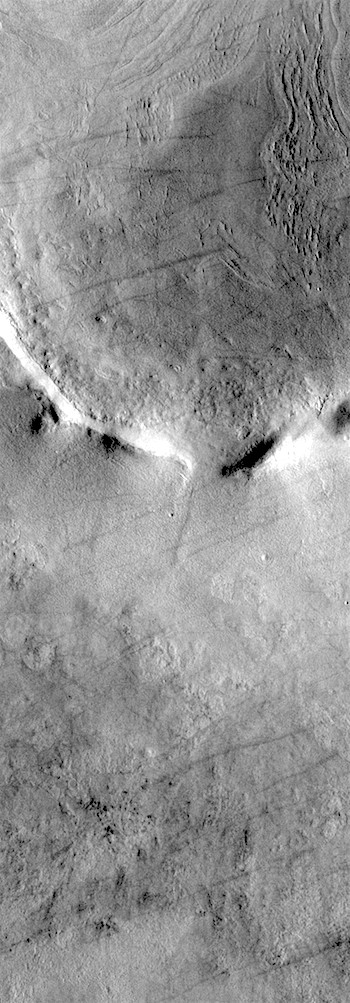
HiRISE: Contact between Apollinaris Patera and the Medusae Fossae formation

tumblr_paqkd5WJWf1rlz4gso1_1280Contact between Apollinaris Patera and the Medusae Fossae formation. Let’s hope they get along. (The Medusae Fossae Formation is to the right in this image and is noticeable for the yardangs — those long, high standing rock formations — we see here.)

Beautiful Mars series. [More at links]

Posted in Reports | Tagged , , , , , , , , , , | Comments Off

Mars dust storm may lead to new weather discoveries

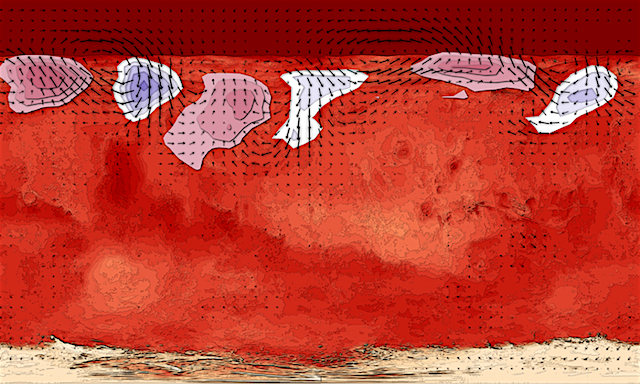
Mars graphicMars is experiencing an estimated 15.8-million–square-mile dust storm, roughly the size of North and South America. This storm may not be good news for the NASA solar-powered Opportunity rover, but one Penn State professor sees this as a chance to learn more about Martian weather.

Steven Greybush, an assistant professor of meteorology and atmospheric science and Penn State Institute for CyberScience faculty co-hire, studies numerical weather prediction and the weather and climate of Mars.

“We are seeing the impact of this storm on Opportunity because it has caused it to shut down,” Greybush said. “Opportunity is in the heart of the storm.”

Beginning on June 13, NASA was unable to contact Opportunity and it is believed that lack of sunlight has caused it to suspend operations to save energy. Opportunity, which originally launched on July 7, 2003, as a part of NASA’s Mars Exploration Rover program, was designed to search for and characterize rocks and soils that hold clues to past water activity on Mars. These studies may give researchers key information about the possibility of life on the planet.

Outside of the concern for the rover, Greybush said that the observations of these storms provide researchers with a wealth of data about weather, allowing them to more accurately model the atmospheric conditions along with getting closer to the possibility of being able to forecast the weather on Mars

Knowledge of Mars’ weather will also help with planning future NASA missions, said Greybush.

“If we can learn more about the atmospheric conditions of Mars, we may be able to land in more interesting places, such as those with hills and craters rather than flat terrain,” Greybush said…. [More at link]

Posted in Reports | Tagged , , , , | Comments Off