THEMIS: Wind etching of soft sediments

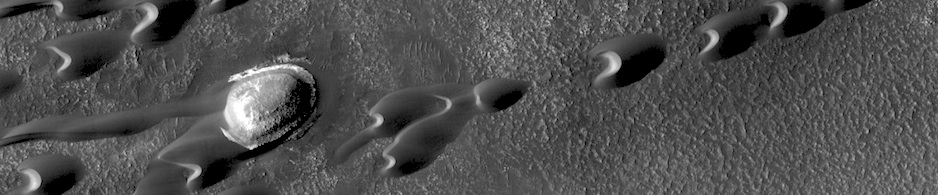
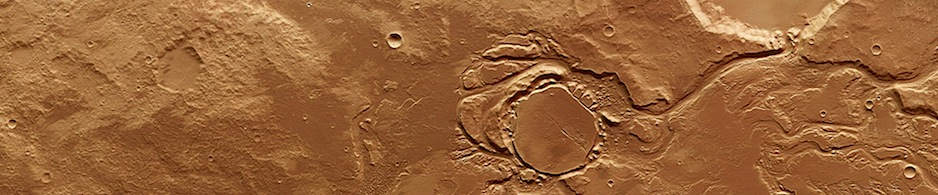
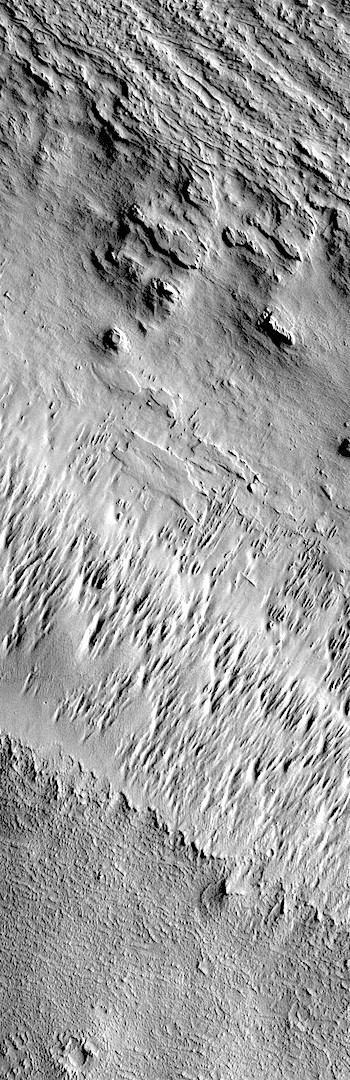
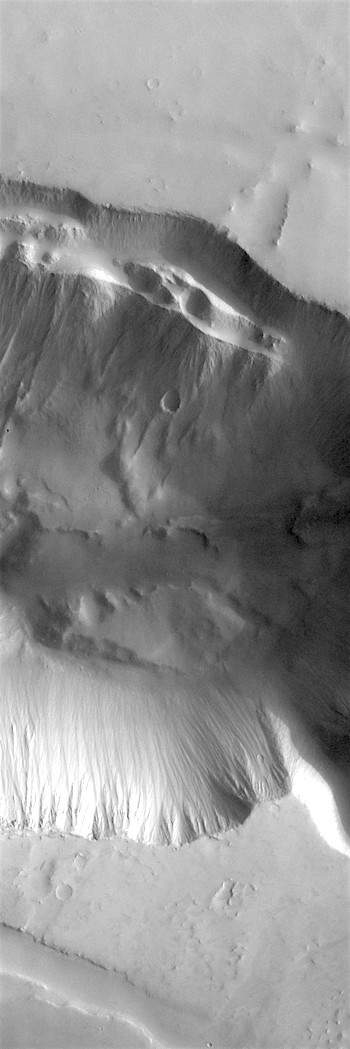
Wind etching (THEMIS_IOTD_20180629)THEMIS Image of the Day, June 29, 2018. In regions of poorly cemented surface materials it is possible to create large features due to just the action of the wind. The equatorial region between Olympus Mons and Apollinaris Mons is dominated by wind etched regions. This region east of Apollinaris Mons contains just such a terrain.

The direction of the wind aligns with the ridges and valleys. The dominant wind direction in this region is southeast to northwest; however, other wind directions can occur within a localized region.The top of this VIS image follows the regional trend, with a smaller central surface indicating winds perpendicular to the prevailing direction.

More THEMIS Images of the Day by geological topic.

Posted in Reports | Tagged , , , , , , , , , , | Comments Off

Curiosity: Looking ahead and back

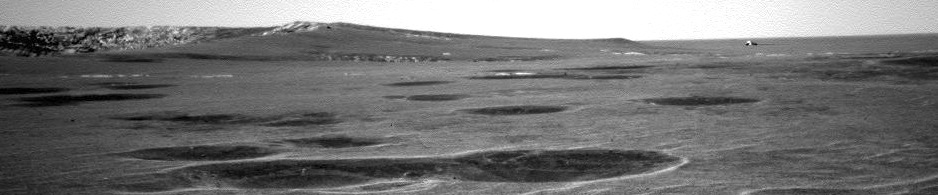
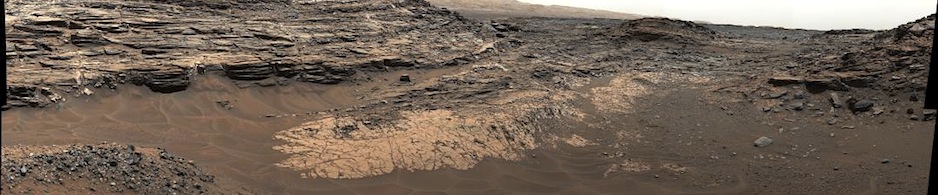
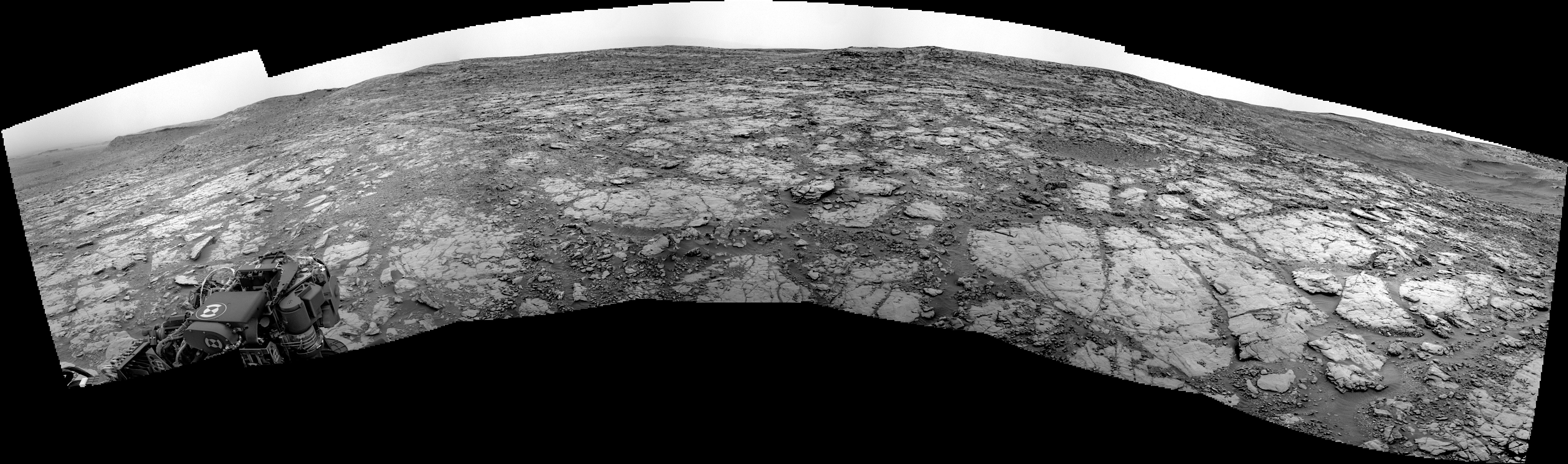
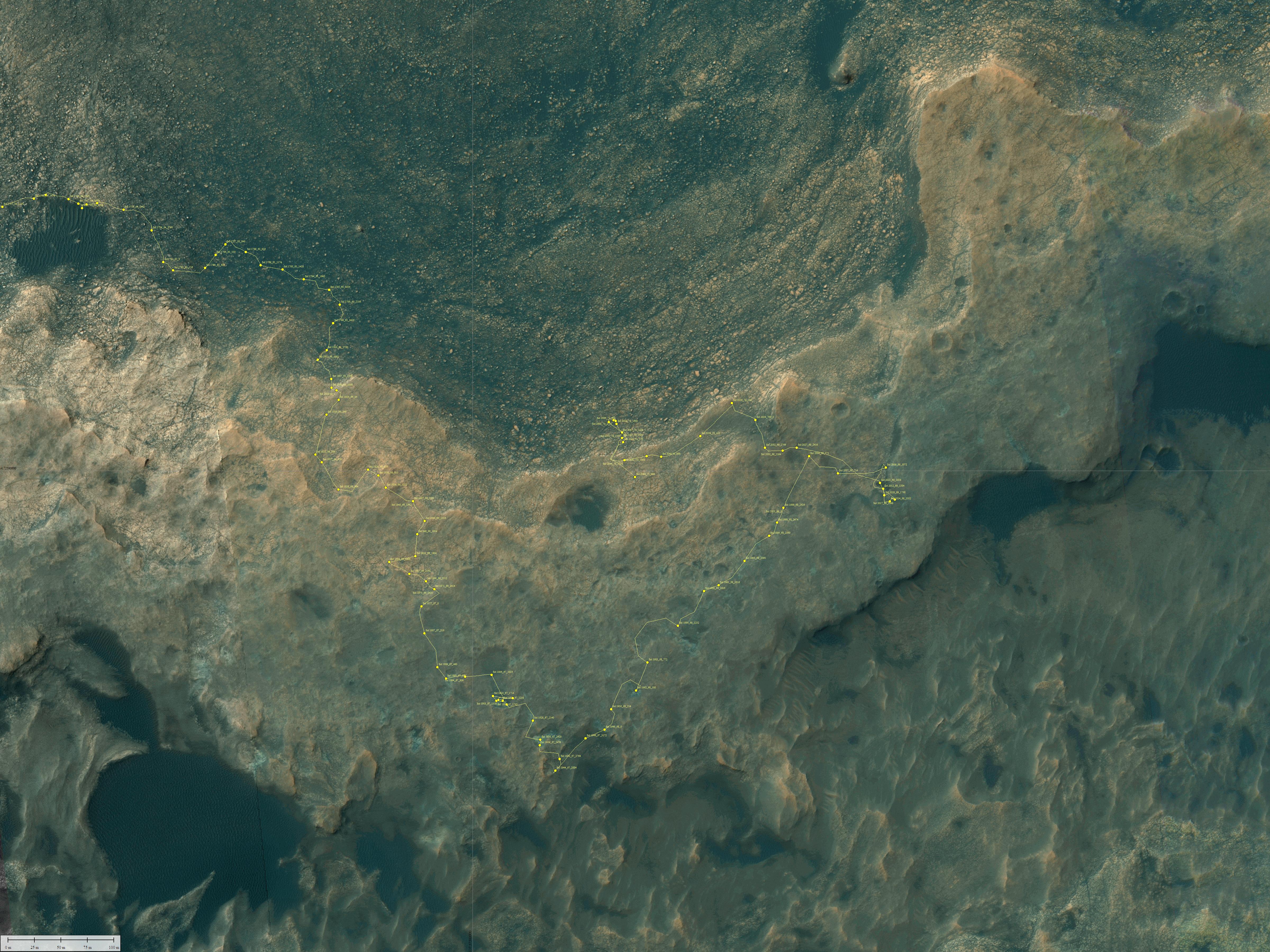
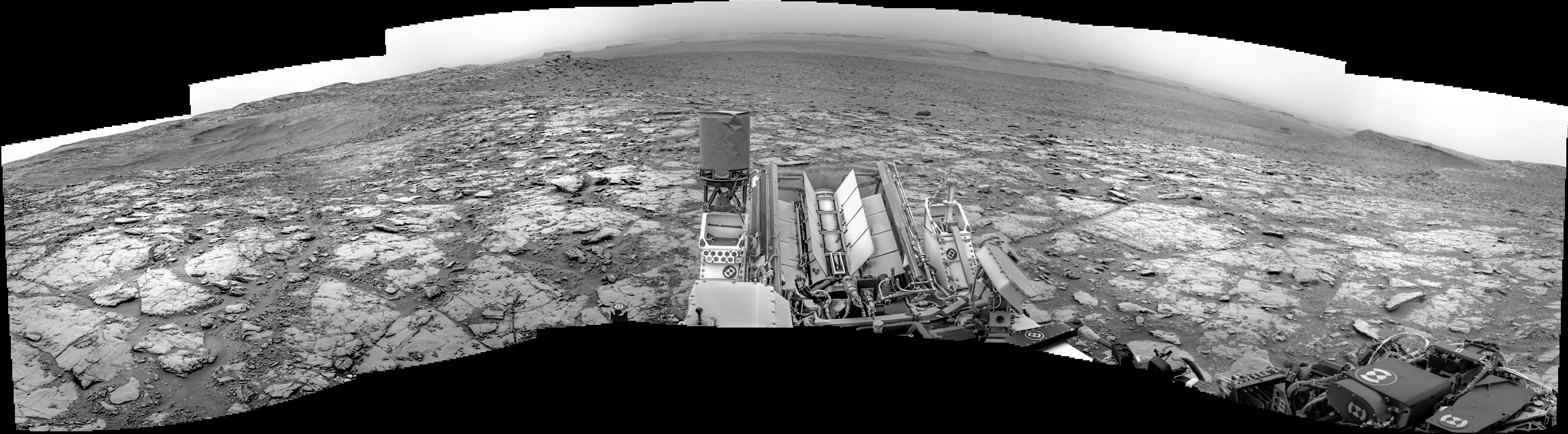
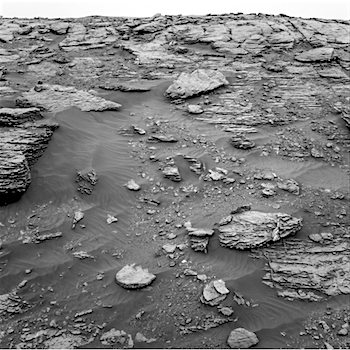
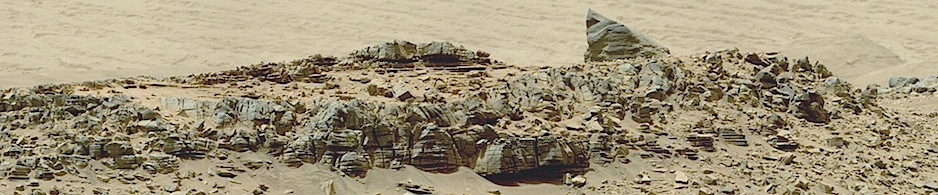
2094-navcam-southCuriosity_Location_Sol2094-fullSol 2094, June 27, 2018. With Curiosity back up on a flatter part of the ridge top, mission control directed the Navcam to make two composites, one showing the view looking ahead to the south (above) and another looking to the north (below). Note the haziness in the distance below, thanks to dust in the air. Both composites overlap on each end, and both enlarge when clicked.

Sol 2094 raw images (all cameras), and Curiosity’s latest location (thumbnail above).

2094-navcam-north

Posted in Reports | Tagged , , , , , , , , | Comments Off

HiRISE: Lingering frost

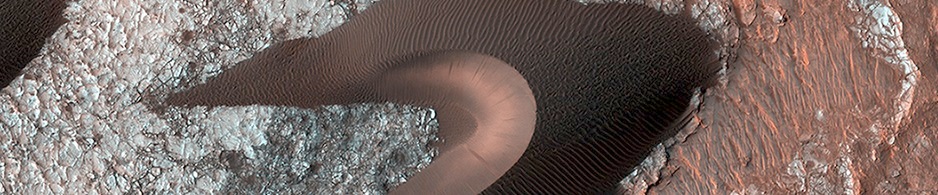
tumblr_pawggcJ6VN1rlz4gso1_1280Lingering frost. The North Polar layered deposits comprise a thick stack of icy layers. Part of this image has lingering seasonal frost, which serves to accentuate those layers.  An additional rationale for this observation is to document new activity in scarp erosion.

Beautiful Mars series. [More at links]

Posted in Reports | Tagged , , , , , , , , , | Comments Off

Weather update from Gale Crater

Posted in Reports | Tagged , , , , , , , , | Comments Off

Curiosity update: Over the crest

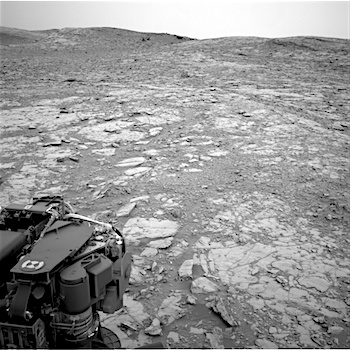
NRB_583386458EDR_F0710996NCAM00280M_-br2Sols 2095-96, June 28, 2018, update by MSL scientist Lauren Edgar: After a steep drive Sol 2094, Curiosity is back over the crest of Vera Rubin Ridge and enjoying the view of flatter terrain ahead. I was the SOWG Chair on this late slide sol, which means that we started planning 3.5 hours later than usual. Everything was going smoothly and we were excited to plan some potential contact science, until we found a rock under the left front wheel that might make Curiosity unstable during arm activities. So at the last minute we swapped out MAHLI and APXS activities for some additional remote sensing. We still packed a lot of science into the two-sol plan, and we’ll have another opportunity to do contact science in the weekend plan. [More at link]

Posted in Reports | Tagged , , , , , , , , , , , | Comments Off

‘Black Beauty’ meteorite expands window for early Mars life

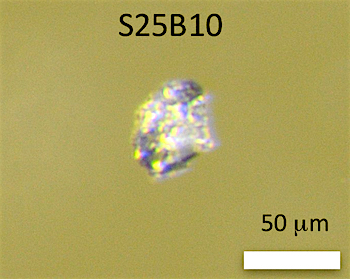
old_zircon_STARPLANThe early surface of Mars consisted of a liquid magma ocean that crystallized extremely rapidly, just 20 million year after the formation of the solar system. Thereafter, a solid crust emerged on the red planet, potentially housing oceans with water and life. This was about 130 million years before a corresponding solid crust appeared on Earth.

New evidence for this rapid crystallization and crust formation on Mars has just been published [in Nature] in a study from the Centre for Star and Planet Formation at the Natural History Museum of Denmark, University of Copenhagen. The study, based on the analysis of the rare Mars meteorite Black Beauty, significantly expands the window for when life might have existed on Mars. [More at links]

Posted in Reports | Tagged , , , , , , | Comments Off

THEMIS: Faulting and landslides in Tithonium Chasma

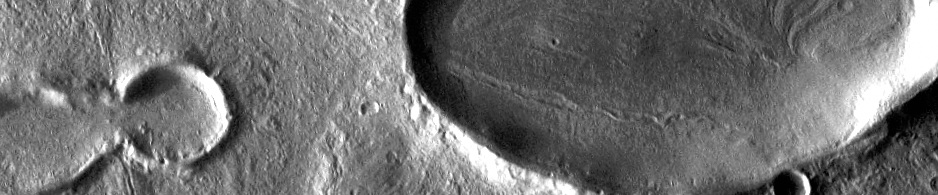
Faulting and slides in Tithonium Chasma (THEMIS_IOTD_20180628)THEMIS Image of the Day, June 28, 2018. This VIS image shows the eastern edge of Tithonium Chasma, one of the large valley systems that comprise Valles Marineris. Large fractures are visible on the upper margin of the chasma. Downward from those fractures are several landslide deposits.

More THEMIS Images of the Day by geological topic.

Posted in Reports | Tagged , , , , , , , , , , , , | Comments Off

Water floods and effusive volcanism in Hrad Vallis

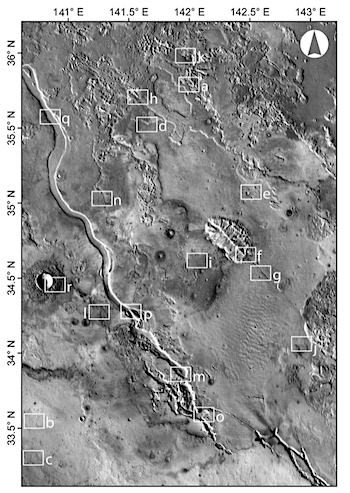
figure-2[Editor’s note: From a paper by Christopher Hamilton and four co-authors recently published in the Journal of Geophysical Research.]

• The Hrad Vallis region of Mars includes evidence of both aqueous flooding and effusive volcanism

• Lava flows in the region provide evidence of inflation and may have interacted with ice deposits to generate hydrothermal activity

• Identification of ~50 m thick pahoehoe-like lava flows implies decadal-scale emplacement periods, similar to large lava flows on Earth

Major outflow channels on Mars may have been carved by either catastrophic aqueous floods or turbulent lava flows. Addressing the ambiguous origin of these channels is therefore important for constraining the hydrological and volcanic history of the planet. This study focuses on Hrad Vallis, which is a geologically recent (Amazonian-age) outflow channel located within the Elysium Volcanic Province, through a combination of mapping and modeling.

We find evidence for both aqueous flooding and effusive volcanism associated with this channel, indicating a complex hydrologic and geologic history. However, lava flows in this region are interpreted to be the products of pāhoehoe-like lava flow emplacement, similar to terrestrial lava flows on Earth in New Mexico and Hawaii, and not highly turbulent flows as previously suggested.

The identification of ~50 m thick pāhoehoe-like lava flows near Hrad Vallis implies a gradual formation process over the course of decades, and heat from these lava flows may have interacted with ground ice to produce meltwater and steam. Lava-water interactions on Mars are important because they could generate habitable environments for microbial organisms that have adapted for survival within hydrothermal systems. [More at link]
Posted in Reports | Tagged , , , , , | Comments Off

Curiosity update: Feeling powerful

NRB_583208586EDR_F0710570NCAM00278M_-br2Sols 2093-94, June 26, 2018, update by MSL scientist Lauren Edgar: Today’s 2-sol plan kicked off with the good news that our power state exceeded predictions, so we were able to add in some extra science activities. The first sol starts with several remote sensing activities to continue to monitor the ongoing dust storm. Then the team planned several ChemCam observations of “Mudhole Lake,” “Jacobs Lake,” and “Monker Lake” to assess the bedrock chemistry and search for evaporites, followed by Mastcam documentation. In the afternoon, Curiosity will acquire a short multispectral tau observation to measure the optical depth of the… [More at link]

Posted in Reports | Tagged , , , , , , , , , , , | Comments Off

MARCI weather report, June 18-24, 2018

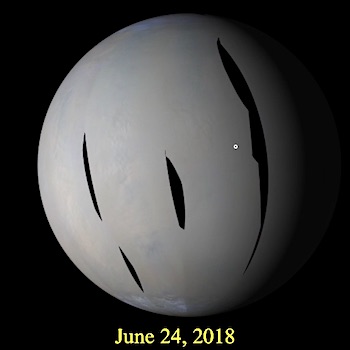
MARCI-June-24-2018The planet-encircling dust event endured across Mars last week. As the week progressed, storm activity expanded over Solis-Sinai, Aonia, and Sirenum. Dusty conditions also continued from Isidis to Olympus and from Argyre to western Sirenum. Storm activity south of Hellas, reached deep over the polar interior above regions, Promethei and Cimmeria, for much of the week. Meanwhile, dust lifting centers over Noachis slightly contracted away from the seasonal south polar ice cap edge. Minor clearing was spotted over portions of Acidalia and Arabia on some afternoons. Looking to the northern… [More at link, including video]

Posted in Reports | Tagged , , , , , , , , , , , , , , , , , , | Comments Off