


Curiosity update: Triple delivery for CheMin

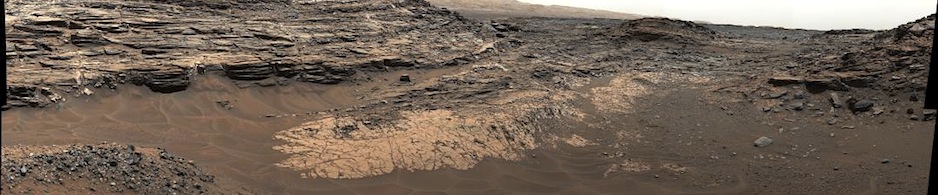
Sols 2068-69, May 31, 2018, update by MSL scientist Claire Newman: We’re looking forward to analyzing some great drill samples from the “Duluth” rock target in Curiosity’s Chemistry and Mineralogy instrument, CheMin. However, previous tests on Mars and the first delivery attempt to CheMin raised a concern that less material than expected may be making it in. To increase the chances of a successful CheMin analysis this time around, three portions will be delivered in Sol 2068 instead of the usual single portion, and from a smaller height than before.

In addition to the CheMin triple delivery, the geology theme group planned some passive imaging of target “Bassett” by ChemCam. This is exposed Murray formation bedrock, so the purpose is to compare its chemical composition with other Murray targets and get a sense of their variability. Also included were Mastcam stereo images of targets “Anderson Lake,” “Bob Lake,” “Toohey Lake,” and “Bass Lake” to better understand the bedding geometry. The GEO theme group also included more Mastcam change detection images… [More at link]
Posted in Reports | Tagged , , , , , , , , , , , , , , , | Comments Off

Curiosity: RMI zooms in on mineralized vein ‘Gary’

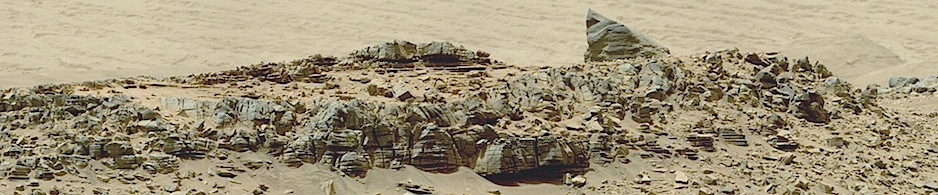
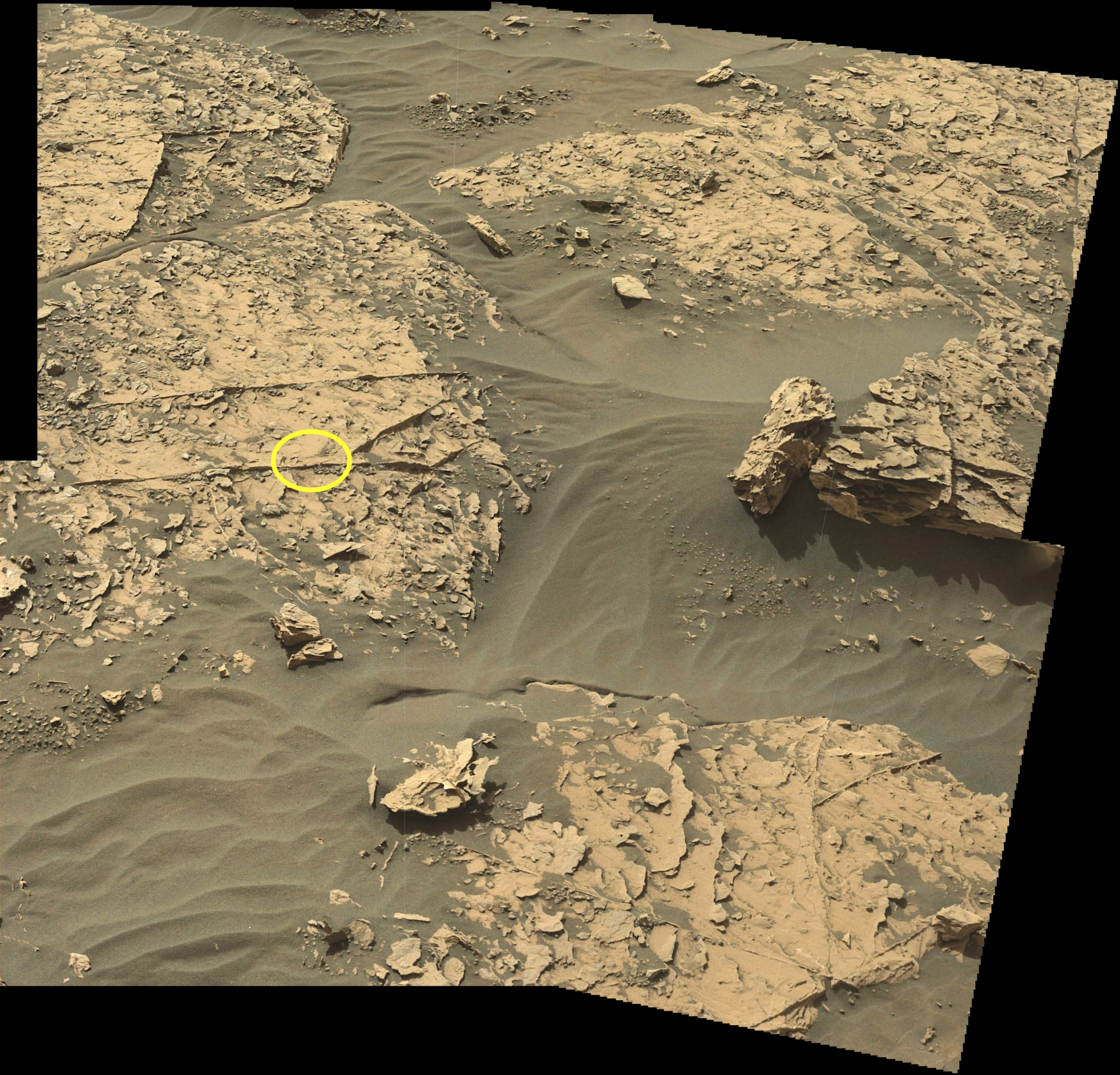
2062-mastcam342067-rmiSol 2067, May 30, 2018. The Remote Micro-Imager (RMI) took aim at a small, thin ridge of minerals, dubbed Gary, that formed within a crack inside softer rock. The soft rock then eroded to leave the mineralized vein standing above it. Above is a Mastcam 34-mm composite made on Sol 2062 showing Gary’s location in the yellow oval. At right is the zoomed-in RMI composite view.  Click either image to enlarge it.

Sol 2067 raw images (from all cameras), and Curiosity’s latest location.

Posted in Reports | Tagged , , , , , , , , , | Comments Off

HiRISE: Corduroy dunes

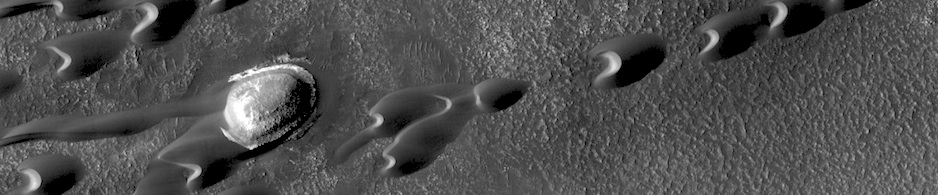
tumblr_p9lpuchq571rlz4gso1_1280Corduroy dunes. The permanent polar cap of Mars is encircled by sand dunes and looking like pulled threads, these dunes march across a fabric of patterned ground. At this time of the Martian year they are free of the seasonal dry ice that forms a temporary cover every winter.

Beautiful Mars series. [More at links]

Posted in Reports | Tagged , , , , , , , , , , | Comments Off

THEMIS: Dark slope streaks in rugged terrain

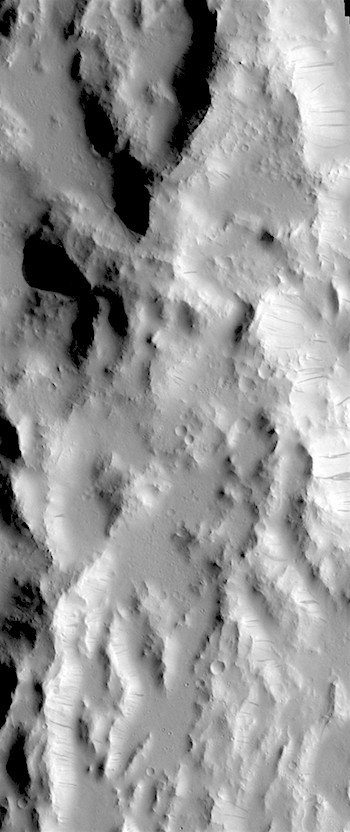
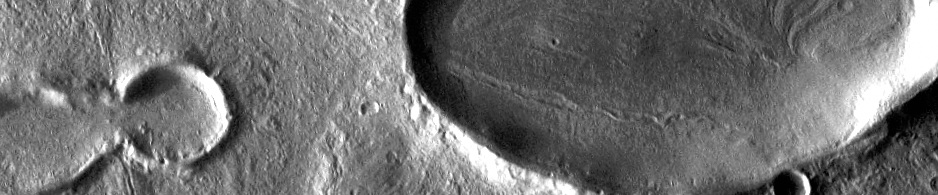
Dark slope streaks on rugged terrain (THEMIS_IOTD_20180531)THEMIS Image of the Day, May 31, 2018. This VIS image shows part of the ‘rim’ of Orcus Patera. How Orcus Patera formed is a mystery. Along the east facing ridge walls in this image multiple regions of dark slope streaks are visible.

It is believed these features formed due to down slope movement of materials, either revealing darker rock beneath a dusty cover, or a coating of the surface with another material.

More THEMIS Images of the Day by geological topic.

Posted in Reports | Tagged , , , , , , , , , | Comments Off

Curiosity update: ‘Tis the season to be dusty

NRB_580363776EDR_S0701752NCAM00573M_-br2Sol 2067, May 30, 2018, update by MSL scientist Claire Newman: The previous plan included some tests of the sample delivery system, including delivery of a single portion to the closed cover of the SAM inlet. The imaging showed a small amount made it, but not as much as we’d hoped. So the team decided to postpone CheMin sample delivery until tomorrow’s plan, leaving us even more time for science activities in today’s single sol plan for Sol 2067.

The environmental theme group seized the opportunity to take a long ‘dust devil search’ movie pointed roughly to the northwest, where we currently have a beautiful view back down the slope of Aeolis Mons toward the Bagnold Dunes, and all the way across Gale Crater’s floor to the northwest rim (as shown in this Navcam image from Sol 2060). We’ve just moved past southern spring equinox, which means we’re now in the half of the Mars year when global dust storms are observed to begin. However, the increased… [More at link]

Posted in Reports | Tagged , , , , , , , , , , , , , , , , | Comments Off

ExoMars 2020 rover set for tough environmental tests

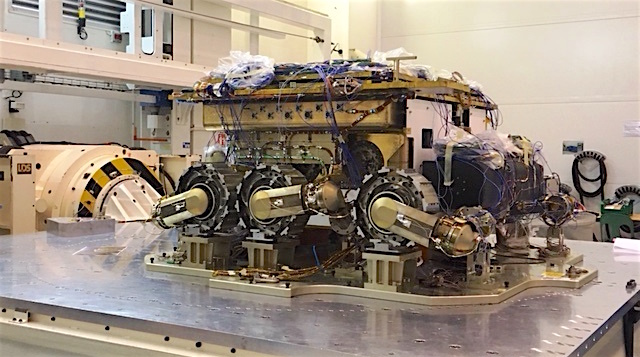
ExoMars_Rover_STM_20180519A representative model of the ExoMars rover that will land on Mars in 2021 is beginning a demanding test campaign that will ensure it can survive the rigours of launch and landing, as well as operations under the environmental conditions of Mars.

ExoMars is a joint endeavour between ESA and Roscosmos, with the Trace Gas Orbiter already at Mars and beginning its science mission to look for atmospheric gases that may be linked to active geological or biological processes. The orbiter will relay the data collected by the rover back to Earth, a capability already demonstrated with communications relays to NASA’s rovers currently on Mars.

The ExoMars rover will be the first of its kind to drill below the surface – down to 2 m – and determine if evidence of life is buried underground, protected from the destructive radiation that impinges the surface today.

Like any space mission, the rover’s mechanical structure, along with its electrical and thermal components and its interfaces with the scientific instruments, have to be tested to check they can survive their journey in space and operations at the destination.  [More at link]

Posted in Reports | Tagged , , , , , , , | Comments Off

Opportunity: Heavy traffic zone

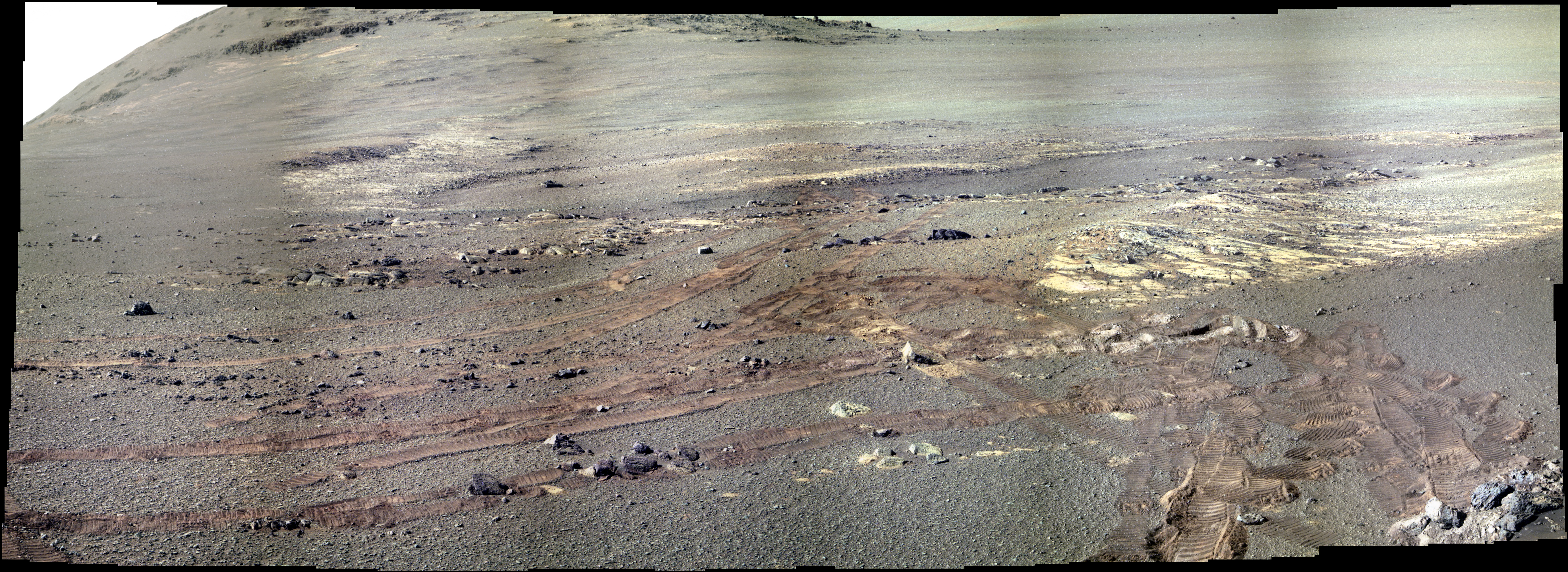
5096-5100-pancamFCSols 5096-5100 (!), May 27-30, 2018. A 12-frame Pancam composite (false color by Holger Isenberg) shows the heavily trafficked ground to the northeast of the rover’s current position. As mission scientists wished to examine one outcrop or rock after another in this part of Perseverance Valley, Opportunity drove back and forth across the valley channel. (If it looks like a terrestrial ATV has been busy here, that’s basically what Opportunity is, plus instruments.)  Click the image to enlarge it (10 MB).

Opportunity raw images, its latest mission status, location map, and atmospheric opacity, known as tau.

Posted in Reports | Tagged , , , , , , | Comments Off

MARCI weather report, May 21-27, 2018

MARCI-May-24-2018Shortly after the arrival of the Northern Autumnal Equinox last week, two large arcuate-shaped dust storm fronts swept eastward from Acidalia to Deuteronilus and further eastward towards the plains of Utopia. Looking to the southern highlands, dust lifting activity was at a local minimum for much of the week. A couple of tiny transient dust storms were spotted over Syria Planum and the slopes of Arsia Mons…. [More at link, including video]

Posted in Reports | Tagged , , , , , , , , , , , , , | Comments Off

HiRISE: Patches of snow

ESP_053324_2570The North Pole of Mars is surrounded by a vast sea of sand dunes. In this dune field, the dunes are covered by a seasonal cap of dry ice in the winter.

In early Martian summer, at the time we acquired this image, the dunes are almost free of their seasonal ice cover. Only pockets of ice protected in the shade most of the day remain.

Posted in Reports | Tagged , , , , , , , , | Comments Off

THEMIS: Dunes and glacial deposits in Moreux Crater

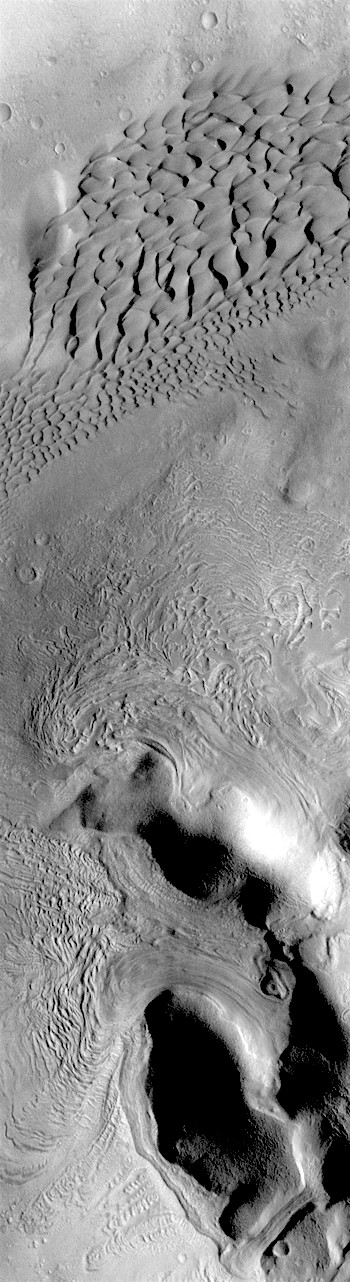
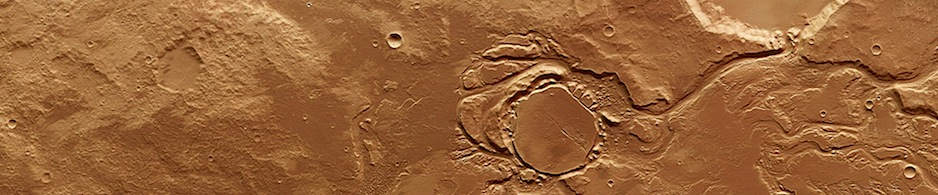
Dunes and flowing debris in Moreux Crater (THEMIS_IOTD_20180530)THEMIS Image of the Day, May 30, 2018. Moreux Crater is located in the northern part of Terra Sabaea. The crater has a region of sand dunes on the crater floor, as well as features that are similar to glacial topography on Earth. (Note that the light is coming from the right.)

The glacial flows occur from both the crater rim and the central crater peak. Glacial activity creates fine scale materials, which means the source of the dune sands may be local, rather than materials blown in from outside of the crater.

More THEMIS Images of the Day by geological topic.

Posted in Reports | Tagged , , , , , , , , , , , , , , | Comments Off