


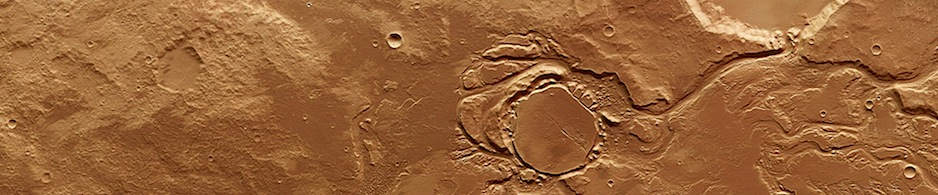
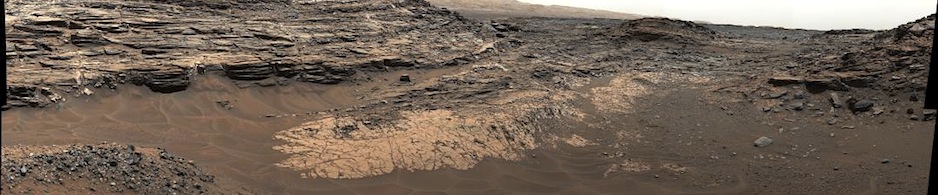
HiRISE: Dust ridges in Daedalia Planum

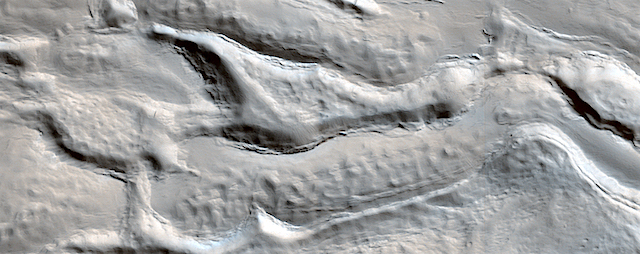
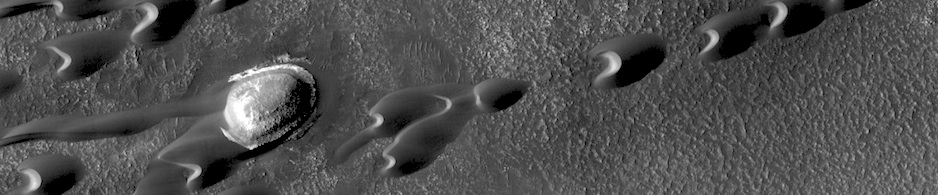
tumblr_olnm7yadzr1rlz4gso1_1280Dust ridges in Daedalia Planum. Beautiful Mars series.
Posted in Reports | Tagged , , , , , , , , , | Comments Off

THEMIS: Terra Cimmeria’s sand traps

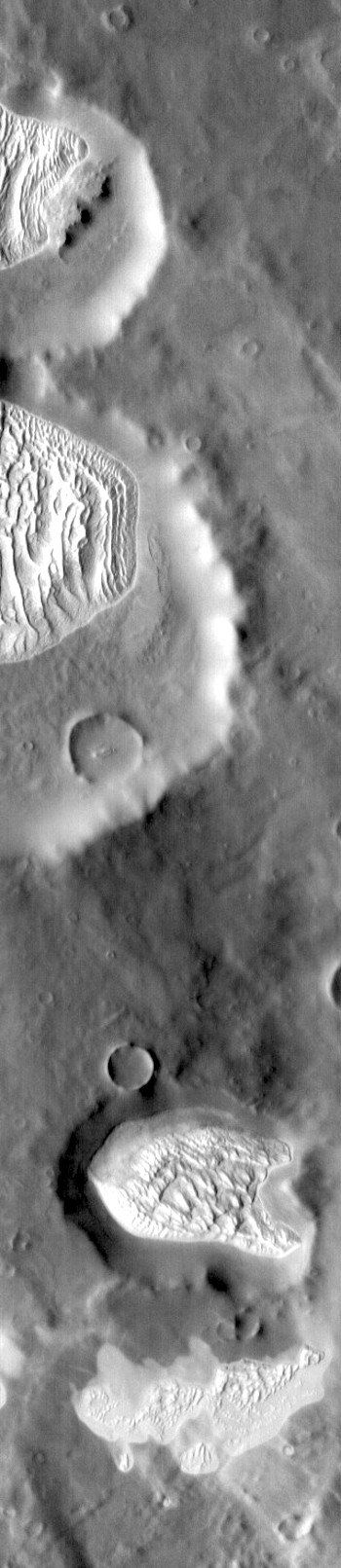
Wilderness of warm dunes in Cimmeria (THEMIS_IOTD_20170310)THEMIS Image of the Day, March 10, 2017. This infrared image covers a large swath of Terra Cimmeria, including numerous craters with dunes and dune fields on their floors, as well as dunes located on the plains between craters. Dunes with dark sand glow bright in thermal infrared because they absorb solar radiation.

More THEMIS Images of the Day by geological topic.

Posted in Reports | Tagged , , , , , , , , , , , | Comments Off

MARCI tracking back-to-back regional dust storms

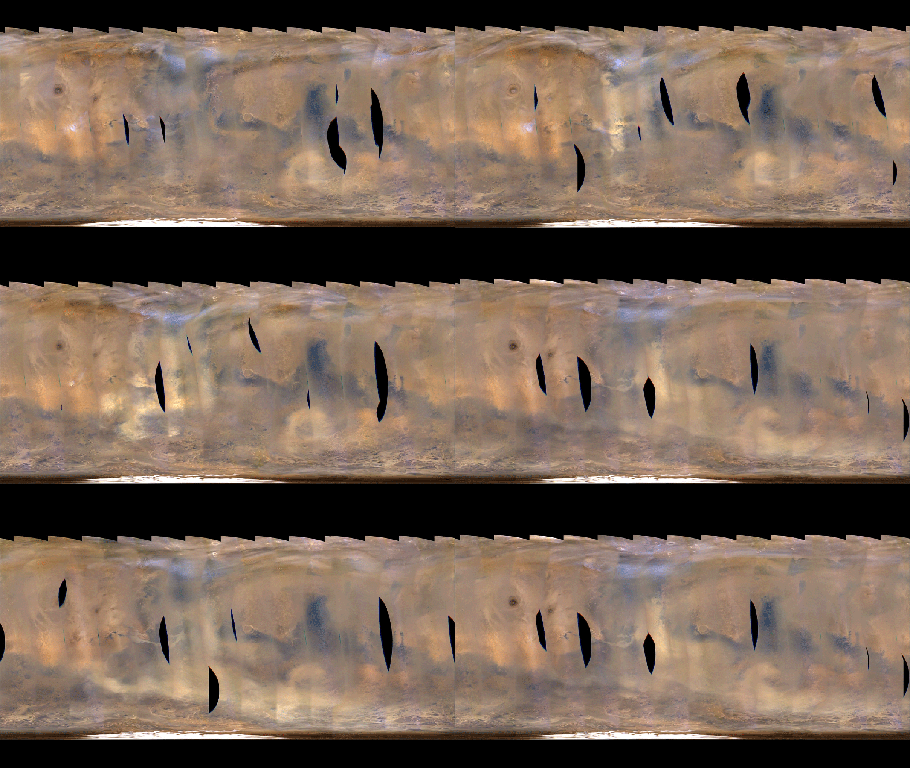
PIA21484

A regional dust storm currently swelling on Mars follows unusually closely on one that blossomed less than two weeks earlier and is now dissipating, as seen in daily global weather monitoring by NASA’s Mars Reconnaissance Orbiter.

Images from the orbiter’s wide-angle Mars Color Imager (MARCI) show each storm growing in the Acidalia area of northern Mars, then blowing southward and exploding to sizes bigger than the United States after reaching the southern hemisphere.

That development path is a common pattern for generating regional dust storms during spring and summer in Mars’ southern hemisphere, where it is now mid-summer.

“What’s unusual is we’re seeing a second one so soon after the first one,” said Mars meteorologist Bruce Cantor of Malin Space Science Systems, San Diego, which built and operates MARCI. “We’ve had orbiters watching weather patterns on Mars continuously for nearly two decades now, and many patterns are getting predictable, but just when we think we have Mars figured out, it throws us another surprise.” [More at link]

Posted in Reports | Tagged , , , , , , , , , , , , , | Comments Off

HiRISE: Seasonal flows on warm slopes

ESP_049032_1670Recurring Slope Lineae (called “RSL”) are seasonally-repeating dark flows that are active at the warmest times of the year. Some of these grow from the top of the steep slope downwards as expected for liquid or granular flows.

Others show different darkening patterns, which suggests different processes. Although HiRISE has acquired many images to monitor RSL sites, it still is not certain how these features form. [More at link]

Posted in Reports | Tagged , , , , , , , | Comments Off

Opportunity: Descending Cape Tribulation

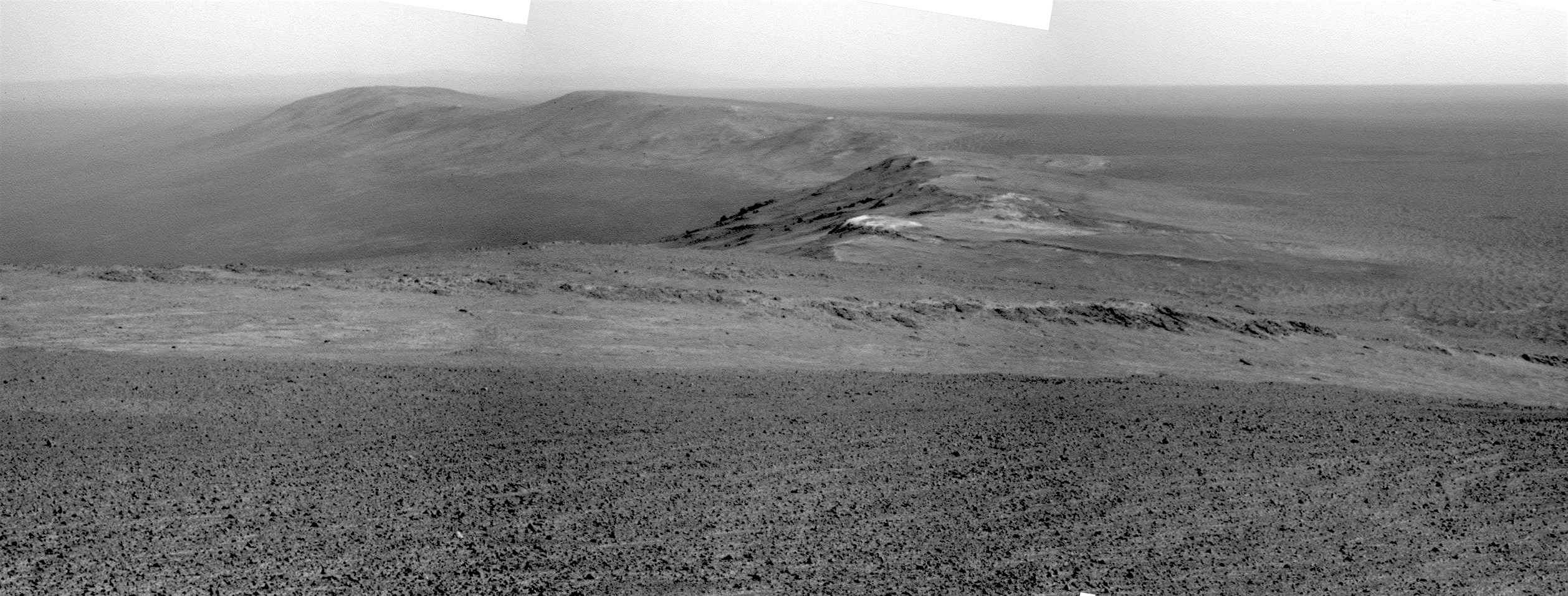
4665-pancam2Sol 4665, March 9, 2017. Having driven more than 20 meters (66 feet) south in the last day, Opportunity used its Pancam as a forward scouting imager. The three frames used for this composite were taken using Pancam’s red-sensitive filter, so the handful of places ahead on the downslope that appear light in tone have a relatively strong reddish tint. Note the low outcrop lying ahead. Click image to enlarge it.

Opportunity raw images, its latest mission status, a location map, and atmospheric opacity, known as tau.

Posted in Reports | Tagged , , , , , , | Comments Off

Curiosity update: Contact science on ‘Spring Point’

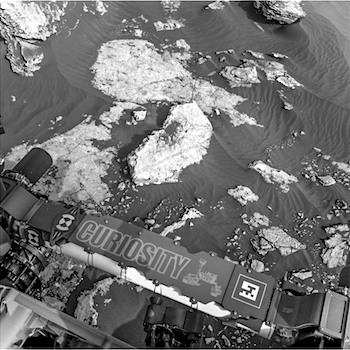
NLB_542210344EDR_F0611650NCAM00375M_Sol 1632-33, March 7, 2017, update by USGS scientist Ken Herkenhoff: The MSL rover drove a little over 40 meters on Sol 1630, to a place with bedrock blocks surrounded by dark sand.  There’s a bright block with parallel linear features in the arm workspace, so the tactical team decided to plan contact science on those features.  This made for an exciting day for me as MAHLI/MARDI uplink lead!  The MAHLI image through the closed dust cover that was planned for Sol 1630 was successfully acquired, so we’re planning to acquire a similar image of the APXS target “Spring Point” on Sol 1632.  MAHLI diagnostic images of its calibration target and more drill diagnostic tests are… [More at link]

Posted in Reports | Tagged , , , , , , , , , , , | Comments Off

HiRISE: Bedrock exposures in Juventae Chasma

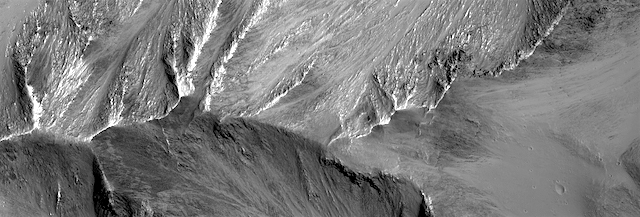
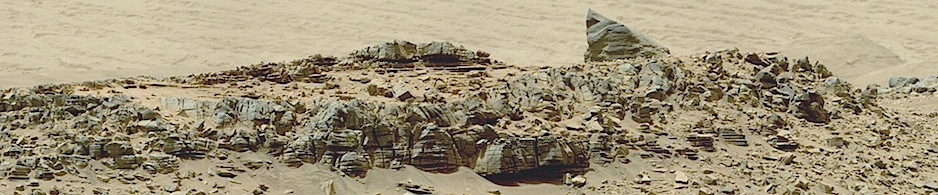
tumblr_olnlnlNqDS1rlz4gso1_1280Bedrock exposures in Juventae Chasma. Beautiful Mars series.

Posted in Reports | Tagged , , , , , , , , | Comments Off

THEMIS: Warm dunes glowing in Kaiser Crater

Warm dunes in Kaiser Crater (THEMIS_IOTD_20170309)THEMIS Image of the Day, March 9, 2017. This is an infrared image of Kaiser Crater and the dune field on the crater floor. Brighter tones in the image are warmer surfaces. The basaltic dunes are dark in the visible, but bright in infrared.

More THEMIS Images of the Day by geological topic.

Posted in Reports | Tagged , , , , , , , , , , | Comments Off

HiRISE: Icy flow in a crater

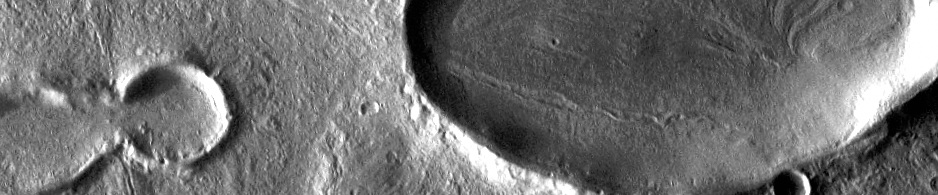
ESP_049028_2065The material on the floor of this crater appears to have flowed like ice, and contains pits that might result from sublimation of subsurface ice. The surface is entirely dust-covered today. There probably was ice here sometime in the past, but could it persist at some depth?

This crater is at latitude 26 degrees north, and near-surface ice at this latitude (rather than further toward one of the poles) could be a valuable resource for future human exploration. A future orbiter with a special kind of radar instrument could answer the question of whether or not there is shallow ice at low latitudes on Mars. [More at link]

Posted in Reports | Tagged , , , , , , , | Comments Off

MARCI weather report, Feb 27-March 5, 2017

feb-28-2017The major martian dust storm mentioned in the previous report gradually abated near the beginning of this past week. This left a large cloud of dust which stretched east to the region of southern Cimmeria. As the week progressed, the dust cloud slowly became less and less optically thick. Looking to the north, a few local-scale dust storms were spotted near Tempe and the Phlegra Montes. By the end of the week, an additional dust storm along the Acidalia storm-track became regional in size over Xanthe Terra. Equatorial water-ice clouds… [More at link, including video]

Posted in Reports | Tagged , , , , , , , , , , , , , | Comments Off