

Curiosity update: Examining Jewell

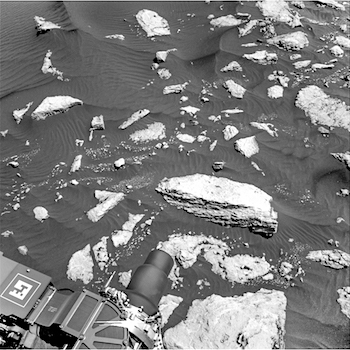
NRB_538115543EDR_F0601650NCAM00375M_Sol 1585, January 19, 2017, update by USGS scientist Ken Herkenhoff: After a 31-meter drive on Sol 1584, MSL is in position for contact science on a block of bedrock in front of the rover.  So, as MAHLI/MARDI uplink lead today I focused on planning a full suite of MAHLI images of a target named “Jewell” that appears to expose sedimentary structures.  The Sol 1585 plan also includes ChemCam and Right Mastcam observations of Jewell, a single Right Mastcam image of another bedrock exposure dubbed “Bernard Mountain,” and a Navcam dust devil survey.  The rover will then drive again and acquire images in the new location.  Later in the afternoon, Mastcam… [More at link]
Posted in Reports | Tagged , , , , , , , , , , | Comments Off

HiRISE: Changing dunes of Wirtz Crater

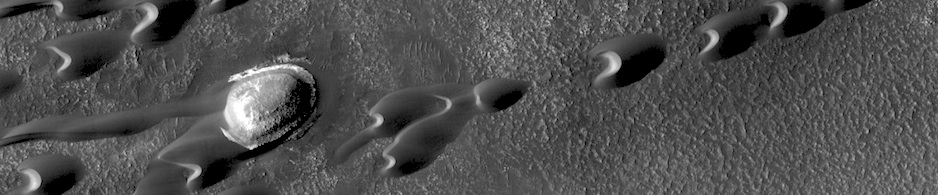
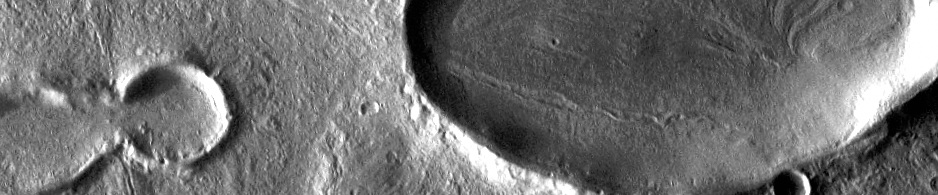
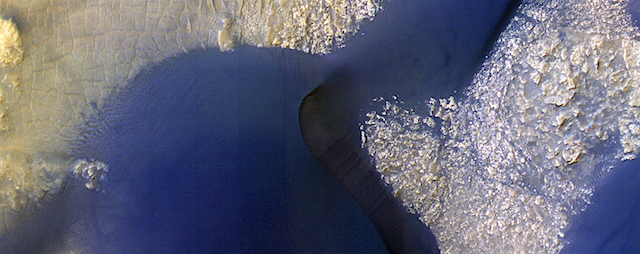
ESP_021603_1315The large dark feature is a classic Martian sand dune. Most sand on Earth is made from the mineral quartz, which is white and bright. On Mars, most sand is composed of dark basalt, a volcanic rock. For this reason, dunes on Mars are darker than those on Earth.

The dunes in this observation, within Wirtz Crater, are known as “barchans.” The steepest slope is on the eastern (right) side, partially in shadow, and represents the direction the dune is migrating as the sand is blown and transported by the wind…. [More at link]

Posted in Reports | Tagged , , , , , , , , , | Comments Off

Curiosity: South vista & Ireson Hill

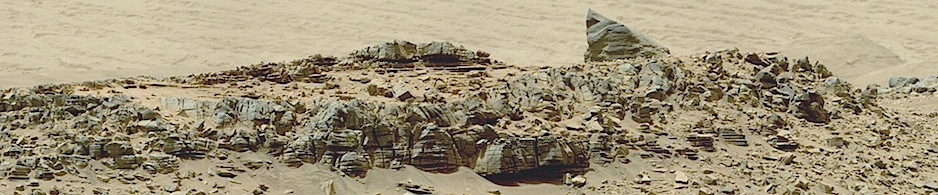
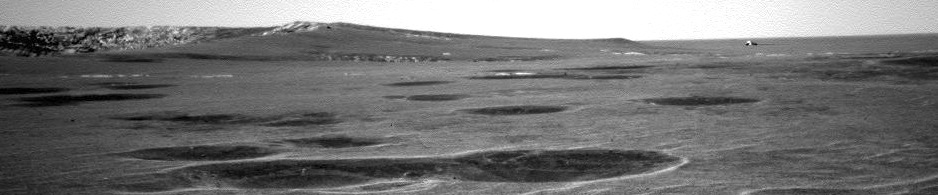
1584-navcam2Sol 1584, January 19, 2017. Curiosity drove some 30 meters (100 feet) south from yesterday’s position, and its sand-patch-dodging path has brought it slightly closer to Ireson Hill. Seen in the Navcam composite below, the hill is now about 100 meters (330 feet) away. Before the drive, the Navcam took a composite view looking south (above), from Mt. Sharp on the left to the edge of Ireson Hill at the extreme right. Both images enlarge when clicked.

Sol 1584 raw images (from all cameras), and Curiosity’s latest location.

1584-navcam

Posted in Reports | Tagged , , , , , , , , , | Comments Off

HiRISE: Landforms at end of Her Desher Vallis

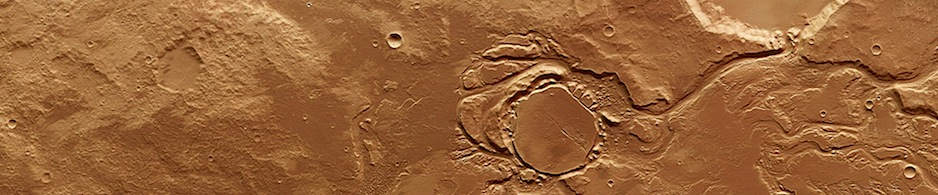
tumblr_ojwhmsBVXY1rlz4gso1_1280Landforms at west end of Her Desher Vallis. Beautiful Mars series.

Posted in Reports | Tagged , , , , , , , , | Comments Off

THEMIS: Gale Crater mound’s northern side

Gale Crater mound north side (THEMIS_IOTD_20170120)THEMIS Image of the Day, January 20, 2017. Today’s false color image shows part of the floor of Gale Crater and the northern side of Mt. Sharp (Aeolis Mons). The blue-colored areas on the crater floor are likely dunes made of basaltic sand.

The THEMIS VIS camera contains 5 filters. The data from different filters can be combined in multiple ways to create a false color image. These false color images may reveal subtle variations of the surface not easily identified in a single band image.

More THEMIS Images of the Day by geological topic.

Posted in Reports | Tagged , , , , , , , , , , , , , , , | Comments Off

NASA’s $2.4-billion plan to steal a rock from Mars

Mars1Ed. note: The following is an except from a story in Nature; full story here.

Adam Steltzner rose to engineering stardom in 2012, when NASA’s Curiosity rover plummeted to a perfect landing on Mars, thanks to a daring, fiery manoeuvre designed by his team. Now, all Steltzner wants to talk about is how to clean.

The object of his sanitary obsession is a dark-grey metallic tube about the size of his hand. It sits on a workbench inside a warehouse-like building at the Jet Propulsion Laboratory (JPL) in Pasadena, California, where Steltzner works as chief engineer for NASA’s next Mars rover. He needs the tube to be one of the cleanest objects ever created so that the rover can complete its mission.

As early as July 2020, the 1-tonne, 6-wheeled vehicle will blast off from Florida, carrying 43 such tubes on a 7-month trip to the red planet. Once it arrives, the rover will drive across the Martian surface and fill each tube with dirt, rock or air. Then it will seal the tubes, place them on the ground, and wait — for years, or possibly decades — for another spacecraft to retrieve them and fly them back to Earth. It will be humanity’s first attempt to bring back part of the red planet.

If all goes to plan, these will become the most precious extraterrestrial samples ever recovered. Tucked inside one of those metallic tubes could be evidence of life beyond Earth in the form of a microorganism, biominerals or organic molecules.

Which is why Steltzner and his team have to be very, very clean. Just one Earth cell or specks of other contaminants would ruin any chance of unambiguously detecting a Martian microbe…. [More at link, including video]

Posted in Reports | Tagged , , , , | Comments Off

HiRISE: Unusual gullied slope

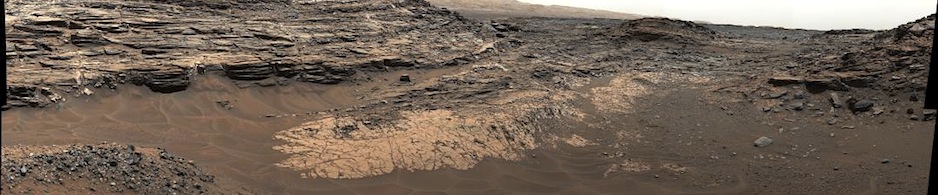
tumblr_ojwia0q58N1rlz4gso1_1280Unusual gullied slope in southern mid-latitudes. Beautiful Mars series.

Posted in Reports | Tagged , , , , , , , , , | Comments Off

Curiosity update: Touch and go at Frost Pond

NLB_538029632EDR_F0601422NCAM00375M_Sol 1584, January 18, 2017, update by USGS scientist Lauren Edgar: On Sol 1583 Curiosity drove 16 m, which set us up for touch-and-go contact science today.  I was the GKOP again, and it was a fun day of planning contact science and remote sensing.  The plan starts with a short APXS integration on the target “Frost Pond,” (seen in the middle of the above Navcam image) to investigate the chemistry of a typical Murray bedrock block.  Then we’ll take a full suite of MAHLI images on the same target.  Later in the plan we’ll acquire a ChemCam observation of “Frost Pond” for comparison, and we’ll also take a… [More at link]

Posted in Reports | Tagged , , , , , , , , | Comments Off

THEMIS: Rugged central peaks in Hale Crater

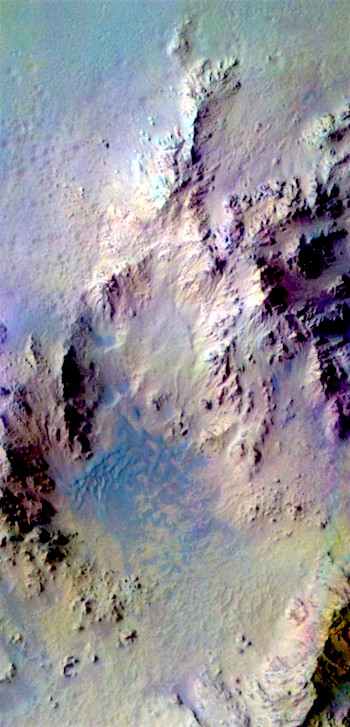
Rugged central peaks of Hale Crater (THEMIS_IOTD_20170119)THEMIS Image of the Day, January 19, 2017. Today’s false color image shows part of the interior of Hale Crater.

The THEMIS VIS camera contains 5 filters. The data from different filters can be combined in multiple ways to create a false color image. These false color images may reveal subtle variations of the surface not easily identified in a single band image.

More THEMIS Images of the Day by geological topic.

Posted in Reports | Tagged , , , , , , , , | Comments Off

HiRISE: Bedrock exhumed from the deep

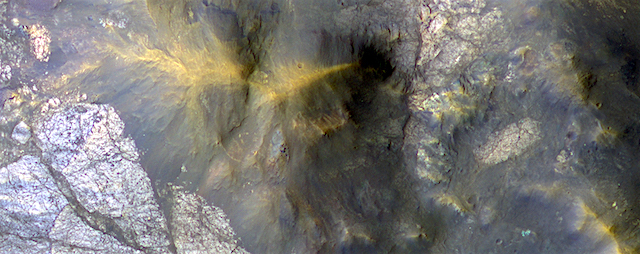
ESP_011523_1695Roadside bedrock outcrops are all too familiar for many who have taken a long road trip through mountainous areas on Earth. Martian craters provide what tectonic mountain building and man’s TNT cannot: crater-exposed bedrock outcrops.

Although crater and valley walls offer us roadside-like outcrops from just below the Martian surface, their geometry is not always conducive to orbital views. On the other hand, a crater central peak—a collection of mountainous rocks that have been brought up from depth, but also rotated and jumbled during the cratering process—produce some of the most spectacular views of bedrock from orbit. [More at link]

Posted in Reports | Tagged , , , , , , , , | Comments Off