





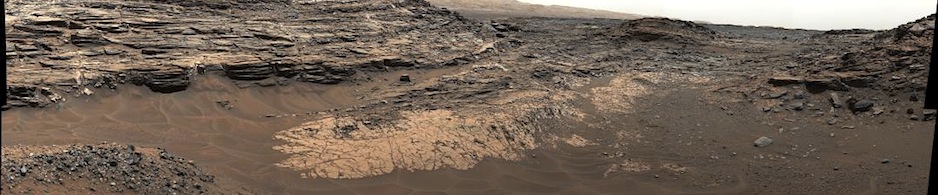
How Europe plans to land on Mars in 2021

2-decadesofattEurope has been trying to land on Mars since 2003, but none of the attempts have gone exactly according to plan. A couple of months ago, the ExoMars Schiaparelli landing demonstrator crashed onto the planet’s surface, losing contact with its mothership. However, the mission was partially successful, providing information that will enable Europe and Russia to land its ExoMars rover on the Red Planet in 2021.

Now European research ministers have finally agreed to give the mission the outstanding €400m it needs to go ahead. A lot is at stake as the rover is poised to uniquely drill under the harsh Martian surface to search for signs of past, or even present, life. With the best of human endeavour, we must learn, try again and not give up. As leader of the international Panoramic Camera team on the rover, which will among other things provide surface geological and atmospheric context for the mission, I am one of many scientists working very hard to make it work. PanCam is one of nine state-of-the-art instruments which will help us analyse subsurface samples. [More at link]
Posted in Reports | Tagged , , , , , | Comments Off

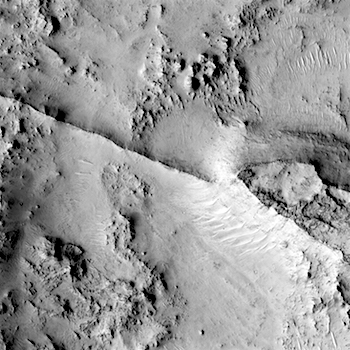
HiRISE: Ridge NW of Nili Fossae

tumblr_ohq2hkks3v1rlz4gso1_1280Ridge northwest of Nili Fossae. Beautiful Mars series.

Posted in Reports | Tagged , , , , , , , , , , | Comments Off

Curiosity: Ireson Hill

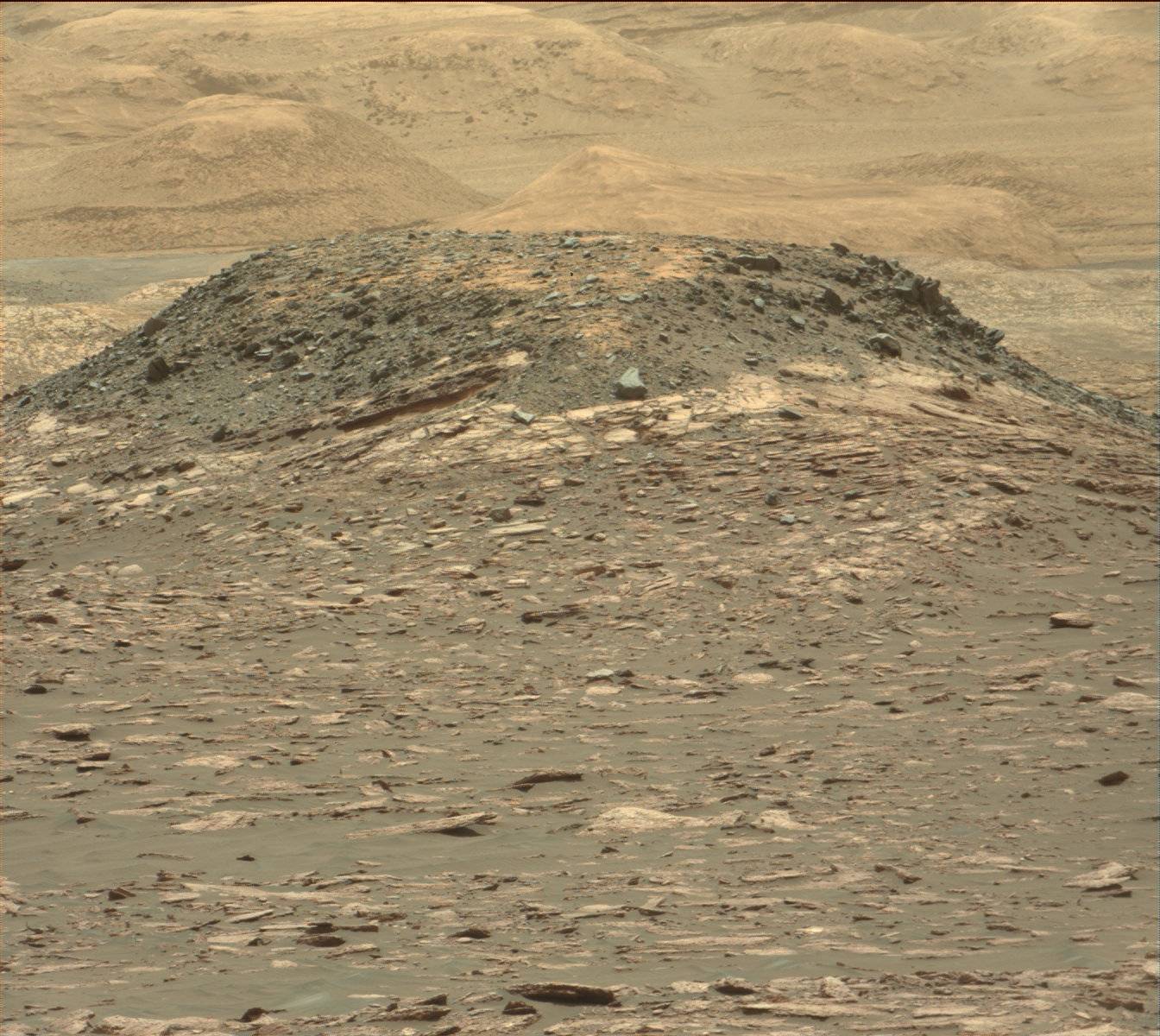
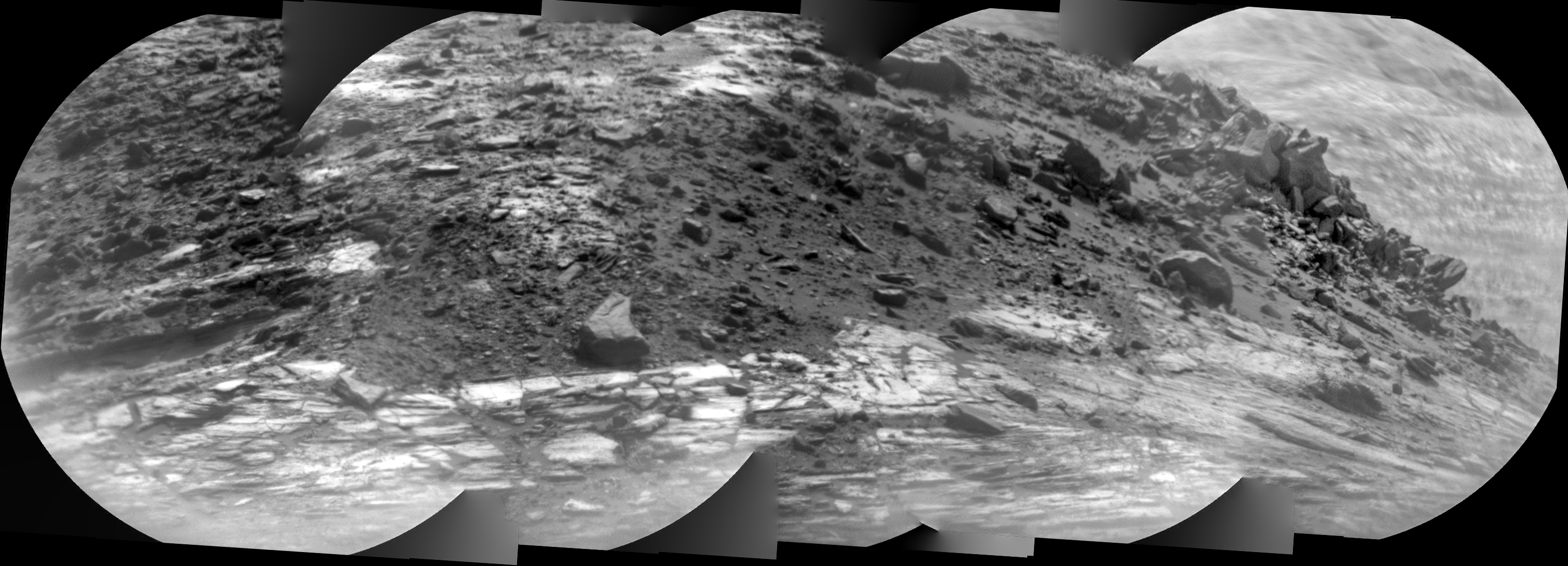
1539-rmi1539MR0079090000800035E01_DXXXSol 1539, December 4, 2016. Both the Mastcam (100mm lens) and the Remote Micro-Imager took aim at the low butte dubbed Ireson Hill. It lies to the southwest of Curiosity’s current position. Click either image to enlarge it.

Sol 1539 raw images (from all cameras), and Curiosity’s latest location.

Posted in Reports | Tagged , , , , , , , , , | Comments Off

THEMIS: Rubble and ridges in Melas Chasma

Canyon wall and debris in Melas Chasma (THEMIS_IOTD_20161205)THEMIS Image of the Day, December 5, 2016. Today’s VIS image shows part of the canyon wall of Melas Chasma. Landslides and “mass wasting” — the downslope movement of loose debris — have eroded the canyon walls and dumped a jumble of rocks on the floor of the canyon.

More THEMIS Images of the Day by geological topic.

Posted in Reports | Tagged , , , , , , , , , | Comments Off

Curiosity update: Targeted remote sensing

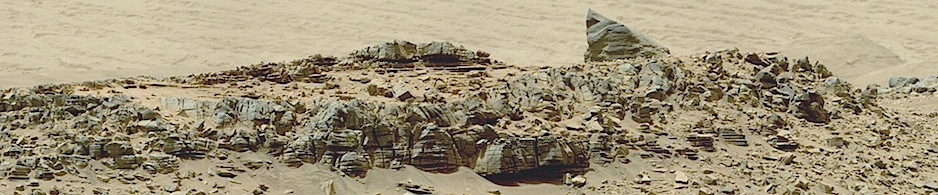
NLB_533853697EDR_F0592830NCAM00207M_Sol 1538-40, December 2, 2016, update by USGS scientist Lauren Edgar: The R[over] P[ilot]s are going to take a little more time to diagnose the drill fault before we drive or use the arm again, so today’s plan is focused on targeted remote sensing.  We’re still at the “Precipice” site, assessing the composition and sedimentary structures in the Murray bedrock and carrying out some long distance observations.  Today’s plan includes a long distance ChemCam RMI mosaic to monitor linear features observed from HiRISE and another RMI mosaic to investigate the stratigraphy exposed in a… [More at link]

Posted in Reports | Tagged , , , , , , , , , , | Comments Off

HiRISE: Catena on Alba Mons

tumblr_ohdgvlwjzP1rlz4gso1_1280Catena on Alba Mons. Beautiful Mars series.

Posted in Reports | Tagged , , , , , , , , , , | Comments Off

Curiosity update: Drill fault

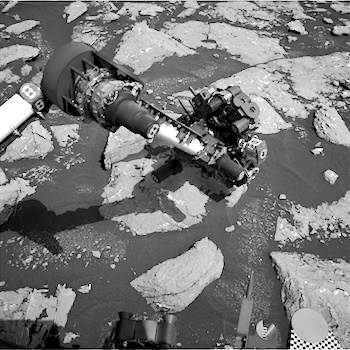
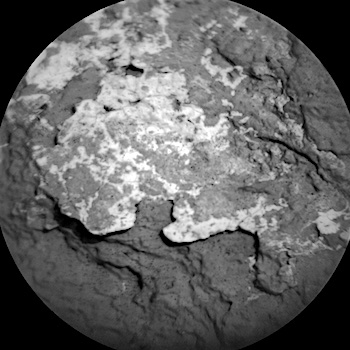
CR0_533227275PRC_F0592830CCAM02528L1Sol 1537, December 1, 2016, update by USGS scientist Ken Herkenhoff: Unfortunately, the much-anticipated rotary-only drilling experiment did not even start due to a drill fault that is currently being investigated.  This type of drill fault appears to be unrelated to the previous short circuits during percussion, but more study is needed.  So the tactical planning team had to scramble to put together a plan while the drill experts work to recover from this anomaly.  Luckily, the fault did not preclude non-drilling arm activities, so we picked the bright target “Thomas Bay” for contact science.  We were also able to fit a lot of… [More at link]

Posted in Reports | Tagged , , , , , , , , , , , , , , , , , | Comments Off

Early Mars climate changes driven by carbonate – silicate cycle

1-s2.0-S0012821X16304794-gr001Dramatic climate cycles on early Mars, triggered by buildup of greenhouse gases, may be the key to understanding how liquid water left its mark on the planet’s surface, according to a team of planetary scientists.

Scientists have long debated how deep canyons and extensive valley networks — like the kinds carved by running water over millions of years on Earth — could form on Mars some 3.8 billion years ago, a time many believe the planet was frozen.

The researchers suggest a glacier-covered early Mars could have experienced long warm periods, lasting up to 10 million years at a time, caused by a thick atmosphere of carbon dioxide and hydrogen.

The team, which published its findings [December 1] in the journal Earth and Planetary Science Letters, found the warming cycles would have lasted long enough, and produced enough water, to create the features.

“With the cycling hypothesis, you get these long periods of warmth that give you sufficient time to form all the different Martian valley networks,” said Natasha Batalha, graduate student, astronomy and astrophysics, Penn State. [More at links]

Posted in Reports | Tagged , , | Comments Off

THEMIS: Pit crater in Noachis Terra

Noachis Terra pit crater (THEMIS_IOTD_20161202)THEMIS Image of the Day, December 2, 2016. Today’s VIS image is located in Noachis Terra. The unnamed crater at the bottom of the image contains a central pit. Central features such as pits and peaks can provide information about both the impacted surface and the size of the meteorite.

More THEMIS Images of the Day by geological topic.

Posted in Reports | Tagged , , , , , , , , , | Comments Off

HiRISE: Third image of Schiaparelli crash site

ESP_048331_1780This is the third HiRISE image of the crash site of ESA’s Schiaparelli lander demonstration, and the second imaging capturing the lander site plus backshell and parachute in the central color stripe. [More at link]

Posted in Reports | Tagged , , , , , , , , , , , , | Comments Off