

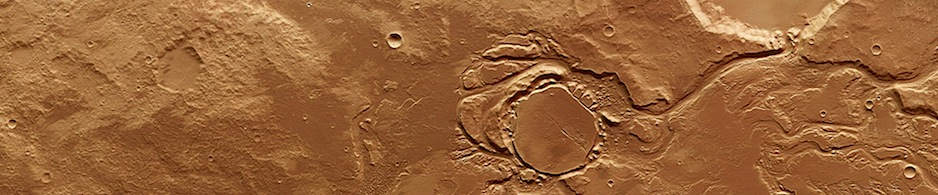
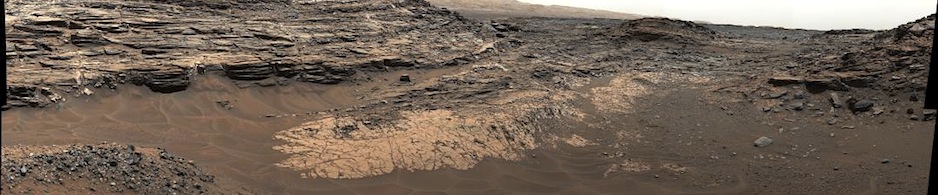

HiRISE: Possible chloride-rich deposits in Terra Sirenum

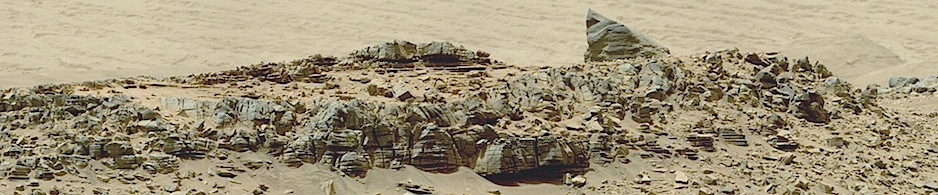
tumblr_onfohzmljM1rlz4gso2_1280Possible chloride-rich deposits in Terra Sirenum. Beautiful Mars series.
Posted in Reports | Tagged , , , , , , , , | Comments Off

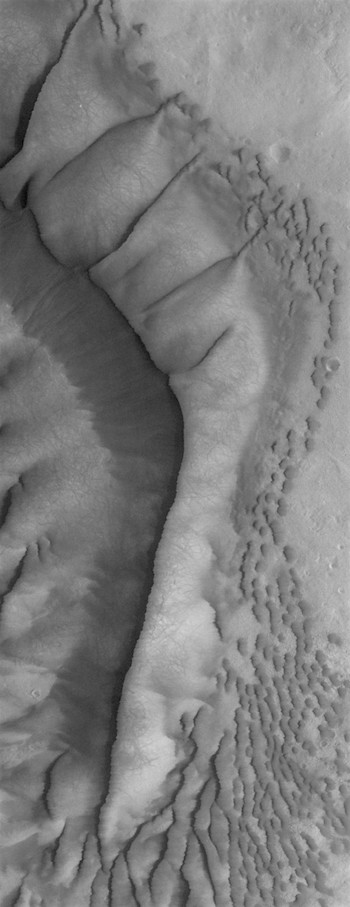
THEMIS: Gullies on a big dune

Gullies and dunes in Russell Crater (THEMIS_IOTD_20170327)THEMIS Image of the Day, March 27, 2017. Today’s VIS image shows part of the large dune form on the floor of Russell Crater. The big dune is scarred by gullies, with little dunes gathering at the gullies’ ends.

More THEMIS Images of the Day by geological topic.

Posted in Reports | Tagged , , , , , , , , , , | Comments Off

Curiosity update: Approaching the dune edge

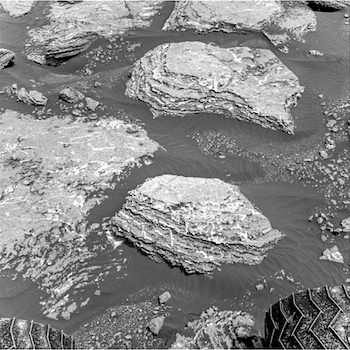
NRB_543623010EDR_F0620000NCAM00289M_Sol 1647-49, March 24, 2017, update by USGS scientist Ken Herkenhoff: The traction control test went well, and MSL drove over 30 meters on Sol 1646.  The rover will be busy this weekend with lots of remote sensing, arm work, and a drive onto the edge of the dune.  On Sol 1647, Left Mastcam will take a 360-degree panorama and Right Mastcam will acquire a 17×3 mosaic of the edge of the sand dune, which was named “Ogunquit Beach.”  Then ChemCam and Right Mastcam will observe bedrock targets “Damariscotta Lake,” “Mount Katahdin,” and “Boothbay Harbor.”  Late that afternoon, the arm will be unstowed for drill diagnostic tests and a full suite of MAHLI images on another bedrock target dubbed “Halftide Ledge.”  APXS will then be placed on the same target for… [More at link]

Posted in Reports | Tagged , , , , , , , , , , , , , | Comments Off

HiRISE: Dust devil tracks on southern crater rim

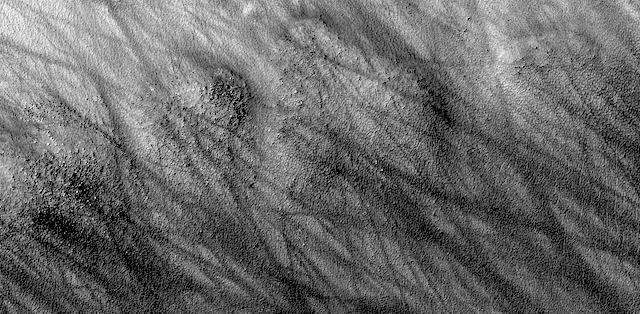
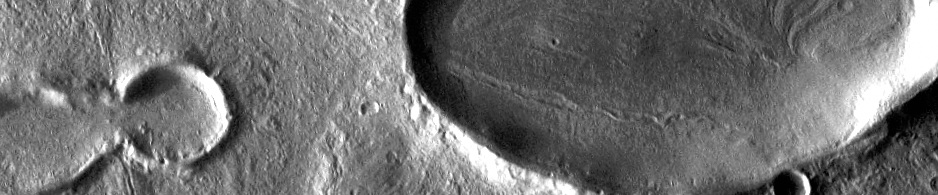
tumblr_ombnjbasBj1rlz4gso1_1280Southern crater rim. Beautiful Mars series.

Posted in Reports | Tagged , , , , , , , | Comments Off

Curiosity: Edge of Ogunquit Beach

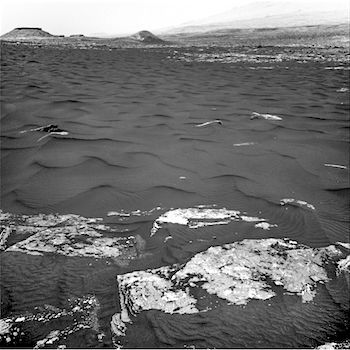
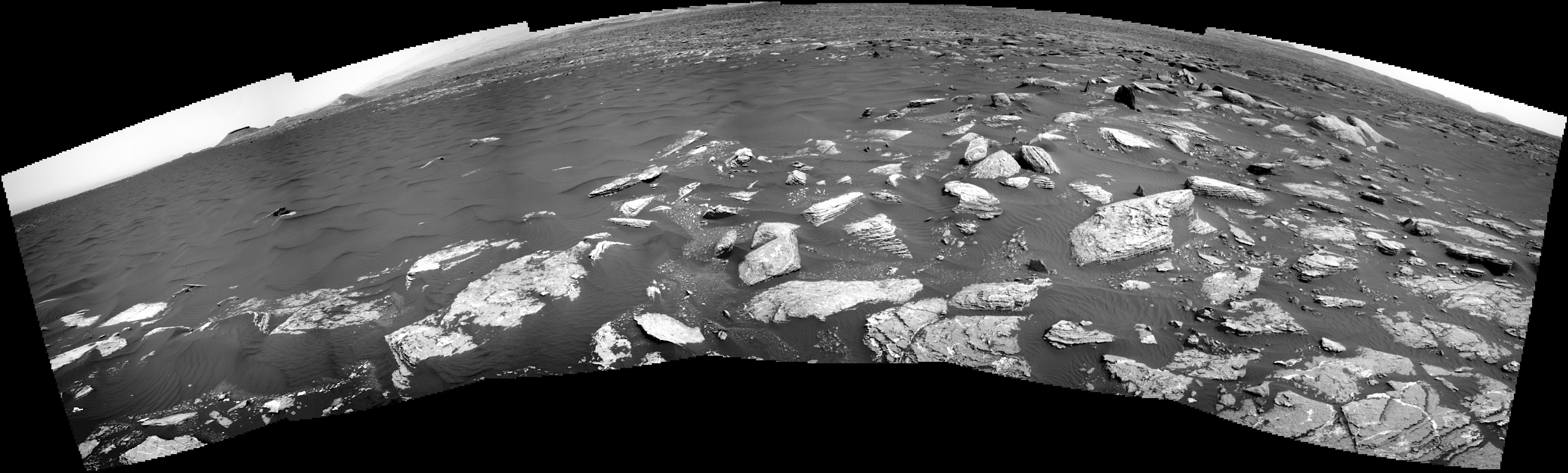
1646-navcamSol 1646, March 24, 2017. Curiosity drove about 30 meters (100 feet) to the east-northeast. This placed the rover close to the edge of a large sand patch where it can investigate the dune sand and dune ripples at the area dubbed Ogunquit Beach. Click the image to enlarge it.

Sol 1646 raw images (from all cameras), and Curiosity’s latest location.

Posted in Reports | Tagged , , , , , , , , , , , | Comments Off

THEMIS: Gale Crater & Mt. Sharp in false color

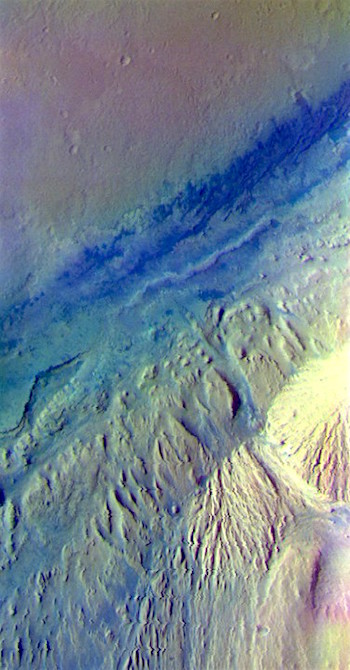
Gale Crater and Mount Sharp false color (THEMIS_IOTDS_20170324)THEMIS Image of the Day, March 24, 2017. Today’s false color image shows part of Gale Crater, the home of Curiosity Rover. The rover has driven about 10 miles (16 km) from where it landed and is currently traversing across the blue band (which is sand dunes) on its way to Mt. Sharp at lower right.

The THEMIS VIS camera contains 5 filters. The data from different filters can be combined in multiple ways to create a false color image. These false color images may reveal subtle variations of the surface not easily identified in a single band image.

More THEMIS Images of the Day by geological topic.

Posted in Reports | Tagged , , , , , , , , , , , , , , , | Comments Off

Opportunity: Rolling southward

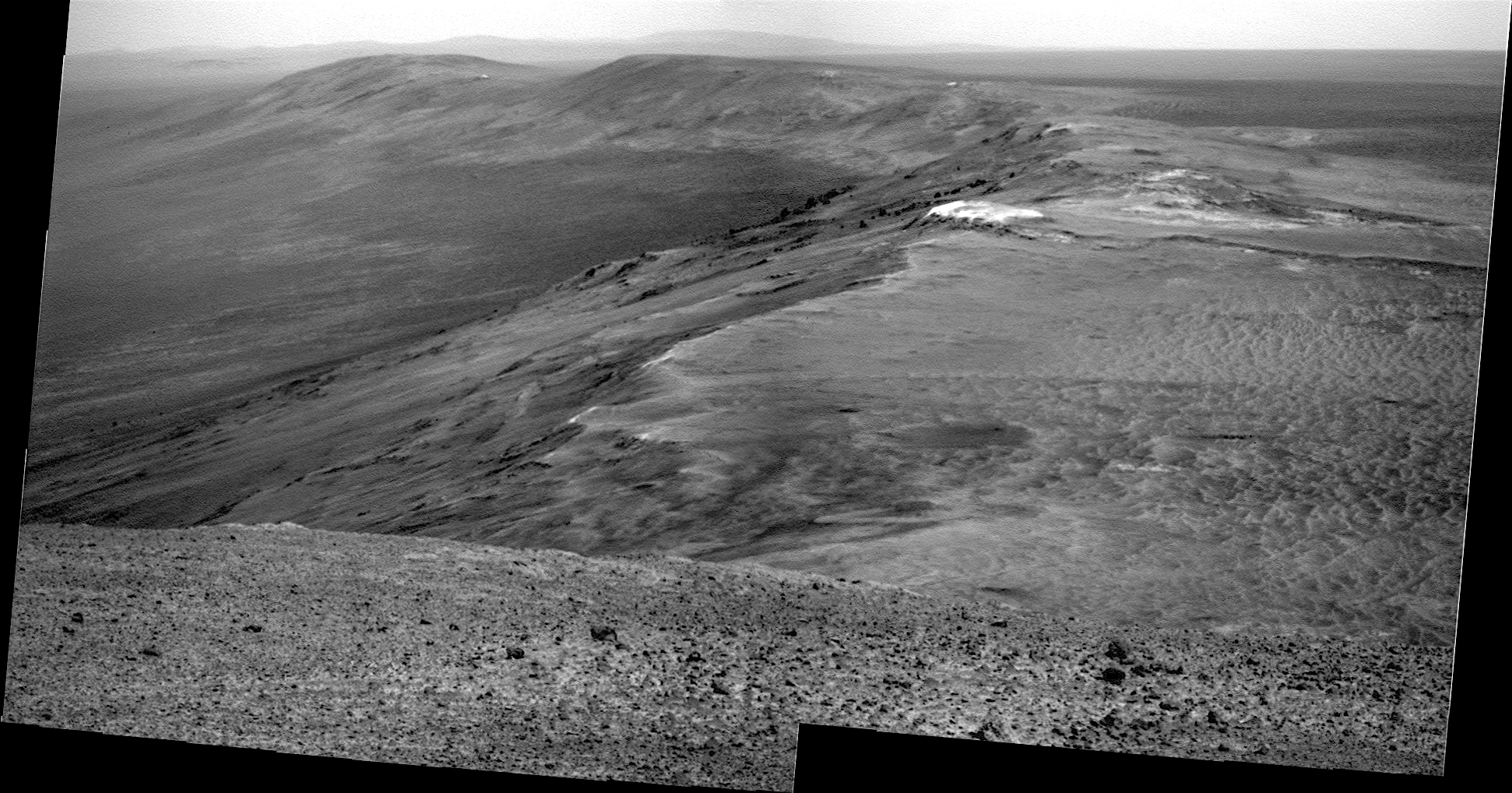
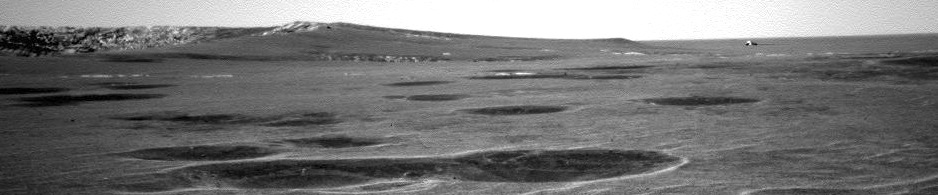
4679-pancamSol 4679, March 23, 2017. After Opportunity drove about 30 meters (100 feet) farther south, two Pancam frames scouted the landscape ahead. The bright mesa (dubbed Winnemucca) is a point of interest; while it may simply be covered with bright dust, its nature should become clearer as Opportunity draws closer to it. On the left side of the horizon, some overlapping hill profiles are beginning to appear, as dustiness in the air gradually clears. These are likely parts of the rim and ejecta apron of Iazu Crater. Click the image to enlarge it.

Opportunity raw images, its latest mission status, a location map, and atmospheric opacity, known as tau.

Posted in Reports | Tagged , , , , , , , | Comments Off

ExoMars: TGO aerobraking, ‘So far, so good’

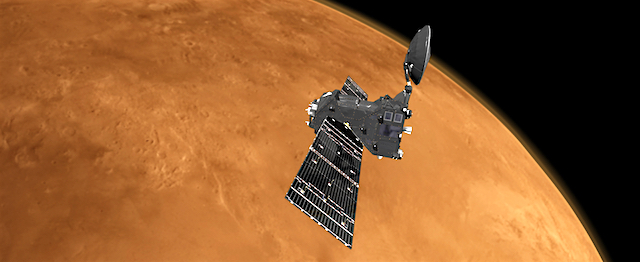
ExoMars2016_TGO_20150625-640Aerobraking progress as of 22 March:
To date, periapsis passage speed reduced by 33 cm/sec

Still to go: 99,967 cm/sec

There’s news from the ExoMars/TGO mission control team at ESOC following the first ten days of the ‘walk-in’ to aerobraking, and it’s good; or, to paraphrase the ever-cautious and risk averse engineers who fly around Mars: so far, so good! #hang10

So far, aerobraking is proceeding just as planned and we are very happy with the performance of the spacecraft and its progress through the Martian atmosphere,” says Deputy Spacecraft Operations Manager Silvia Sangiorgi.

To recap: Following months of extremely detailed planning by the mission control team at ESOC, the science team at ESAC, the ExoMars project team at ESTEC and industry, aerobraking began on 15 March with a thruster burn – one of seven that will begin lowering TGO’s altitude at periapsis (height of closest approach above the surface) step-wise to just 113 km.

Already, it is ‘feeling’ the wispy faint drag due to the atmosphere of Mars, and this is what the mission controllers want… [More at link]

Posted in Reports | Tagged , , , , , , , | Comments Off

Curiosity update: Traction control driving

NRB_543533452EDR_F0613226NCAM00312M_Sol 1646, March 23, 2017, update by USGS scientist Ken Herkenhoff: MSL drove a little over 20 meters on Sol 1645, toward the big sand dune to the east that is the subject of a science campaign that will hopefully start next week.  Another drive toward the east is planned for Sol 1646, with post-drive imaging to set up for contact science.  The drive will include the first use on Mars of traction control software that’s been tested and fine-tuned in JPL’s Mars Yard since last April.  This new software allows the rover to drive “softer,” meaning that when the rover detects that a wheel is driving over a rock, it slows the other five wheels to avoid pushing the wheel into the rock while the wheel… [More at link]

Posted in Reports | Tagged , , , , , , , , , , | Comments Off

HiRISE: Dunes of the Southern Highlands

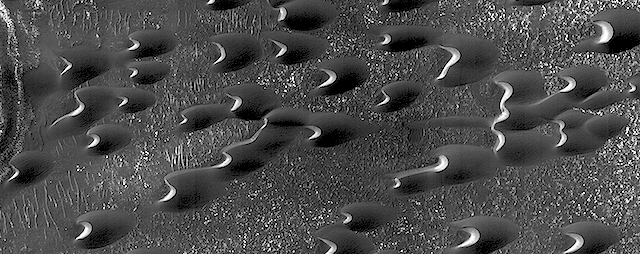
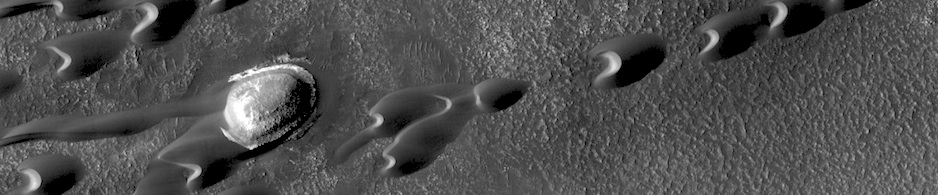
ESP_049371_1380Sand dunes are scattered across Mars and one of the larger populations exists in the Southern hemisphere, just west of the Hellas impact basin. The Hellespontus region features numerous collections of dark, dune formations that collect both within depressions such as craters, and among “extra-crater” plains areas.

This image displays the middle portion of a large dune field composed primarily of crescent-shaped “barchan” dunes. Here, the steep, sunlit side of the dune, called a slip face, indicates the down-wind side of the dune and direction of its migration. Other long, narrow linear dunes known as “seif” dunes are also here and in other locales to the east. [More at link]

Posted in Reports | Tagged , , , , , , , , , , | Comments Off