

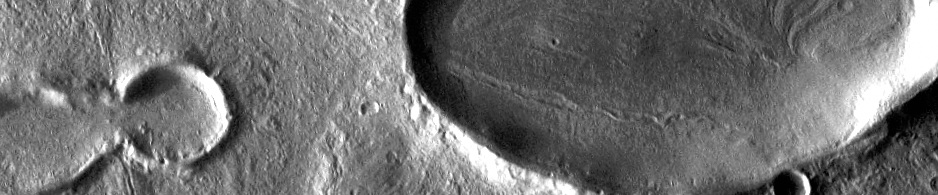


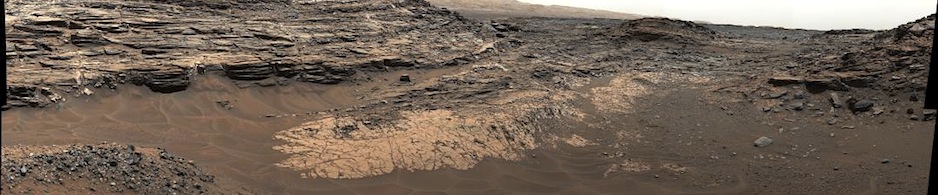
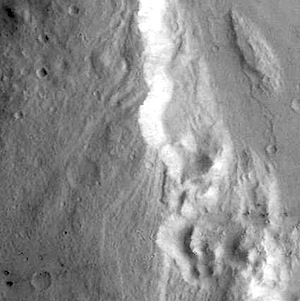
 THEMIS Image of the Day, August 28, 2014. This VIS image shows a portion of Ares Vallis.
More THEMIS Images of the Day by geological topic.
THEMIS Image of the Day, August 28, 2014. This VIS image shows a portion of Ares Vallis.
More THEMIS Images of the Day by geological topic.
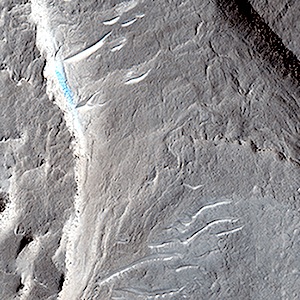 One of the important roles of HiRISE is to take high resolution images of potential landing sites for future landing missions. This image is of an area called Aram Dorsum (also known by its old name, Oxia Palus) that has been suggested for the 2018/2020 ExoMars Rover, because it contains an ancient, exhumed alluvial system. Imaging is needed both to check for boulder fields and other obstacles, as well as checking the scientific justification for choosing a site… [More at link]
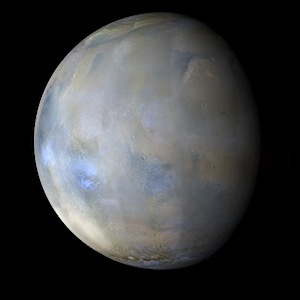 This past week brought the arrival of the Martian northern autumn and southern spring seasons. Along with the autumnal equinox came extensive dust lifting was across northern mid-to-high latitudes, leading to regional storm activity that spanned from Acidalia to Utopia. Suspended dust haze… [More at link, including video]
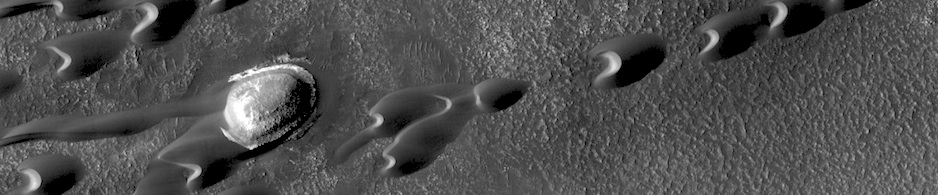
 Seasonal sublimation site. Beautiful Mars series.
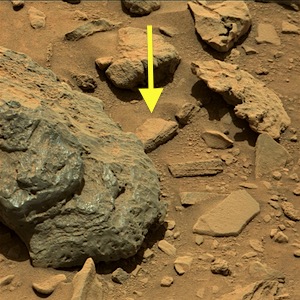 Sol 730, August 26, 2014. Both the Mastcam and ChemCam imaged a large, grayish rock with a rounded, relatively smooth, and glassy surface. Mastcam used its 100mm lens to image the rock and its surroundings (right).
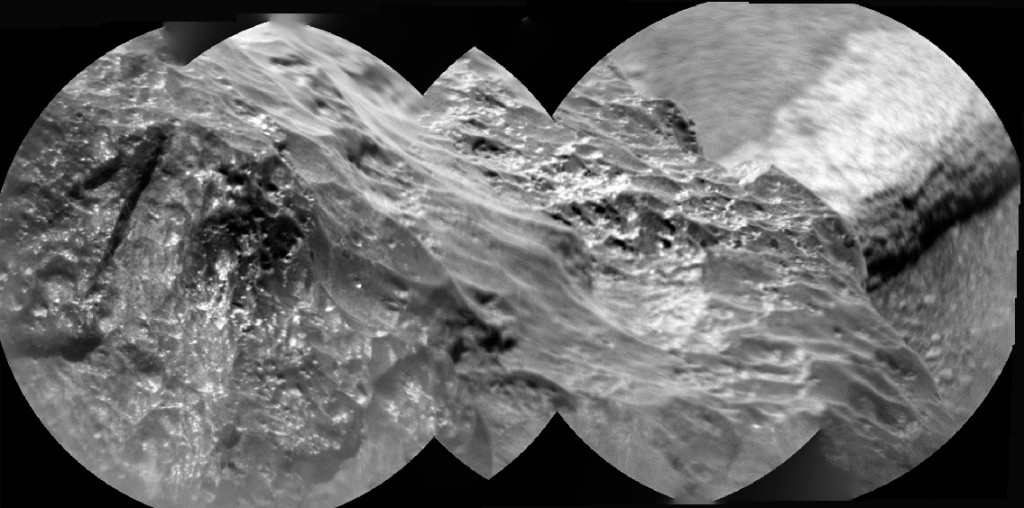
ChemCam shot a mosaic of images across the rock (below). A visual link is provided by the flat, angular rock (yellow arrow) resting on the sand in the center of the Mastcam image; this rock also appears, out of focus, at right in the ChemCam mosaic, which combines five images.
 Sol 730 raw images (from all cameras), and Curiosity’s latest location map.
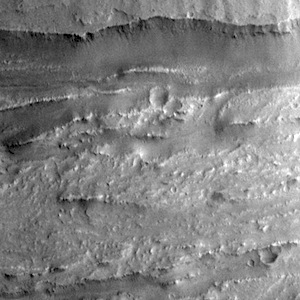 THEMIS Image of the Day, August 27, 2014. This VIS image shows a portion of Ravi Vallis.
More THEMIS Images of the Day by geological topic.
 Eroded scarps in Cerberus Fossae. Beautiful Mars series.
 From Emily Lakdawalla’s blog at The Planetary Society: “Shooting video of a lumpy moon crossing the Sun and turning it into a giant googly eye is not a new activity for Curiosity, but I get a fresh thrill each time I see one of these sequences downlinked from the rover. A big pile of data from the most recent Phobos transit just landed on Earth, and I had to assemble them into an animation and share it with you…” [More at link]
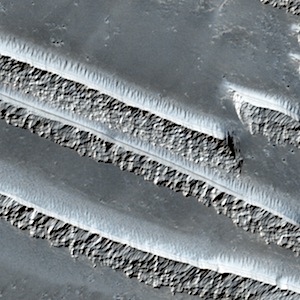 Dust ridges in Tharsis; the length of the top ridge in the full-resolution closeup is about 293 meters (961 feet).
Beautiful Mars series.
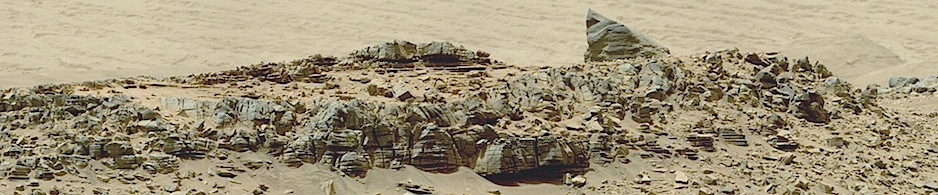
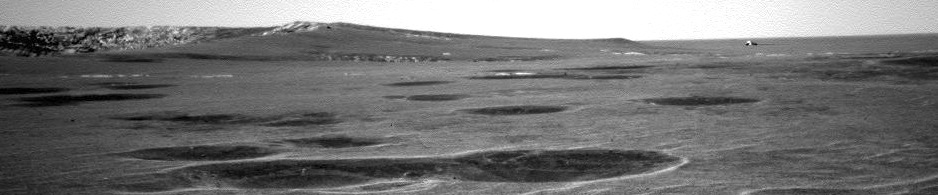
 Sol 729, August 24, 2014. The Mastcam’s wide-angle imager shoots a portrait of a shallow crater approximately 50 meters (160 feet) wide lying to the southwest of Curiosity. As noted below, this will be the rover’s next waypoint (four-frame Mastcam composite).
Sol 729 raw images (from all cameras), and Curiosity’s latest location map.