HiRISE: Pair of new impact craters

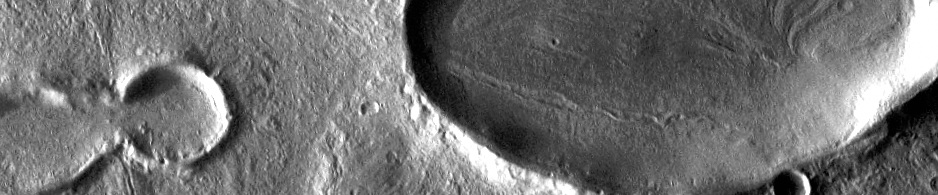
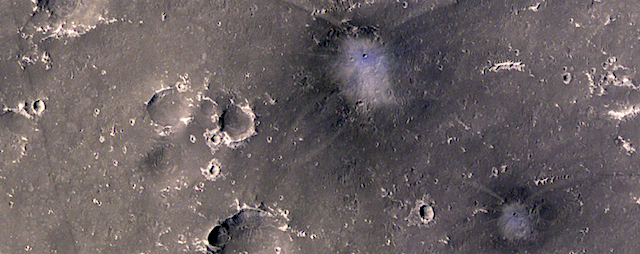
ESP_053653_1850MRO has discovered over 700 new impact sites on Mars. Often, a bolide breaks apart in the atmosphere and makes a tight cluster of new craters.

Here we see just two new craters, both with the same distinctive pattern of relatively blue (less red) ejecta surrounded by a dark blast zone (where dust has been removed or disturbed), and with arcing patterns extending northwest and northeast. This pattern indicates an oblique impact angle with the bolide coming from the north. [More at link]

Posted in Reports | Tagged , , , , , , , | Comments Off

Curiosity: Duluth in full color

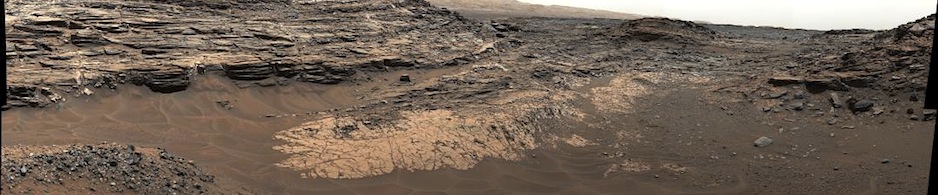
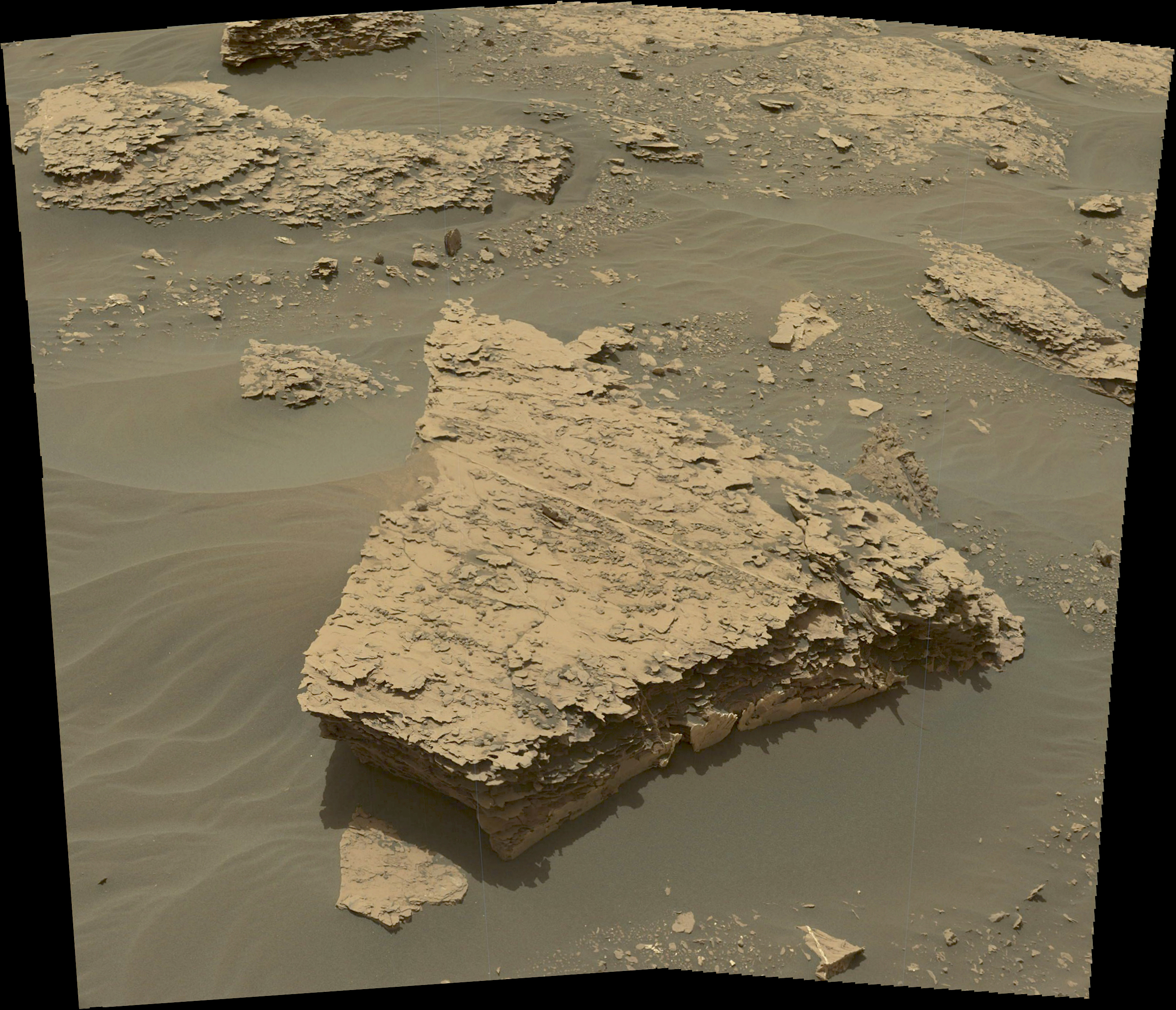
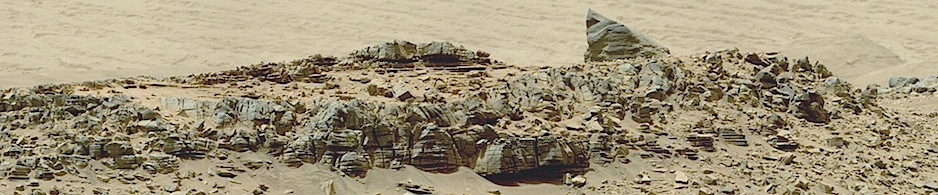
2052-mastcam34Sol 2052, May 15, 2018. The Mastcam used its 34mm optics to make a four-frame composite of the current target, Duluth, which has a thinly layered and delicately eroded structure. Click the image to enlarge it.

Sol 2052 raw images (from all cameras), and Curiosity’s latest location.

Posted in Reports | Tagged , , , , , , , , , | Comments Off

Curiosity update: Bump to Duluth

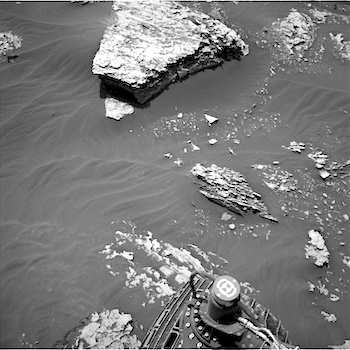
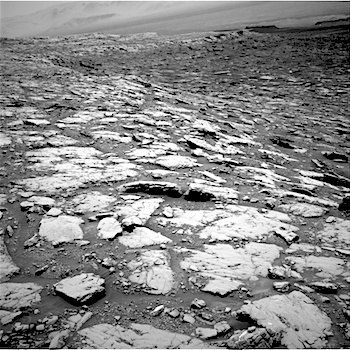
NLB_579659193EDR_F0701668NCAM00312M_-br2Sol 2053, May 15, 2018, update by MSL scientist Rachel Kronyak: A successful drive on Sol 2052 brought Curiosity within bumping distance of what will likely be our next intended drill target. The science team named this target “Duluth.” Duluth is a beautifully exposed Murray formation block visible in the Navcam image above. From our current location, we have a really nice vantage point of both the top and sides of the Duluth block. Analyzing blocks that have this kind of 3-D expression gives us a great opportunity to assess the full architecture of the rock.

Today we planned Sol 2053, which includes a science block prior to our bump. In the science block, we’ll acquire several ChemCam LIBS rasters on targets “Pine Mountain” and “Windigo,” both of which are… [More at link]

Posted in Reports | Tagged , , , , , , , , , , , | Comments Off

Organic matter in acidic terrestrial stream suggests where to look for life on Mars

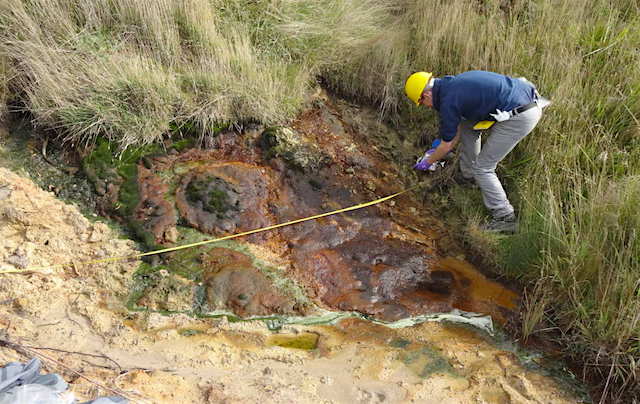
measure--tojpeg_1526313944944_x2By studying streams on the UK coast, experts have calculated how much organic matter we might find on Mars, and where to look.

Dorset is home to highly acidic sulphur streams that host bacteria that thrive in extreme conditions. One such environment, in St Oswald’s Bay, mimics the conditions on Mars billions of years ago. Now, scientists from Imperial College London have found ancient traces of fatty acids – key building blocks of biological cells – in Dorset’s acidic streams. [The study was published in Nature Scientific Reports.]

Because the environment is so similar to that of Mars during its middle-ages, the findings hint that life might once have existed on the Red Planet.

Using Dorset as Mars’ template, study co-author Professor Mark Sephton from Imperial’s Department of Earth Science & Engineering and colleagues examined organic matter preserved in St Oswald’s Bay’s rock deposits.

They found that the Bay’s iron-rich mineral goethite hosts many microbes as well as traces of their fossilised organic remains.

Goethite transforms to haematite – a mineral that’s very common on Mars and gives the planet its red colour. Professor Sephton said: “We thought that if these iron-rich minerals harbour traces of life on Earth, then they might hold clues to past microbial life on the Red Planet.” [More at links]
Posted in Reports | Tagged , , , , | Comments Off

HiRISE: Barchan Pac-Man

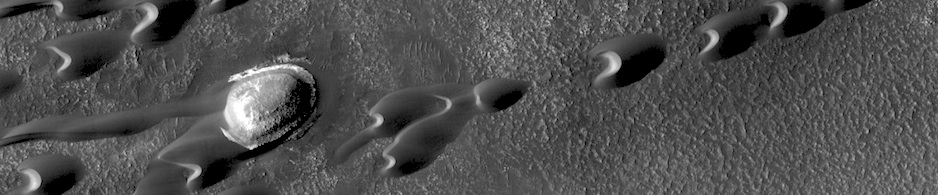
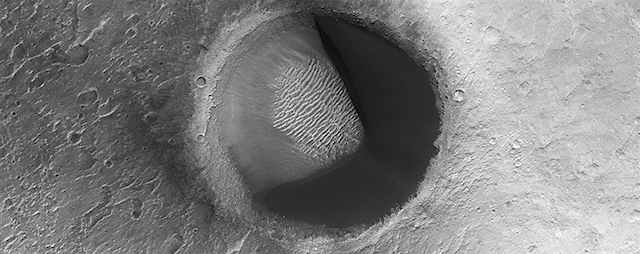
ESP_054515_1930Barchan sand dunes are common on Mars and often form vast dune fields within very large (tens to hundreds of kilometers) impact basins. The regions upwind of barchans are usually devoid of sandy bedforms, so if you were walking in a downwind direction, then the barchans would seem to appear out of nowhere.

As you walk downwind, you would notice the barchans link up (“joining arms”) and eventually slope into featureless sand sheets. We call this progression of dunes a “Herschel-type dune field” named after the first place this sequence was described: Herschel Crater.

But here is something interesting: a barchan dune filling the upwind portion of a small impact crater in a Pac-Man-like shape. This “dune-in-a-crater” s nearly at… [More at link]

Posted in Reports | Tagged , , , , , , , , , | Comments Off

Mars 2020: Rover to carry experimental helicopter

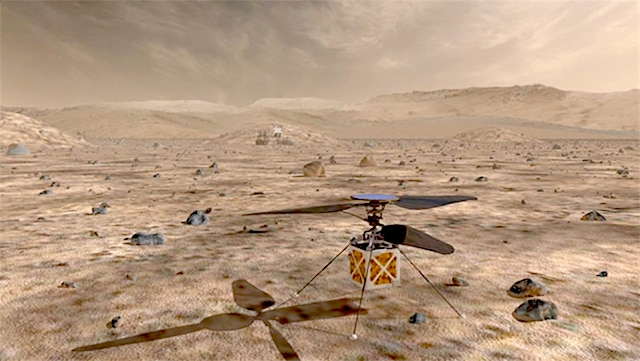
helicopter20180511-16NASA is sending a helicopter to Mars.

The Mars Helicopter, a small, autonomous rotorcraft, will travel with the agency’s Mars 2020 rover mission, currently scheduled to launch in July 2020, to demonstrate the viability and potential of heavier-than-air vehicles on the Red Planet.

“NASA has a proud history of firsts,” said NASA Administrator Jim Bridenstine. “The idea of a helicopter flying the skies of another planet is thrilling. The Mars Helicopter holds much promise for our future science, discovery, and exploration missions to Mars.” [More at link]

Posted in Reports | Tagged , , , , | Comments Off

THEMIS: Curiosity’s home, Gale Crater

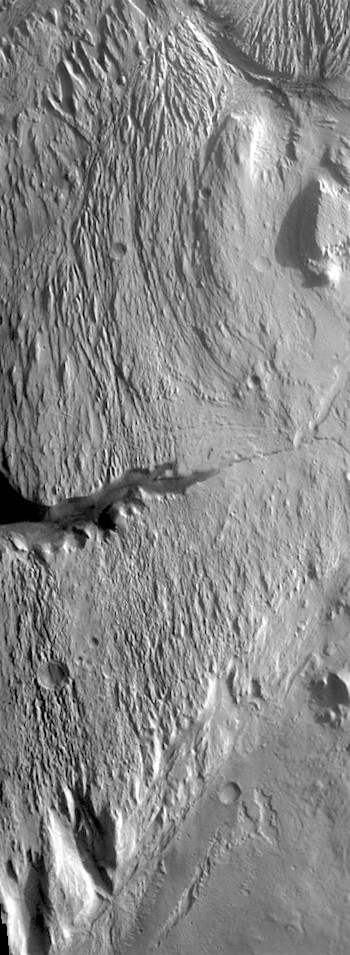
Curiosity's home, Gale Crater (THEMIS_IOTD_20180516)THEMIS Image of the Day, May 16, 2018. This VIS image shows much of the same location as yesterday’s image. Gale Crater is the home of the Curiosity Rover. The rover landed in August of 2012 and has been exploring the crater for the past 6 Earth years (3 Mars years). The goal of the mission is to climb onto the layered deposit in the center of the crater to assess its possible origins.

More THEMIS Images of the Day by geological topic.

Posted in Reports | Tagged , , , , , , , , , , , , | Comments Off

THEMIS: Gale Crater

Gale Crater (THEMIS_IOTD_20180515)THEMIS Image of the Day, May 15, 2018. This VIS image shows part of Gale Crater. Gale Crater is the home of the Curiosity Rover.

More THEMIS Images of the Day by geological topic.

Posted in Reports | Tagged , , , , , , , , , , , , | Comments Off

Opportunity: Inde and environs

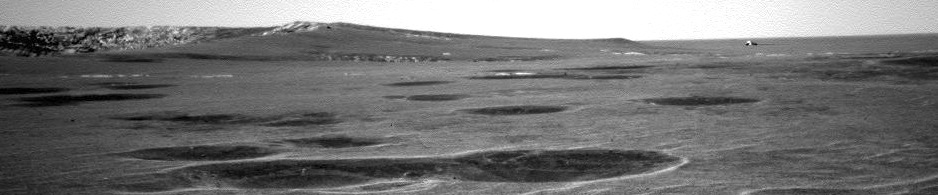
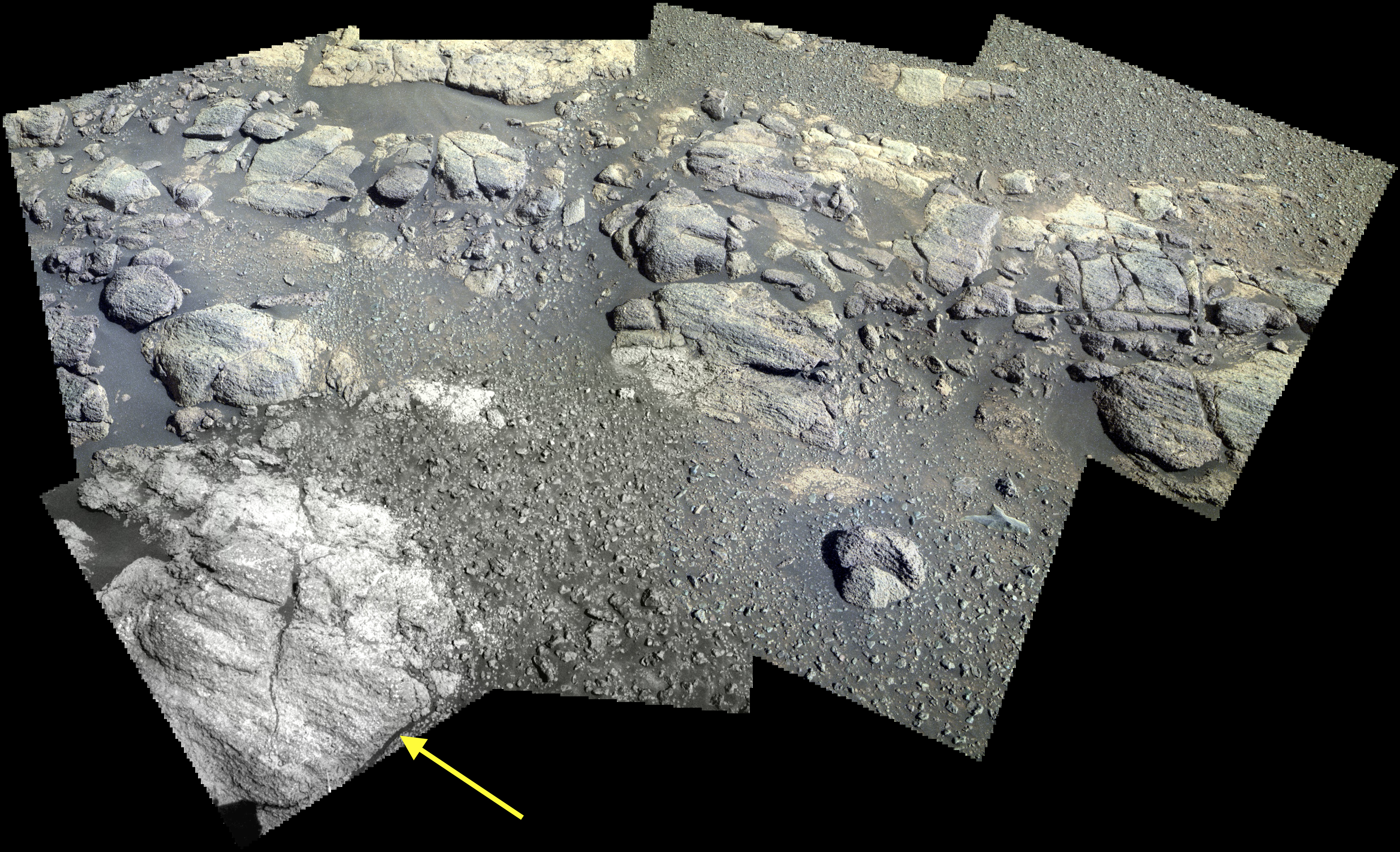
5077-8-pancamFCSols 5077-78, May 6-7, 2018. With Opportunity parked at the rock target called Inde, the Pancam shot a series of frames, mostly multi-filtered, documenting the outcrop near the rock in better perspective than that shown here.

Above shows Inde’s neighbors in false-color Pancam frames, with the two bottom left frames shown as grayscale for lack of additional data (Inde is arrowed). Click the image to enlarge it; false-color frames by Holger Isenberg.

Opportunity raw images, its latest mission status, location map, and atmospheric opacity, known as tau.

Posted in Reports | Tagged , , , , , , , | Comments Off

Curiosity update: Purple coleraine, purple coleraine

NRB_578946886EDR_F0701036NCAM00450M_-br2Sol 2045, May 7, 2018, update by MSL scientist Abigail Fraeman: The drive planned on sol 2045 will take Curiosity off of Vera Rubin Ridge and back into the broken-up rocks that comprise the Blunt’s Point member of the Murray formation. But don’t panic Vera Rubin Ridge fans, we plan to climb back onto the ridge and head to points beyond after we get a chance to test the drill down in Blunt’s Point.

We are planning to start the sol 2045 plan with a remote sensing science block that has several ChemCam observations and associated Mastcam documentation images. The targets are “Blackhoof,” a vein with potential darker inclusions, and “Bovey,” a red-hued rock in the work area. Also, since we’re… [More at link]

Posted in Reports | Tagged , , , , , , , , , , , , , , | Comments Off