


Curiosity update: Heading for half a million laser shots

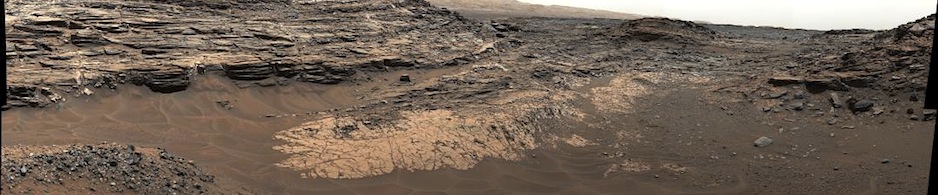
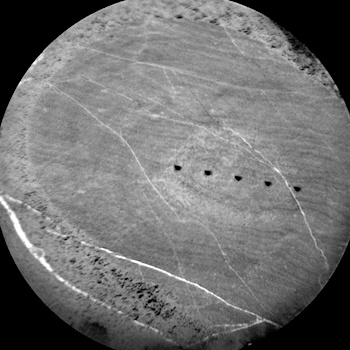
CR0_558350893PRC_F0653308CCAM03811L1-br2Sol 1821, September 19, 2017, update by MSL scientist Roger Wiens: Communication ties our lives together. If phone or internet service goes out in our area, sometimes we have to put our lives on hold for a few minutes or a few hours. The same is true for Mars operations. Yestersol Curiosity missed its ‘phone call’ from Earth due to a small issue at one of NASA’s Deep Space Network stations. We were aware of the issue yesterday, but we went ahead and completed the operation plan in case something would change at the last minute, but no dice. So today we plan to uplink exactly the same plan. Yestersol’s plan is described in the blog for Sol 1820.

Of special note, ChemCam’s observations will carry it past the half million mark for the number of laser firings on Mars. We receive a spectrum with each laser pulse, so these all represent a huge amount of critical data on Mars compositions. Fortunately, ChemCam’s laser should last a while longer. Based on ground testing, we hope for at least another half million shots… [More at link]

Posted in Reports | Tagged , , , , , , , , , , | Comments Off

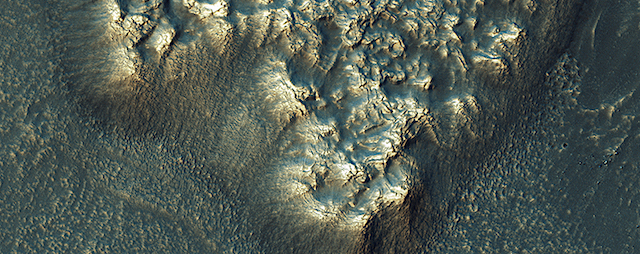
HiRISE: Hollows in a southern mid-latitude crater

tumblr_ou486lGOOF1rlz4gso2_1280Hollows in a southern mid-latitude crater — Not very sleepy, though. Beautiful Mars series.

Posted in Reports | Tagged , , , , , , , | Comments Off

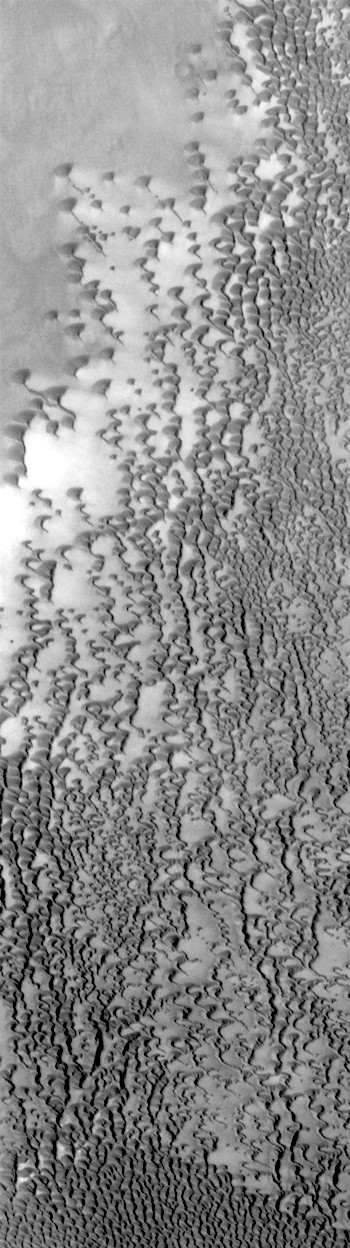
THEMIS: “Dry spots” in the north polar sand sea

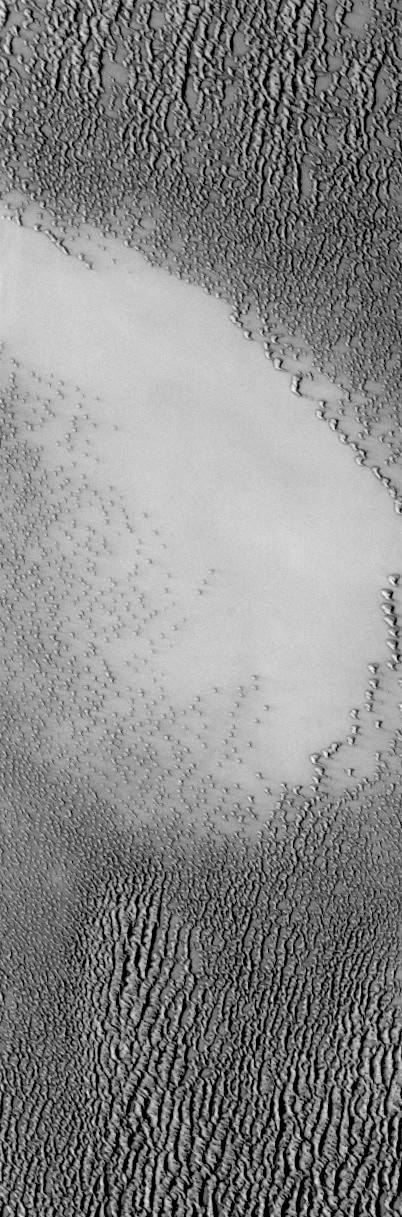
Northern dunes of Siton Undae (THEMIS_IOTD_20170920)THEMIS Image of the Day, September 20, 2017. Siton Undae is a large dune field located in the northern plains near Escorial Crater. Siton Undae is west of the crater and is one of three dune fields near the crater. The nearby north polar cap is dissected by Chasma Boreale, which exposes an ice free surface. This image shows part of dune field just west of Escorial Crater (just off the top of image).

NASA’s Mars Odyssey spacecraft has spent over 15 years in orbit around Mars, circling the planet more than 69,000 times. It holds the record for longest working spacecraft at Mars. THEMIS, the IR/VIS camera system, has collected data for the entire mission and provides images covering all seasons and lighting conditions.

Over the years many features of interest have received repeated imaging, building up a suite of images covering the entire feature. From the deepest chasma to the tallest volcano, individual dunes inside craters and dune fields that encircle the north pole, channels carved by water and lava, and a variety of other feature, THEMIS has imaged them all.

For the next several months the Image of the Day will focus on the Tharsis volcanoes, the various chasmata of Valles Marineris, and the major dunes fields. We hope you enjoy these images!

More THEMIS Images of the Day by geological topic.

Posted in Reports | Tagged , , , , , , , , , , , , , , , , | Comments Off

HiRISE: Go with the (bright) flow

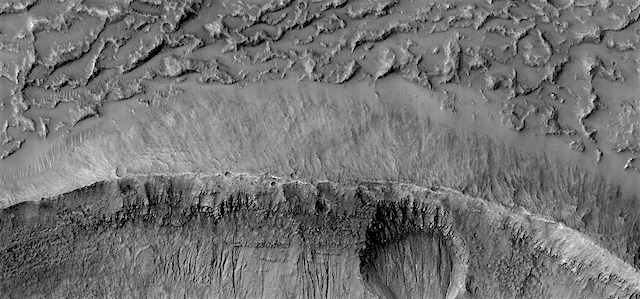
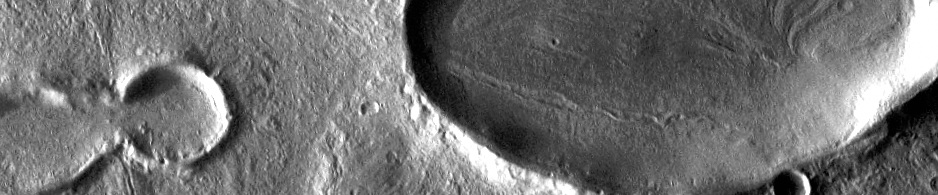
ESP_014335_1450Many slopes in the middle latitudes of Mars show icy flows or glaciers. The region shown here, in the south-facing slope of a crater, is unusual because the flows have bright highlights.

The color and brightness variations are likely due to surface coatings of bright dust and dark sand. There is no evidence that these flows are currently active, but they may have been active only millions of years ago. These flows may well contain ice today in their interiors, as confirmed in places by the subsurface radar experiment on MRO. [More at link]

Posted in Reports | Tagged , , , , , , , , , | Comments Off

Curiosity update: What lay beneath

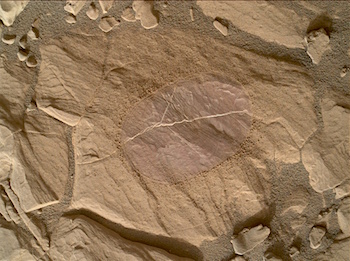
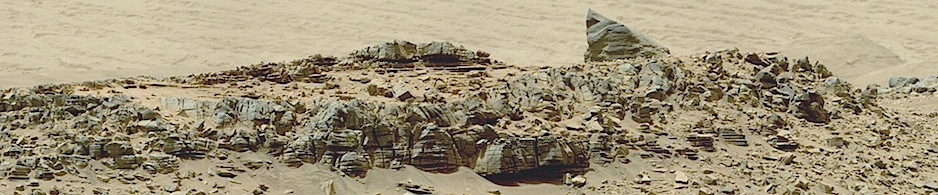
1818MH0001900010701428C00_DXXX-br2Sol 1820, September 19, 2017, update by MSL scientist Michelle Minitti: Curiosity’s weekend “Brushfest” paid off, revealing the stunning purple color of the rocks of this part of the Vera Rubin Ridge (VRR) hiding below the veneer of dust on their surfaces. As Curiosity arrived at her new bedrock-rich workspace after a weekend drive of ~18 m, the science team had to decide whether to quickly interrogate a contact science target with MAHLI and APXS using a touch and go, or stay and find out what lay beneath the dust. There were hints around the workspace that color variations were present, with surfaces visible in shades of tan, gray and purple, so the science team decided to push the drive off a day and stay to use the Dust Removal Tool (DRT) once again on the VRR rocks in the workspace.

The science team was not only in a cleaning mood, they were in a tongue twisting mood, as evidenced by the names of the two MAHLI and APXS targets, “Passadumkeag” (a small Maine town) and “Pennessewassee” (a lake near Norway, Maine). Passadumkeag, a tan-colored target, will benefit from the DRT’s revelatory powers, while Pennessewassee, a more gray-colored target, will be interrogated as… [More at link]

Posted in Reports | Tagged , , , , , , , , , , , , | Comments Off

HiRISE: A crater slope in Terra Sirenum mocks us

tumblr_ou47v0CMXm1rlz4gso1_1280A crater slope in Terra Sirenum mocks us. Beautiful Mars series.

Posted in Reports | Tagged , , , , , , , , , | Comments Off

THEMIS: Basaltic dunes and frost in north polar lowlands

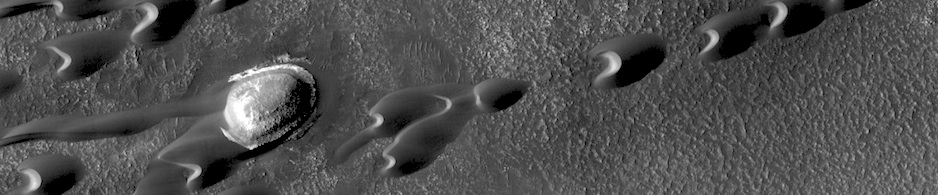
Bare ground, basaltic dunes, and frost (THEMIS_IOTD_20170919)THEMIS Image of the Day, September 19, 2017. Siton Undae is a large dune field located in the northern plains near Escorial Crater. Siton Undae is west of the crater and is one of three dune fields near the crater. The nearby north polar cap is dissected by Chasma Boreale, which exposes an ice free surface. This image was collected during the middle of northern hemisphere summer. There is no frost left on the dunes and they appear dark. These dunes are likely formed of basaltic sand.

NASA’s Mars Odyssey spacecraft has spent over 15 years in orbit around Mars, circling the planet more than 69,000 times. It holds the record for longest working spacecraft at Mars. THEMIS, the IR/VIS camera system, has collected data for the entire mission and provides images covering all seasons and lighting conditions.

Over the years many features of interest have received repeated imaging, building up a suite of images covering the entire feature. From the deepest chasma to the tallest volcano, individual dunes inside craters and dune fields that encircle the north pole, channels carved by water and lava, and a variety of other feature, THEMIS has imaged them all.

For the next several months the Image of the Day will focus on the Tharsis volcanoes, the various chasmata of Valles Marineris, and the major dunes fields. We hope you enjoy these images!

More THEMIS Images of the Day by geological topic.

Posted in Reports | Tagged , , , , , , , , , , , , , , , , , | Comments Off

HiRISE: A sequence of beauty in Terby Crater

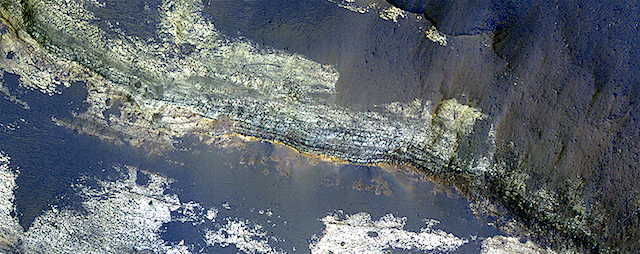
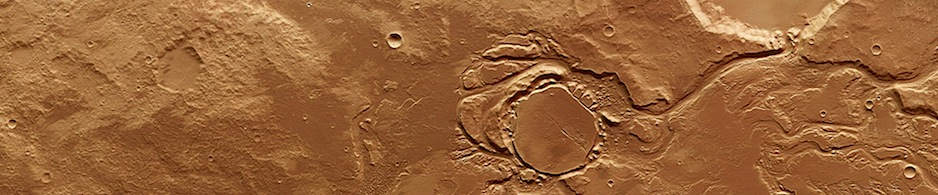
ESP_013305_1515The north-facing wall of a moat-like depression in the middle of Terby Crater exposes a beautiful 400 meter-high sequence of light-toned, repetitive sedimentary layers. These deposits are often obscured by darker-toned patches of material as well as ripples and dunes.

The deposits in Terby, located on the northern rim of Hellas Planitia, are consistent with deposition in a standing body of water. The layers have been proposed as science targets for future landed missions. [More at link]

Posted in Reports | Tagged , , , , , , , , , | Comments Off

Dust devils: major source of atmospheric dust on Mars and Earth

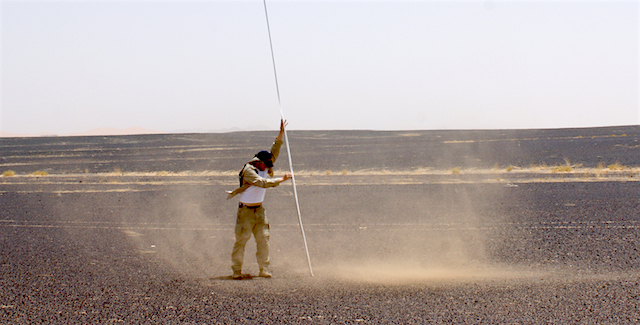
SONY DSCSwirling columns of sand and dust, known as dust devils, are a feature of desert areas on Mars and on Earth. Now, a study of terrestrial dust devils has shown that around two thirds of the fine particles lifted by these vortices can remain suspended in the atmosphere and be transported around the globe. The findings have implications for the climate and weather of both planets and, potentially, human health here on Earth. Results will be presented by Dr Jan Raack of the Open University at the European Planetary Science Congress (EPSC) 2017 in Riga, Latvia on Monday, 18th September 2017.

The study by Raack and an international team of collaborators gives important insights into the contribution of dust devils to mineral aerosols in planetary atmospheres. About half of the dust lifted into the martian atmosphere each year is thought to come from dust devils. However, to date, the structure of these vortices has not been well understood. As terrestrial dust devils act very similarly to those on Mars, Raack and colleagues have carried out multiple field campaigns over the past five years to study dust devils in three different deserts on Earth, in China, Morocco and the USA. The researchers took samples of grains lifted by dust devils at different heights, studied tracks left by dust devils on the surface and measured physical and meteorological properties of dust devils.

Raack explains: “The method for sampling is simple – although not actually that pleasant to carry out as it involves getting sandblasted. Essentially, we cover a 5-metre aluminium pipe with double sided sticky tape and run into an active dust devil. We hold the boom upright in the path of a dust devil and wait until the dust devil passes over the boom. Numerous grains are collected on the sticky tape, which are preserved on-site by pressing sections of the tape from different heights onto glass slides.” [More at links]

Posted in Reports | Tagged , , | Comments Off

Opportunity: Perseverance Valley (very) close-up

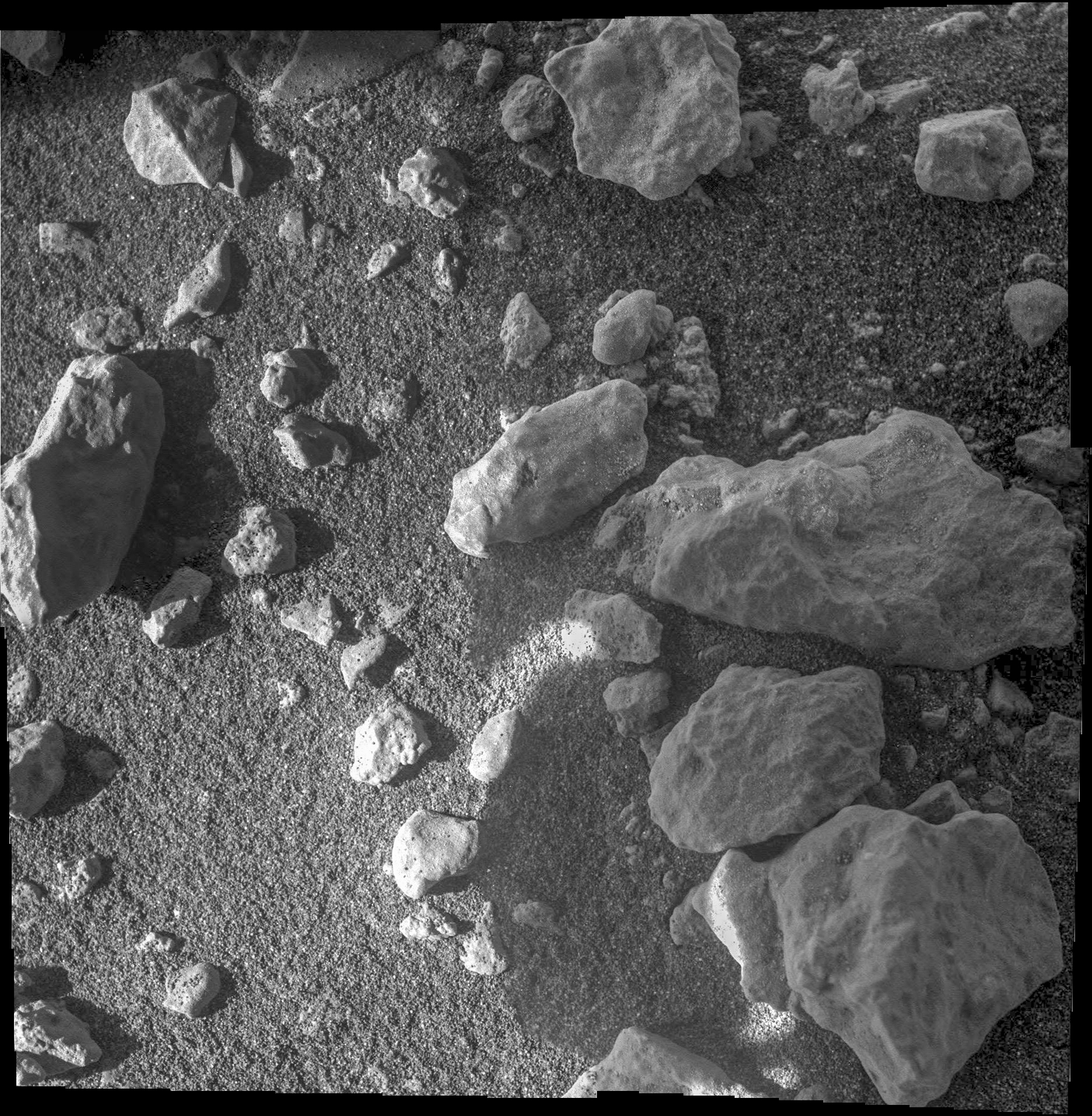
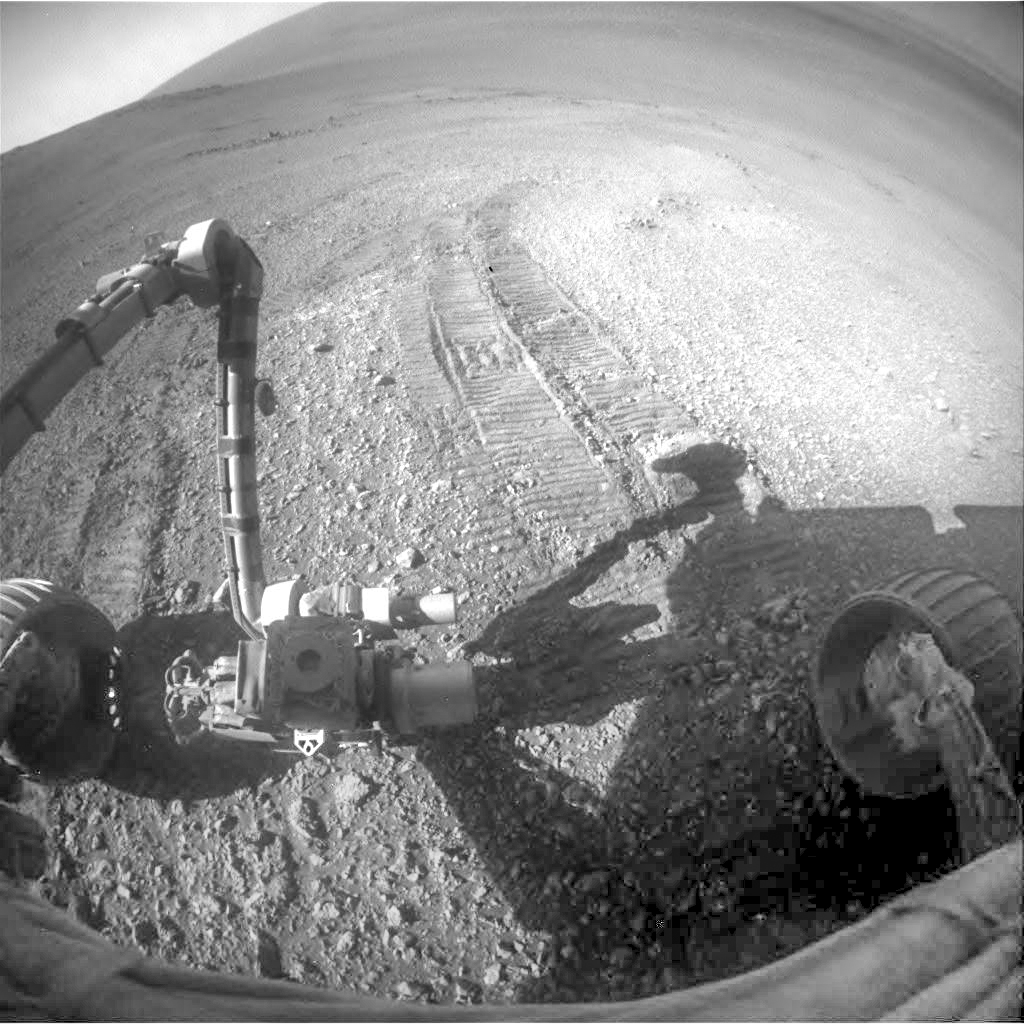
4851-mi1F558840148EFFD0AKP1110R0M1Sol 4851, September 16, 2017. The Microscopic Imager shoots a target named Albuquerque on the ground in front of Opportunity. At right is the Hazcam view. Click either image to enlarge it.

Opportunity raw images, its latest mission status, location map, and atmospheric opacity, known as tau.

Posted in Reports | Tagged , , , , , , , | Comments Off