THEMIS: Lines of dunes in Noachis Terra crater

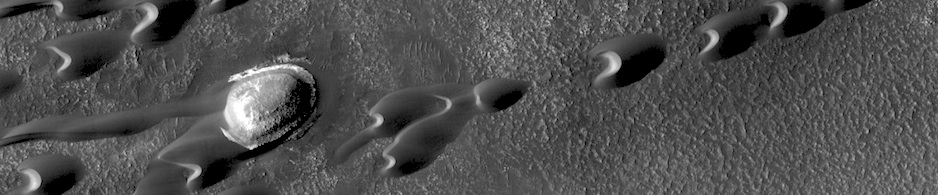
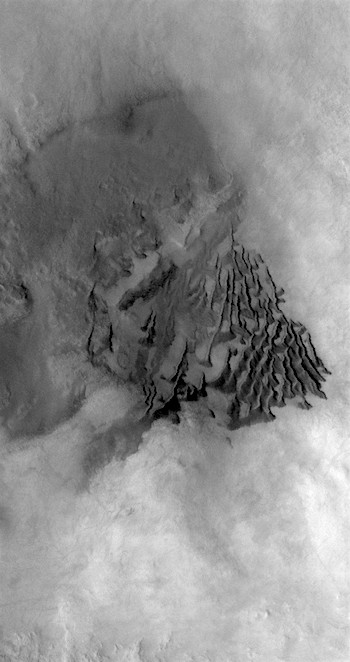
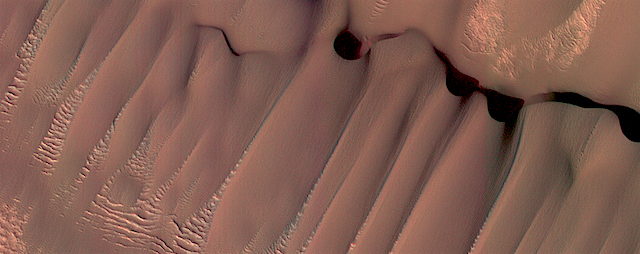
Strings of dunes in Noachis (THEMIS_IOTD_20170202)THEMIS Image of the Day, Februrary 2, 2017. This VIS image shows sand dunes on the floor of an unnamed crater in Noachis Terra. Since Mars is universally dusty, the darker tone of the dunes shows they are relatively free of dust. This strongly suggests they are being actively moved by the wind today.

More THEMIS Images of the Day by geological topic.

Posted in Reports | Tagged , , , , , , , , , | Comments Off

HiRISE: Raining rocks

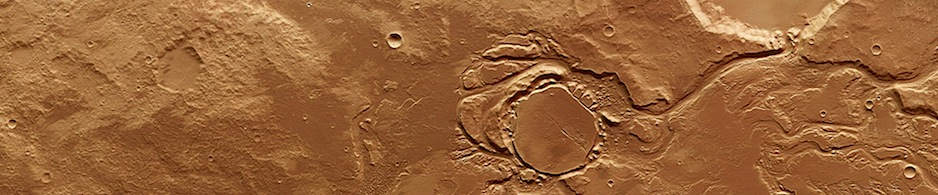
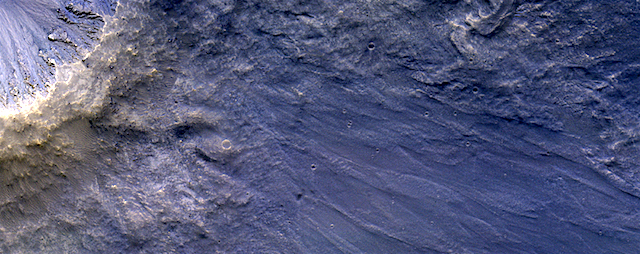
PSP_005145_1690Impact ejecta is material that is thrown up and out of the surface of a planet as a result of the impact of an meteorite, asteroid or comet. The material that was originally beneath the surface of the planet then rains down onto the environs of the newly formed impact crater.

Some of this material is deposited close to the crater, folding over itself to form the crater rim, visible here as a yellowish ring. Other material is ejected faster and falls down further from the crater rim creating two types of ejecta: a “continuous ejecta blanket” and “discontinuous ejecta.” Both are shown in this image. The blocky area at the center of the image close to the yellowish… [More at link]

Posted in Reports | Tagged , , , , , , , , | Comments Off

MARCI weather report: January 23-29, 2017

jan-3-2017For the past week on Mars, local-scale dust storms continued to sweep down the Acidalia storm-track. Some of these small magnitude storms lofted dust towards Valles Marineris and northwestern Noachis. The plains of Amazonis, Utopia, and near the Phlegra Montes also experienced repeated short-lived dust storms. Looking to the southern hemisphere, a number of small transient dust storms were spotted near the edge of the perennial south polar ice cap. Dust hazes were also observed in the vicinity of the large impact basin… [More at link, including video]

Posted in Reports | Tagged , , , , , , , , , , , , , | Comments Off

THEMIS: Dune field in Hale Crater

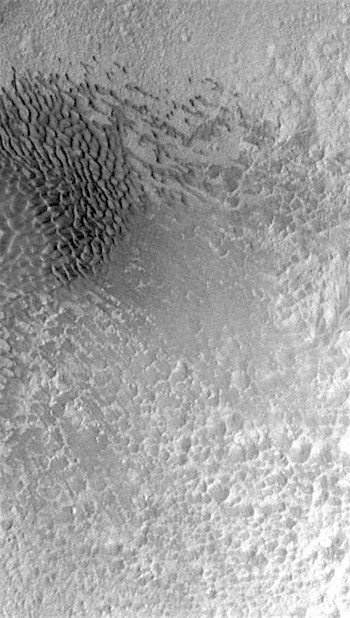
THEMIS Image of the DayHale Crater dunes (THEMIS_IOTD_20170201), February 1, 2017. Today’s VIS image shows a field of sand dunes on the floor of Hale Crater. Hale Crater is located in Noachis Terra north of Argyre Planitia.

More THEMIS Images of the Day by geological topic.

Posted in Reports | Tagged , , , , , , , , , | Comments Off

HiRISE: Dunes in northern summer

PSP_009840_2745This dune field formed near the base of the North Polar cap. Dunes require a source of loose particulate material to form. The source of the northern dune fields around the polar cap may be from the layers of dusty ice that are eroded by strong polar winds.

This image was taken during the Martian northern summer, so there is no frost present on the dunes. The dunes closest to the base of the polar cap are long and parallel, indicating strong winds from the direction of the cap. As they get farther away from the polar cap, they start to form more crescent shaped dunes, called barchan dunes. [More at link]

Posted in Reports | Tagged , , , , , , , , , , | Comments Off

Opportunity: Fort Thompson

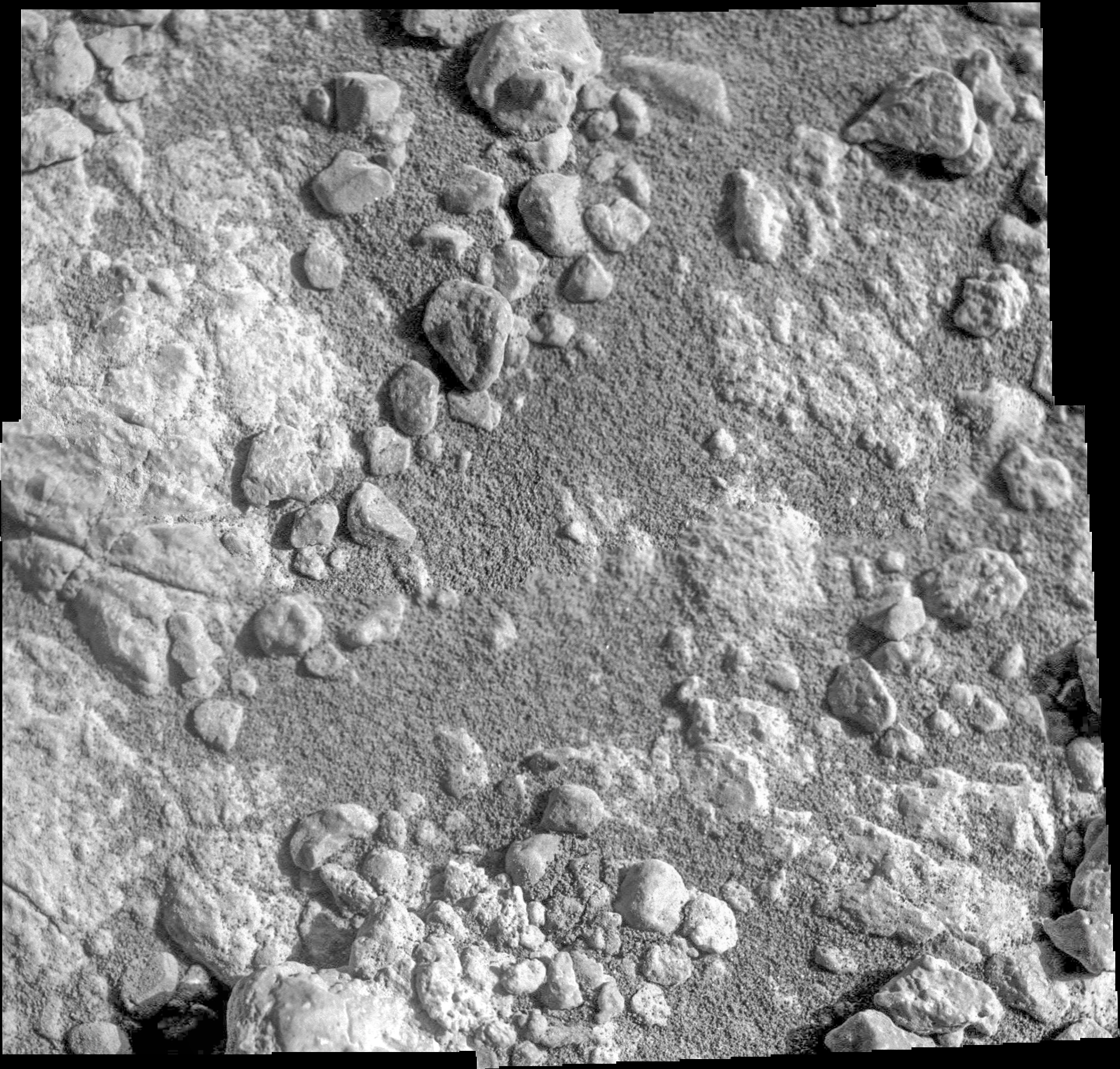
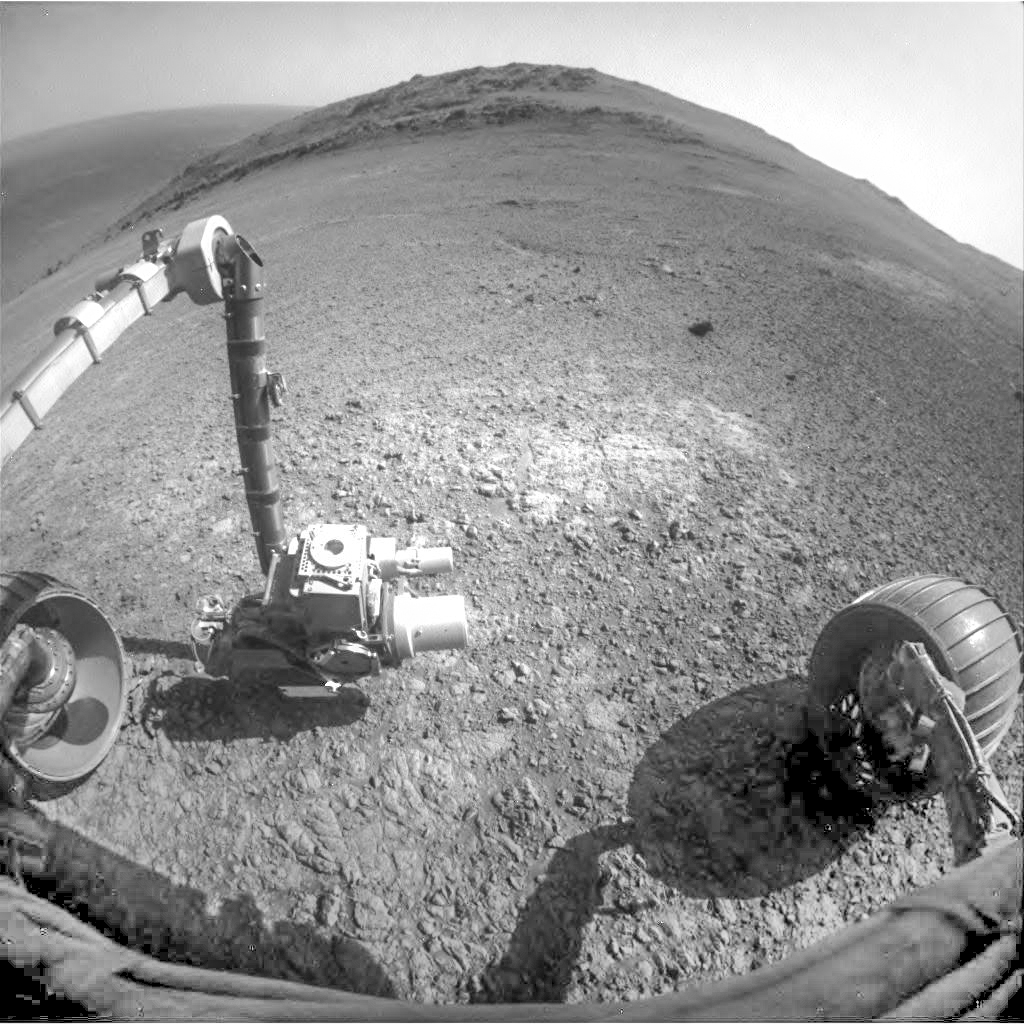
4629-mi1F539132928EFFCVGZP1110R0M1Sol 4629, January 31, 2017. With Opportunity parked on the rim facing south, mission scientists positioned the instrument arm so as to examine a target — Fort Thompson — lying on the ground directly in front of the rover. Above, four Microscopic Imager frames. At right, the Hazcam shows the scene. Both images enlarge when clicked.

Opportunity raw images, its latest mission status, a location map, and atmospheric opacity, known as tau.

Posted in Reports | Tagged , , , , , , , , | Comments Off

THEMIS: Young crater and wide-flung ejecta

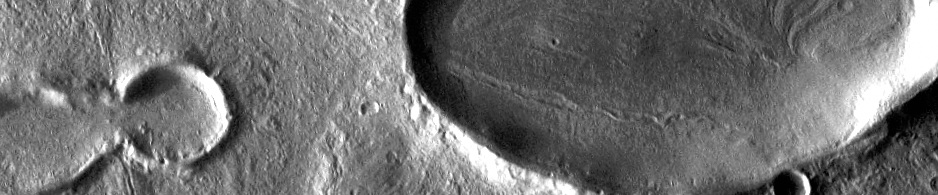
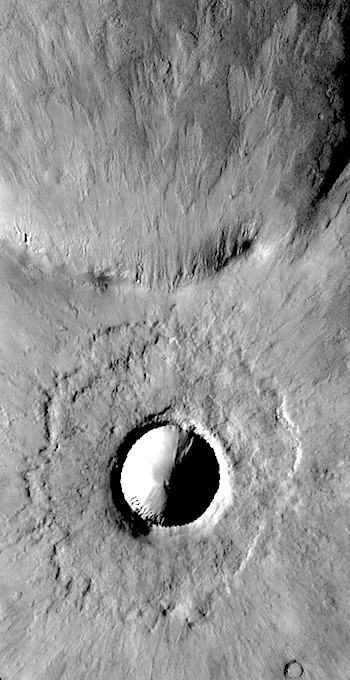
Young crater and ejecta (THEMIS_IOTD_20170131)THEMIS Image of the Day, January 31, 2017. Today’s VIS image shows two craters in Terra Cimmeria just north of Kepler Crater.

The small crater in the middle of the image is a relatively new crater. The interior rim has gullies, but the bowl shape shows that there has been very little deposition of materials. Additionally, the radial emplacement of thin ejecta is still identifiable, and can be seen in the larger crater in the top of the image.

With time the crater floor will flatten due to influx of materials and the subtle radial ejecta will be hidden by dust. While the actual age of the small crater is not known, it is relatively younger than the larger crater.

More THEMIS Images of the Day by geological topic.

Posted in Reports | Tagged , , , , , , , , , , , , | Comments Off

Curiosity update: Approaching dunes for round two

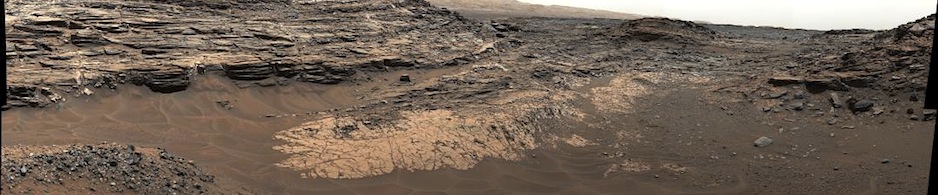
1590MR0081020040800439E01_DXXXSol 1596-97 January 30, 2017, update by USGS scientist Lauren Edgar: Over the weekend, Curiosity drove an additional ~ 26 meters to the southwest, as we prepare for another investigation of the active sand dunes.  We’re still a few more drives away from the dunes, but looking forward to the next campaign.  I was the GSTL today, and we planned some contact science and Mastcam imaging and another drive.  The plan starts with a short APXS integration and MAHLI imaging of “Isleboro” to characterize the composition, grain size, and sedimentary structures exposed in a typical block of the Murray formation.  Then we’ll use Mastcam to document some color variations and stratification at “Parker Bog,” and to assess fracture patterns at “Jim Pond.” We’ll also take a Mastcam image to… [More at link]

Posted in Reports | Tagged , , , , , , , , , , , , , | Comments Off

MAVEN: High-altitude water gives atmospheric escape route for Mars hydrogen

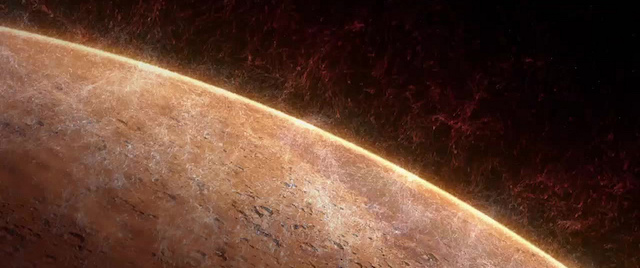
Mars-escapeResearchers at the University of Colorado’s Laboratory for Atmospheric and Space Physics have discovered an atmospheric escape route for hydrogen on Mars, a mechanism that may have played a significant role in the planet’s loss of liquid water.

The findings describe a process in which water molecules rise to the middle layers of the planet’s atmosphere during warmer seasons of the year and then break apart, triggering a large increase in the rate of hydrogen escape from the atmosphere to space in a span of just weeks.

The new study, which appears today in the journal Nature Geoscience, cuts against traditional models that have historically considered Martian hydrogen escape to be slower and more constant.

“Going back to the 1970s, the conventional picture of Martian hydrogen loss has been one of slow, steady escape over long time scales,” said Mike Chaffin, a research associate at LASP and lead author of the new study. “With this work, we find that there are ways to produce much more seasonal variation than previously thought.” [More at link; an earlier report related to this finding appeared here]
Posted in Reports | Tagged , , , , , , , | Comments Off

Curiosity: Ireson Hill and outlier butte beyond

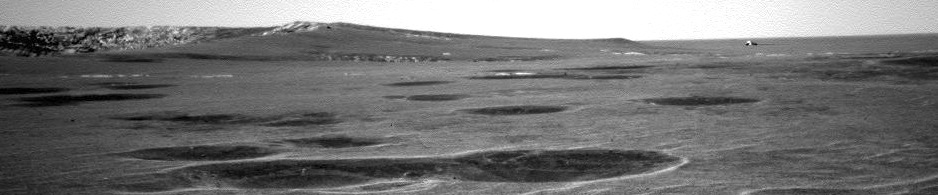
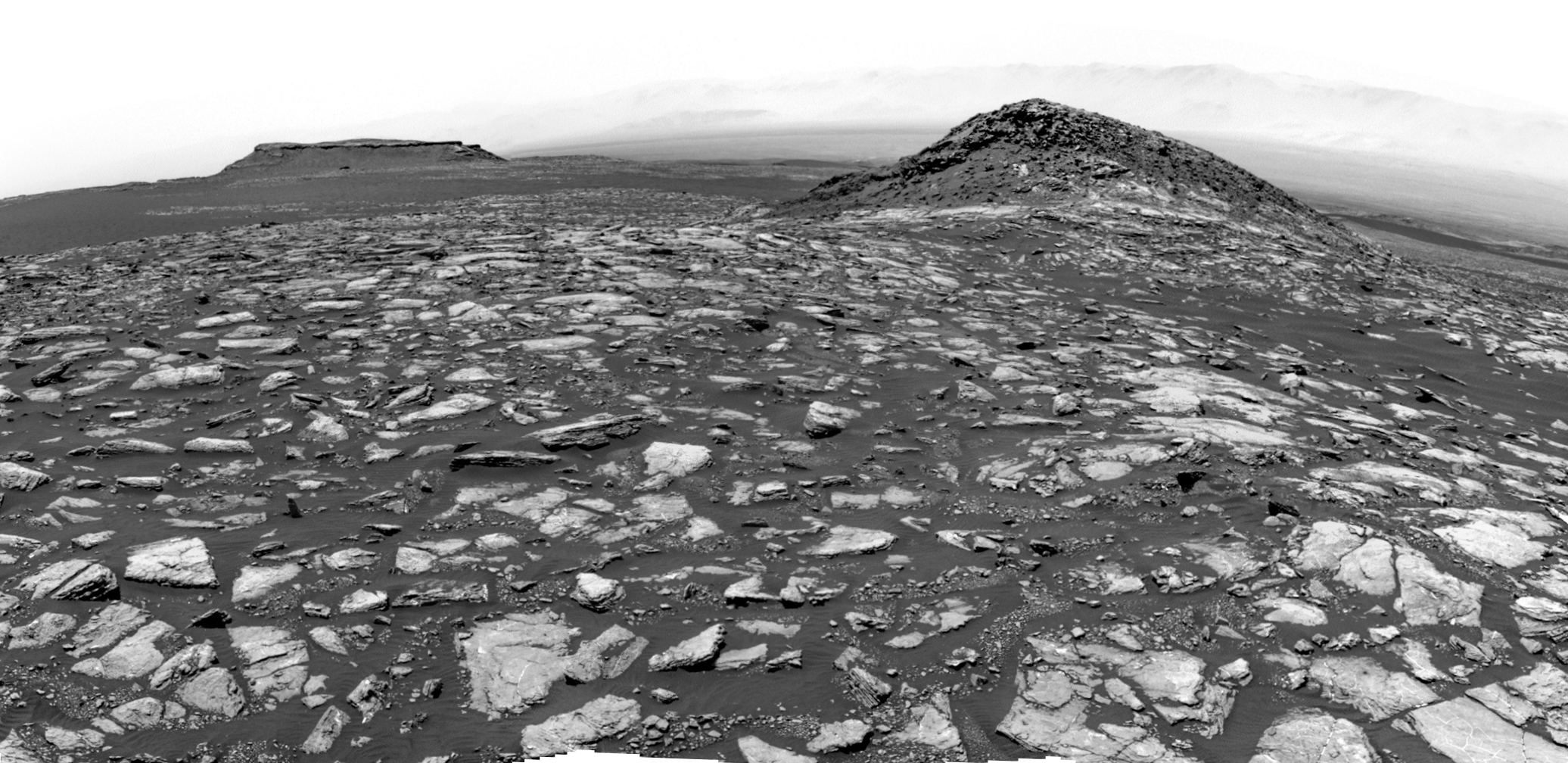
1594-navcamSol 1594, January 29, 2017. As Opportunity continues its southward drive toward a small gap in the Bagnold Dunes, the Navcam gets a look at the south face of Ireson Hill (right), while a much larger no-name butte stands in the distance. Click to enlarge.

Sol 1594 raw images (from all cameras), and Curiosity’s latest location.

Posted in Reports | Tagged , , , , , , , , , , | Comments Off