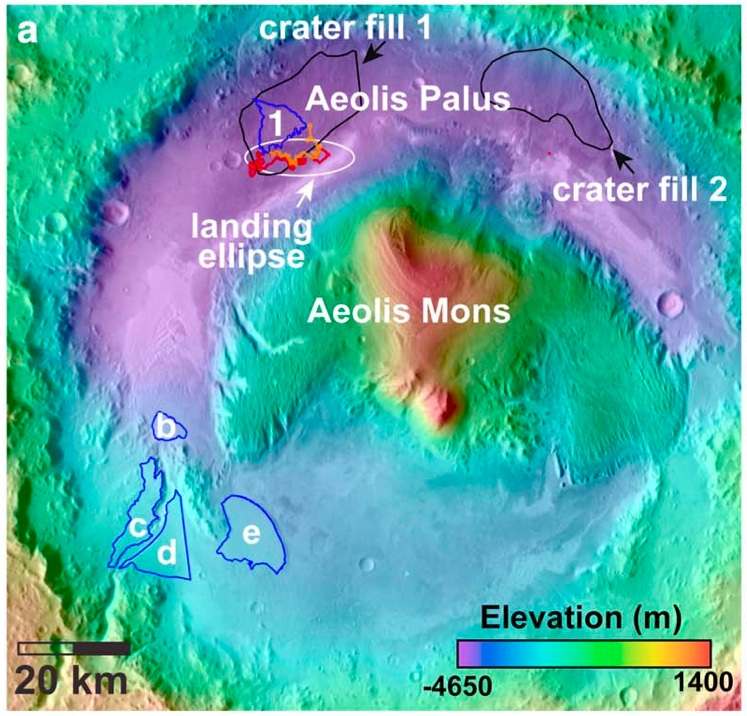
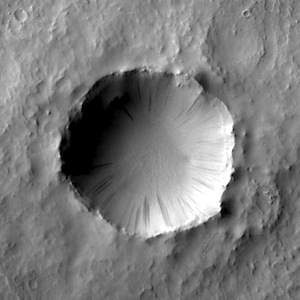
The Mars Science Laboratory rover Curiosity, sent to find habitable environments, landed in Gale Crater on the far end of an alluvial fan. This fan spreads south across Gale’s floor from the north rim. It is built from sediments washed into Gale from the rim by a long-gone stream that flowed through the Peace Vallis channel.
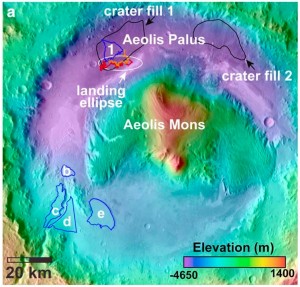
LONGER WET PERIOD. Crater-counting studies indicate water that which would have been tolerable to terrestrial organisms flowed into Gale Crater well into the Hesperian period. This is later in Martian history than scientists had previously thought. (Image taken from Figure 1 in the paper.)
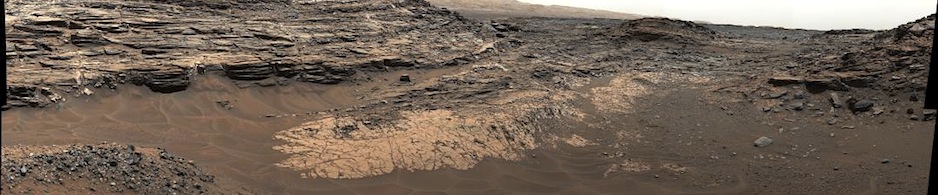
Chemical studies by the rover’s instruments of the mudstones and shales lying at Yellowknife Bay, a shallow depression near the fan’s edge, revealed that the sediments were deposited in waters that would likely have been habitable by terrestrial organisms. Elsewhere on Gale’s floor several locations show sediments in alluvial fans that likely had similar origins.
So the question arises when this alluvial activity took place – or when, and for how long, were conditions in Gale habitable?
“The bulk of the alluvial deposits in Gale, including those interrogated by Curiosity, were likely emplaced during the Hesperian,” says a group of scientists led by John Grant (Smithsonian Institution), reporting in Geophysical Research Letters. The team bases their age finding on studies of the number of craters per unit area across Gale’s floor and on the alluvial fans.
“This age implies,” they note, “that habitable conditions persisted after the Noachian.”
The Noachian period, an ancient period early in Mars geologic history, has long been thought of as the time when conditions on Mars were most favorable for life. While boundary dates are not precise, scientists consider the Noachian as lasting from about 4.1 to 3.7 billion years ago. The Hesperian began then and continued until roughly 3.0 billion years ago, when the current Amazonian period began.
The team writes that statistics for the larger diameter craters on Gale’s floor suggest that infilling began shortly after Gale formed and then ended in the Hesperian, likely about 3.3 to 3.2 billion years ago.
The crater counting also suggests the possibility of a more recent stage of Peace Vallis fan deposition after most of the fan had accumulated, say the scientists. This would have produced an additional deposition of roughly 10 to 20 meters (33 to 66 feet) of sediment on the top of the fan. They add that any such late activity was perhaps concurrent with shaping of the present-day Mount Sharp and with late alluvial contributions to fans elsewhere in Gale.
In any case, the team notes, “If the rocks in Yellowknife Bay were emplaced in the middle of the Hesperian (about 3.3 to 3.2 billion years ago), then the habitable environments they record occurred relatively late in Martian history.”

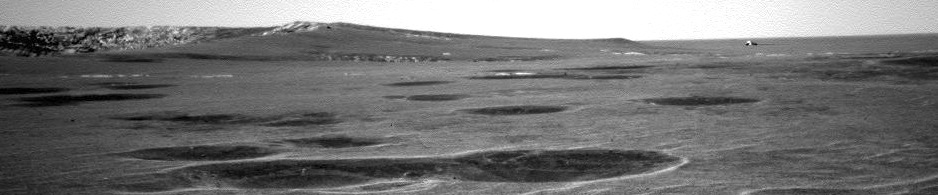

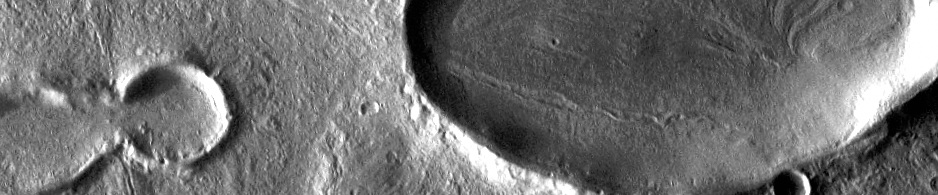
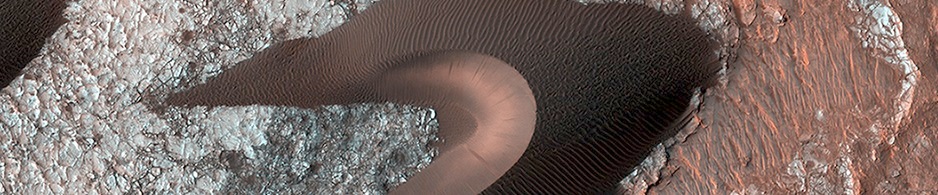
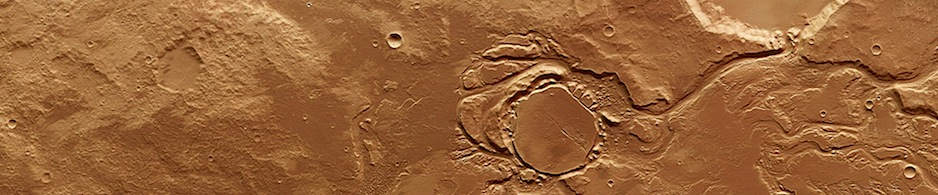
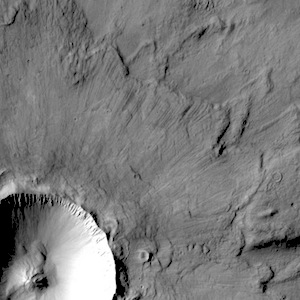 THEMIS Image of the Day, March 5, 2014. Multiple overlapping lobes of ejecta are visible in the VIS image of an unnamed crater in Chryse Planitia. More THEMIS Images of the Day by geological topic.