
Mars Color Imager (MARCI) weather report, January 20-26, 2014

This past week, dust storm activity was prominent along the perennial north polar cap edge, while in the southern subtropics, there were several small transient storms over Solis. Water ice clouds were observed across the tropics and over all the major shield volcanoes. With winter quickly approaching in the southern hemisphere, surface ice had begun to appear in Hellas Basin. As for the two rover sites… [More at link]
Posted in Reports | Tagged , , , , , , , , , , , | Comments Off

Curiosity image: “Harrison” rock shows crystals

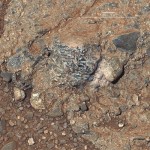
This view of a Martian rock target called “Harrison” merges images from two cameras on NASA’s Curiosity Mars rover to provide both color and microscopic detail. Curiosity inspected the rock’s appearance and composition on the mission’s 514th sol, or Martian day (Jan. 15, 2014). The Remote Micro-Imager (RMI) of the rover’s Chemistry and Camera (ChemCam) obtained the detail shown… [More at link]

Posted in Reports | Tagged , , , , , , , , , , , | Comments Off

Curiosity panorama: approaching Dingo Gap

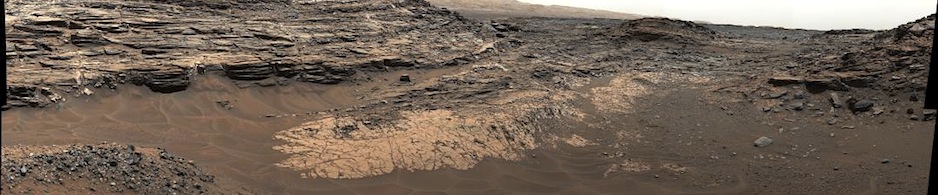
This scene combines images taken by the left-eye camera of the Mast Camera (Mastcam) instrument on NASA’s Curiosity Mars rover during the midafternoon, local Mars solar time, of the mission’s 526th Martian day, or sol (Jan. 28, 2014). The sand dune in the upper center of the image spans a gap, called “Dingo Gap,” between two short scarps. The dune is about 3 feet (1 meter) high. The nearer edge of it is… [More at link]

Posted in Reports | Tagged , , , , , , , , | Comments Off

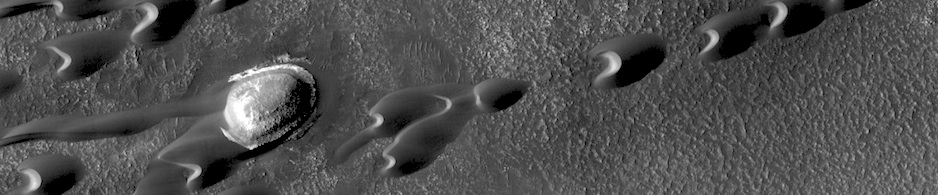
THEMIS image: windstreaks

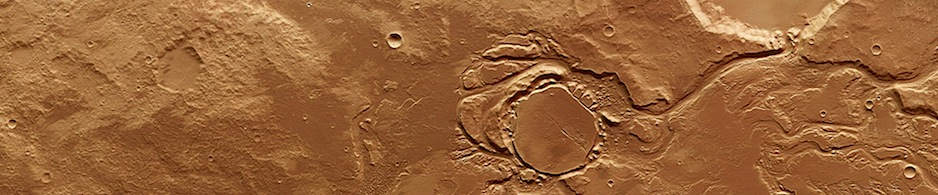
THEMIS Image of the Day, January 31, 2014. The windstreaks in this VIS image are located on the lava plains between Pavonis Mons and Noctis Fossae. Streaks form on the down wind side of positive topographic features (like hills and crater rims), indicating that the winds which created these streaks blew toward the north east in this region.

Posted in Reports | Tagged , , , , , , , | Comments Off

HiRISE image: a landing site in Ladon Vallis

One of the important tasks HiRISE has is to image potential landing sites for future rovers. A landing site must have relatively mild terrain so that the vehicle can land successfully, but it must also contain interesting places to study. We can imagine that a rover landing here would take a look at the bright patch of ground, to study its composition: were the minerals formed in the presence of water? [More at link]

Posted in Reports | Tagged , , , , , , , , | Comments Off

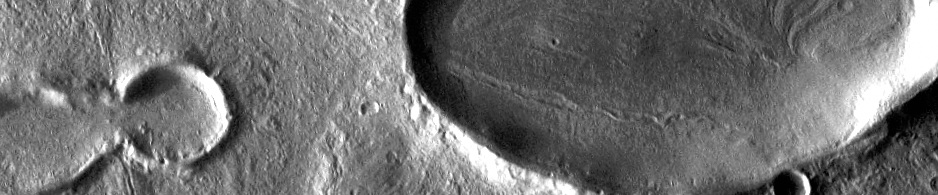
HiRISE image: sinuous ridges and meanders

These ridges are thought to be old river channels, but wind erosion has created inverted topography. What was low (the channel bottoms) was more resistant to erosion, so now it is relatively high. In a closeup image, we see a cutoff meander. This forms as a river cuts its outer bank and curves more and more, until it decides to take a “short-cut.” The abandoned channel may have formed an oxbow lake, when… [More at link]

Posted in Reports | Tagged , , , | Comments Off

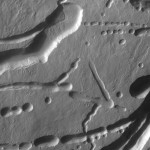
THEMIS image: Ascraeus Mons

THEMIS Image of the Day, January 30, 2014. Today’s image shows a different portion of the collapse features located on the northern flank of Ascraeus Mons.

Posted in Reports | Tagged , , , , , , , , , , , , | Comments Off

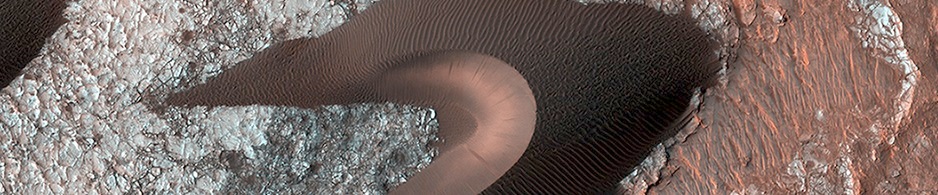
HiRISE image: RSLs and colorful fans along Coprates Chasma ridge

This site along a Coprates Chasma ridge shows what are called recurring slope lineae (or RSL) on generally north-facing slopes in northern summer/southern winter (latitude 12.9 degrees S, longitude 295.5 degrees E). With an animation constructed from multiple co-located images, we can detect surface change and constrain the RSL phenomena. An enhanced color image illustrates the “greenish” fans… [More at link]

Posted in Reports | Tagged , , , , , , , , , | Comments Off

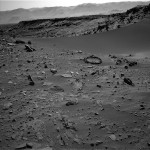
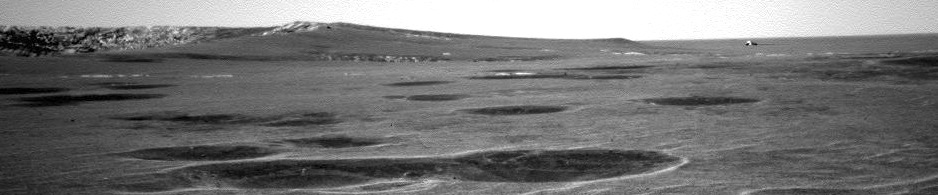
Curiosity raw image: Sol 527, January 29, 2014

Curiosity’s left Navigation Camera (Navcam): Looking at a large dune or sand drift, with the Gale rim in the distance. More Sol 527 images (all cameras)

Posted in Reports | Tagged , , , , , , , | Comments Off

HiRISE image: high-altitude clouds on Mars

The standard color images for this observation look really weird. The reason is apparent by looking at an animation of the color images. These were acquired in a particular sequence: first blue-green (BG), then RED, then infrared (IR), and the animation shows them in this sequence. What we see are thin condensate clouds moving relative to… [More at link]

Posted in Reports | Tagged , , , , , , , | Comments Off