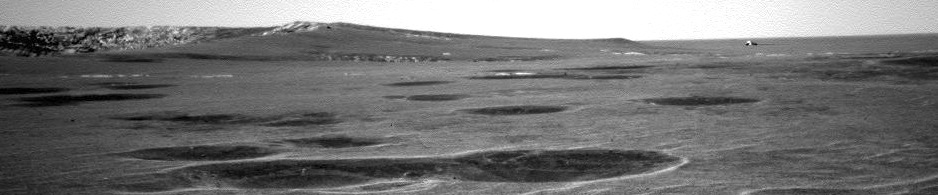

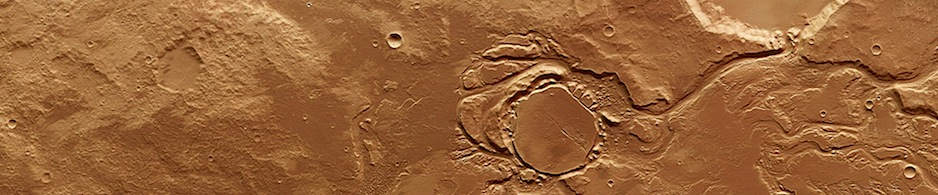
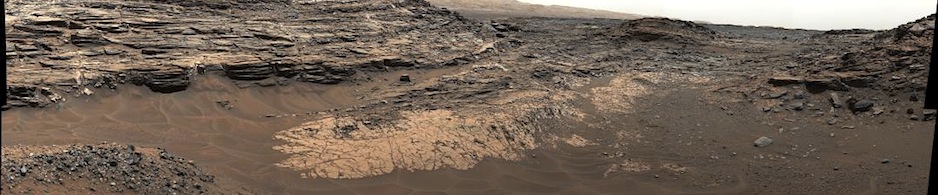
Curiosity raw image: Sol 526, January 28, 2014

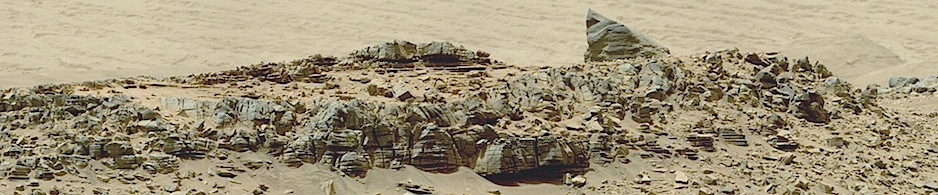
Curiosity’s left Navigation Camera (Navcam): catching sight of Mount Sharp over a low rise. Light-tone mineral vein in the foreground? More Sol 526 images (all cameras).
Posted in Reports | Tagged , , , , , | Comments Off

THEMIS image: Ascraeus Mons

THEMIS Image of the Day, January 29, 2014. The pits, fractures and channel-like features in this image are located on the northern flank of Ascraeus Mons. Most of these features were created by collapse into lava tubes that existed below the surface.

Posted in Reports | Tagged , , , , , , , , , , , , | Comments Off

THEMIS image: Alba Fossae

THEMIS Image of the Day, January 28, 2014. Today’s VIS image shows a portion of Alba Fossae, located on the northwestern margin of Alba Mons. Small channels are also visible cutting across the grabens.

Posted in Reports | Tagged , , , , , , , , | Comments Off

THEMIS image: Labeatis Fossae

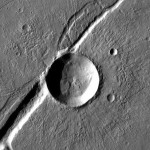
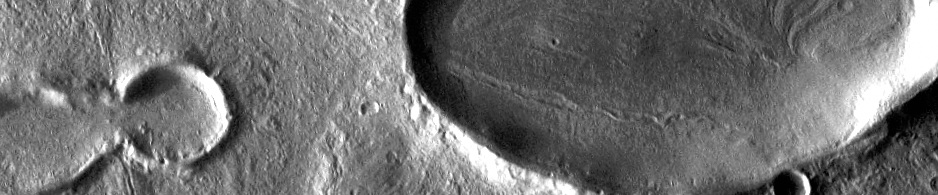
THEMIS Image of the Day, January 27, 2014. The fractures in this VIS image are part of Labeatis Fossae. The large impact crater was formed after the fractures.

Posted in Reports | Tagged , , , , , , , | Comments Off

CRISM image: phyllosilicates in Tyrrhena Terra

This image shows spectral signatures of hydrated silicate minerals in Tyrrhena Terra, a heavily-cratered region about 2,300 kilometers (1,430 miles) across, comparable to the length of Australia’s Great Barrier Reef. Clay-like minerals called phyllosilicates, which in this region are rich in iron and magnesium, appear in pink and are… [More at link]

Posted in Reports | Tagged , , , , , | Comments Off

Curiosity raw image: Sol 522, January 23-34, 2014

Curiosity’s left Navigation Camera (Navcam): looking back over the rear deck toward the southern rim of Gale Crater. More Sol 522 images (all cameras).

Posted in Reports | Tagged , , , , | Comments Off

THEMIS image: Cerberus Fossae

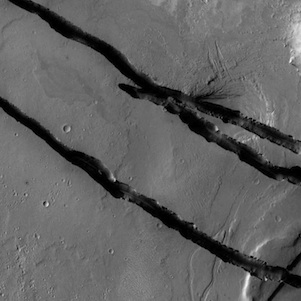
THEMIS Image of the Day, January 24, 2014. The fractures in this VIS image are part of a large system of fractures called Cerberus Fossae. Athabasca Valles is visible in the lower right corner of the image.

Posted in Reports | Tagged , , , , , , , , , , | Comments Off

HiRISE image: Frosty gullies in Hellas Planitia

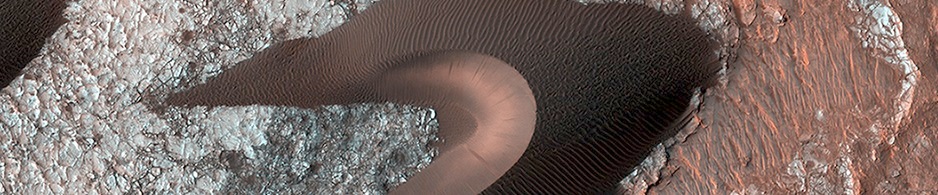
Beautiful Mars series: Frosty gullies in Hellas Planitia.

Posted in Reports | Tagged , , , , , | Comments Off

Ancient watery environments at Endeavour Crater

Matijevic Hill (black rectangle) on the Cape York rim segment of Endeavour Crater contains rocks both older and younger than the Endeavour impact. They point to a less acidic water environment than that which produced the overlying sulfate-rich Burns formation sandstones. (Image is Figure 1 from the paper.)

A new paper in Science from a team led by Raymond Arvidson (Washington University) and Steven Squyres (Cornell University) reports on water-related minerals found by the Mars Exploration Rover Opportunity, which reached Endeavour Crater in August 2011. The paper is part of a special section on Mars habitability in the issue and online commemorating the 10th anniversary of the MER landings.

Exploring the Cape York rim segment, and in particular Matijevic Hill, the rover team found evidence of water-rock interactions before and after the Noachian-era impact that made Endeavour. Aqueous environments ranged from slightly acidic to approximately neutral pH.

The team notes, “This would have been more favorable for prebiotic chemistry and microorganisms than those recorded by younger sulfate-rich rocks at Meridiani Planum.”

Posted in Reports | Tagged , , , , , , , , , | Comments Off

Opportunity Pancam raw images of the “jelly donut” rock

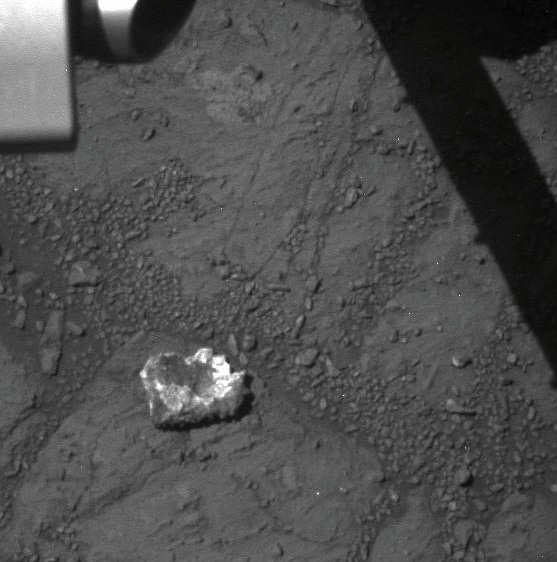
On sol 3551 (January 19, 2014) Mars Exploration Rover Opportunity used its Panoramic Camera to image in several wavelengths the “donut rock” — dubbed Pinnacle Island by the science team — that appeared near the rover sometime before it was first noticed on sol 3540 (January 8, 2014). According to the press release from Jet Propulsion Laboratory, “Much of the rock is bright-toned, nearly white. A portion is deep red in color. Pinnacle Island may have been flipped upside down when a wheel dislodged it, providing an unusual circumstance for examining the underside of a Martian rock. The site is on Murray Ridge, a section of the rim of Endeavour Crater where Opportunity is working on north-facing slopes during the rover’s sixth Martian winter.”

Posted in Reports | Tagged , , , , , , , , | Comments Off