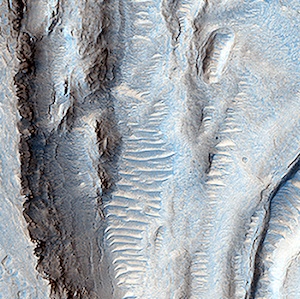


THEMIS image: Antoniadi Crater

THEMIS Image of the Day, January 23, 2014. This VIS image shows a portion of the floor of Antoniadi Crater. The faint, dark marks may be dust devil tracks.

Posted in Reports | Tagged , , , , , | Comments Off

Mars Color Imager (MARCI) weather report, January 13-19, 2014

Dust-raising activity continued off the perennial north polar cap edge north of Tempe, with storms moving south over Acidalia and into northern Chryse. Transient local dust storms were observed north of Elysium Mons, as well as in southern Sirenum and Aonia. Hellas remained clear and relatively free of dust haze during the week, with diffuse… [More at link, including video]

Posted in Reports | Tagged , , , , | Comments Off

HiRISE image: giant gullies north of the Argyre impact basin

This image shows gullies that are large even by Mars standards, and much larger than the terrestrial landforms we call gullies. The length of some of these is over 6 kilometers (3.6 miles). They are located on large mountains located north of the Argyre impact basin. An enhanced color view (reduced scale) shows only subtle color differences… [More at link]

Posted in Reports | Tagged , , , , | Comments Off

HiRISE image: shapes and spots on a polar sand dune

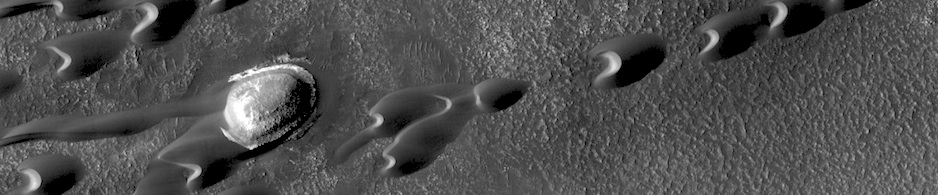
This image shows numerous dark shapes and bright spots on a sand dune in the Northern polar regions of Mars. The bright spots are carbon dioxide frost. On Mars, the main atmospheric component is carbon dioxide, which circulates seasonally between the atmosphere and the polar regions. One of the reasons that permit this process is the fact that… [More at link]

Posted in Reports | Tagged , , , , , , | Comments Off

HiRISE image: light-toned deposits along Coprates Chasma slopes

Valles Marineris contains kilometers-thick light-toned layered sedimentary deposits along many of its floors. In this image, similar light-toned layered deposits are observed, except these are found along steeper wallrock slopes in Coprates Chasma. Compositional data from CRISM and also stereo images… [More at link]

Posted in Reports | Tagged , , , , , | Comments Off

HiRISE image: Oxus Patera collapse feature

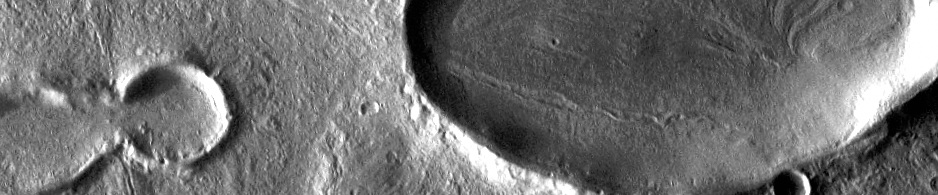
Oxus Patera is an ancient, eroded depression in northern Arabia Terra. It is not known how Oxus Patera formed, though it has been suggested that the feature represents an ancient caldera formed through collapse and explosive volcanism. Other possibilities include formation by impact and erosion, or… [More at link]

Posted in Reports | Tagged , , , , | Comments Off

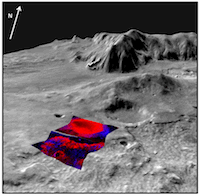
CRISM image: high-calcium pyroxene in Bosporus Planum

The two featured images here show iron/magnesium-rich minerals in the Bosporus Planum region of Mars. The Martian crust is made mostly of igneous rock containing the minerals olivine and pyroxene. Pyroxene is the dominant silicate mineral in most igneous rocks and contains iron, magnesium and variable amounts of calcium… [More at link]

Posted in Reports | Tagged , , , , , | Comments Off

Mars Express: 10 years at Mars

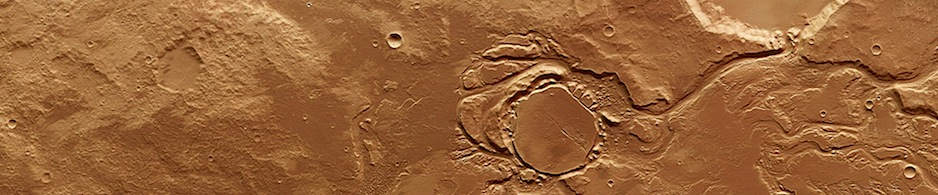
Ten years ago, on 14 January 2004, Mars Express took its very first images of Mars in colour and in 3D. To mark the occasion, the team produced a fly-through movie of the ancient flood plain Kasei Valles. The movie is based on the 67-image mosaic released as part of the ten-years-since-launch celebrations in June 2013. The scene spans 987 km in the north–south direction… [More at link]

Posted in Reports | Tagged , , , , , | Comments Off

Mars Color Imager (MARCI) weather report, January 6-12, 2014

Mars Color Imager (MARCI) weather report, January 6-12, 2014: Dust-raising activity was active off the perennial north polar cap edge with storms in Arcadia and Acidalia, and haze from suspended dust particles extended south into Chryse as well as over Tempe… [More at link, including a video]

Posted in Reports | Tagged , , , , | Comments Off

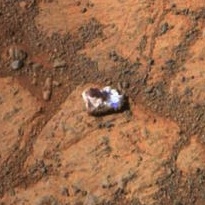
Unusual rock lying in front of Opportunity on Murray Ridge

This before-and-after pair of images of the same patch of ground in front of NASA’s Mars Exploration Rover Opportunity 13 days apart documents the arrival of a bright rock onto the scene. The rover had completed a short drive just before taking the second image, and one of its wheels likely knocked the rock — dubbed “Pinnacle Island” — to this position. The rock is about the size of a doughnut….. [More at link]

Posted in Reports | Tagged , , , , , , , , | Comments Off