

When did the Martian dynamo die?

Current thinking among Mars scientists holds that the Red Planet’s dynamo — the geo-engine in its molten core which generates a global magnetic field — was active soon after the planet formed, but turned off about 4 billion years ago.

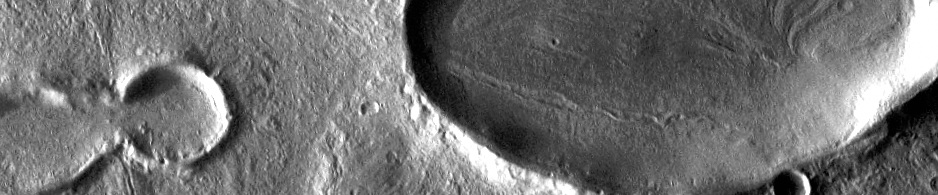
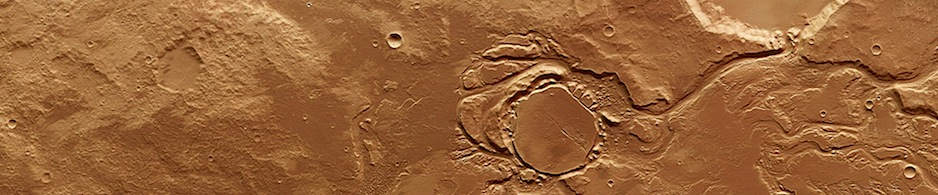
Best-fit paleomagnetic north pole positions determined by the magnetic inversions of the magnetic anomalies modeled near Tyrrhenus Mons (top) and Syrtis Major (bottom). Reddish-brown dots represent poles using Noachian cratered features, purple colors represent poles using Hesperian volcanic features, and black shows poles for magnetic features below craters. (Image combines data from figures 6 and 7 in the paper.)

Spacecraft in orbit have detected and mapped magnetic fields in parts of the ancient southern highlands and elsewhere. While these show no active global dynamo pattern, they indicate that Mars had an internally generated magnetic field at one time. Yet the field disappeared at some point because the Hellas, Argyre, and Isidis impact basins — about 4 billion years old — contain no magnetic signatures. These would have been printed into the impact-melted rocks if a global field had been present when the basins formed.

But is this ancient age in fact correct? New work by a team of scientists led by Colleen Milbury (Purdue University) and published in the Journal of Geophysical Research suggests the dynamo shutdown happened more recently. If true, this means that Mars kept its magnetic field longer — and this would have protected the atmosphere for longer as well.

A magnetic field strong enough to leave traces in once-molten rocks would deflect most energetic solar radiation and ionizing particles, thus preventing them from eroding the atmosphere. But when the dynamo died, the Martian atmosphere began to die with it. Today’s Mars has no global magnetic field, only a thin atmosphere, and solar radiation and particles can strike the surface unhindered, making conditions hostile for most forms of life.

The Milbury team notes, “The presence of a dynamo indicates that the core is rapidly losing heat, a condition necessary for driving geologic activity… Volcanic and tectonic activity on Mars were much more intense during the Noachian, and had ceased in all but a few areas by the end of the Hesperian.” The Noachian epoch lasted from the formation of Mars until about 3.9 billion years ago, when the Hesperian Epoch began and continued down to about 2.9 billion years ago.

The scientists focused only on magnetic anomalies that also have an associated gravity anomaly because this provides a better constraint on the location of the magnetized body. Additionally, they say, “we consider the geologic origin of the feature and the age of the surface to better determine the nature of the anomaly and potentially its age.”

Correlating gravity maps of Tyrrhenus Mons and Nili Patera and Meroe Patera (both part of Syrtis Major) with nearby magnetized rocks, the team found 29 anomalies that can be dated. The paleopole positions determined by the magnetic fields suggest that Noachian (older) locations had a magnetic pole that was closer to today’s Martian equator, while Hesperian (younger) sites had magnetic poles closer to the current rotational pole.

This implies, they explain, that Mars has shifted its rotation axis since Noachian times, perhaps due to the growth of the large Tharsis volcanic province. The excess mass erupted there would have shifted the Martian spin axis to make Tharsis equatorial, as it currently is.

Finally, they note that evidence for magnetized rocks, and therefore the existence of an internal dynamo, peters out in the Hesperian, roughly 3.6 billion years ago.
Posted in Reports | Tagged , , , , , , | Comments Off

Where did Phobos and Deimos form?

For a long time, scientists thought the Martian moons, Deimos and Phobos, were captured asteroids. Now, however, many are examining the idea that the moons formed in orbit around Mars, accreting from debris in the aftermath of a big impact. (In addition to any yet-unidentified impact basins, Mars offers several large and suitably ancient ones, such as Borealis, Elysium, or Daedalia.)

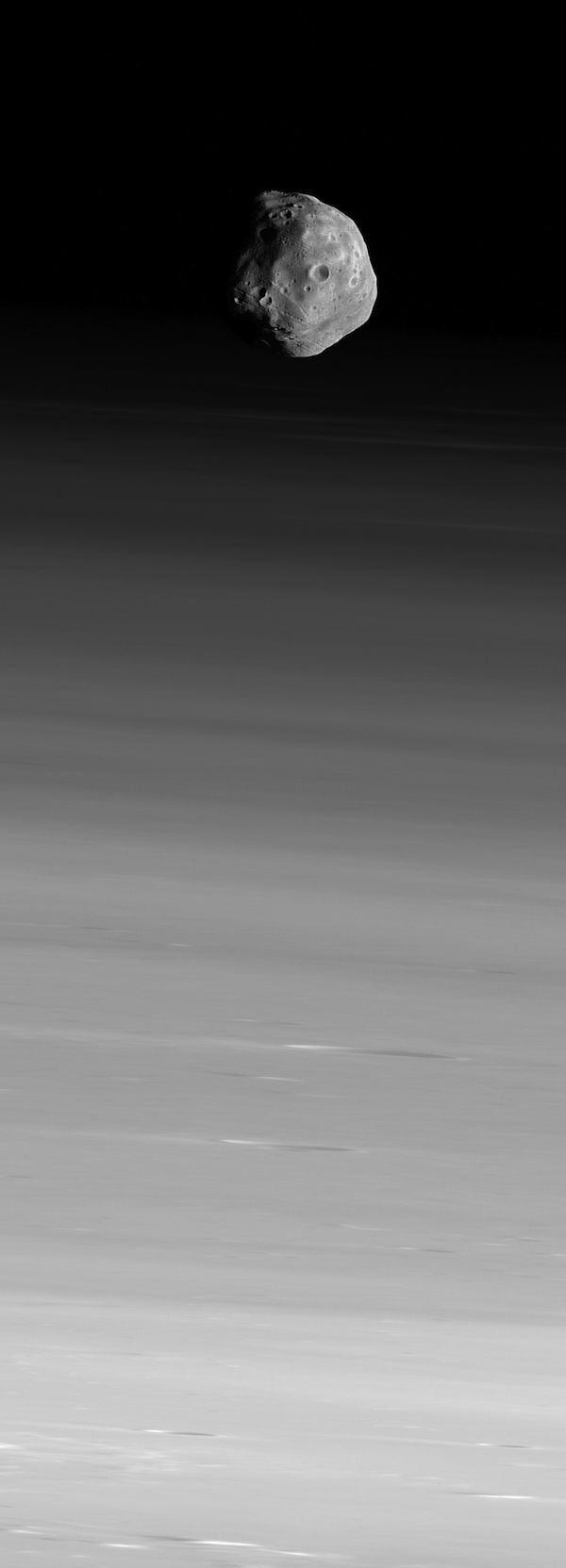
HURTLING MOON. Much scarred by impacts, Phobos hangs over Mars in a view taken by the Mars Express spacecraft. About 22 kilometers in diameter, Phobos is the inner (and larger) of Mars’ two moons. It orbits so close to Mars that it circles the planet more than three times each day. A new study suggests that Phobos and Deimos probably formed comparatively far from Mars, within a disk of debris thrown into space by a giant impact. (ESA/DLR/FU Berlin [G. Neukum

So if that scenario happened, the question naturally arises as to how and where this accretion of the moons happened? Was it close in near Mars? Or farther out?

Writing in Icarus, Pascal Rosenblatt (Royal Observatory of Belgium) and Sébastien Charnoz (Université Paris Diderot) explore the dynamics of making Phobos and Deimos from a disk of debris in Martian orbit. As a first approach, they chose two cases to study, “the strong-tide regime for which accretion occurs close to the planet at the Roche limit, and the weak-tide regime for which accretion occurs farther from the planet.”

For Mars, the Roche limit is the distance (about 2.5 Mars radii) where tidal forces are stronger than a moon’s self-gravity. At or inside the Roche limit, a moon will either break apart — or in the case of a debris disk, never make a moon in the first place. Currently Phobos orbits at 2.8 radii and Deimos at 6.9. At 6 radii (between these two orbits) lies synchronous orbit — where a moon makes one circuit of Mars per Martian day.

The scientists found that in the strong-tide, or near-Mars version, “moonlets can form close to the planet by gravitational instabilities…. The shape and density of Phobos and Deimos are consistent with those expected for these moonlets.”

But there’s a big snag. In the calculations they discovered that “all Martian moonlets orbit Mars below synchronous orbit, so they recede back to Mars in less than 200 million years.” Yet both moons are considerably older than that, judging by the size and number of craters on their surfaces.

So turning to the weak-tide scenario, the researchers write that it “allows for the accretion of a Deimos-mass moonlet (as an embryo resulting from a runaway growth from smaller planetesimals) near the current distance of Deimos.” In addition, they write, “a Phobos-mass moonlet can also be formed but closer to Mars (3 to 4 Mars radii), due to its larger mass than that of Deimos.”

But again the orbital lifetime problem arises. “However, at such distances to Mars, this accreted body is expected to fall back rapidly onto Mars due to the tidal decay of its orbit, and so not to survive over billions of years in Mars orbit.”

That result doesn’t look good for either moon. However, nature offers a possible solution. The team explains, “In the weak-tide regime, embryos can accrete together to form a reduced population of larger bodies. In that case…because of tidal effects, we may expect that embryos below synchronous orbit may migrate inward and form larger objects — and embryos beyond synchronous limit may migrate outward while growing bigger.”

“Does such a process end in one single Phobos below synchronous orbit and one single Deimos beyond synchronous orbit?” the researchers ask. “The present study does not answer that question, but it emphasizes that there is clearly a mechanism of accretion that must be investigated in the case of the formation of the Martian moons.”

Posted in Reports | Tagged , , | Comments Off

Hesperian lava floods thicker than previously thought

A study examining layered “megablocks” of lava in the central parts of Mars craters concludes that flood lavas in the Hesperian epoch were at least 23 percent thicker than previously known. The research says this shows there has been more extrusive volcanism, and a greater release of volatiles, than earlier work indicated.

TUMBLED MEGABLOCKS. These steeply tilted, layered blocks were found in crater central peaks, and are thought to be layers of lava and related sediments. New research that carefully measured the thickness of such blocks boosts the known amount of layered lava deposits by more than 20 percent. This indicates much more lava flooded out during earlier Martian epochs than previously estimated, and this in turn must have affected past climates. (Image taken from Figure 2 in the paper.)

The multi-author study was led by Christy Caudill (University of Arizona) and published in Icarus (September 14, 2012). The research used THEMIS nighttime infrared imagery to locate areas showing potential bedrock. (The team notes they omitted areas in high-latitude polar regions and areas with dense dust or surface cover, such as Arabia Terra.)

Using the HiRISE camera on the Mars Reconnaissance Orbiter, the researchers focused primarily on what they identified as “Layered MegaBlock bedrock” exposures. These are pieces of bedrock hundreds of meters to a kilometer in size, uplifted and tilted by crater-making impacts. Such megablocks show a great many layers with thicknesses of several meters to tens of meters.

The team reports, “This distinctive morphology, found in 41 craters globally, occurs mostly in regions mapped as Hesperian-age plains material and generally interpreted as regions of extensive flood lavas.” Mars scientists date the Hesperian as lasting from about 3.9 to 3.0 billion years ago.

“Coupled with crater-scaling techniques and the regional geologic context, we use these observations to estimate the source depths of Layered MegaBlock material and, by extension, constrain a total volume,” the researchers say.

The Hesperian epoch had slower rates of impacts, weathering, and erosion compared to the earlier Noachian, as the team notes. In addition, the Hesperian had high average rates of volcanic activity, about ten times that of the Amazonian epoch that followed. “Hesperian-aged ridged plains have been mapped over extensive regions of Mars and have been interpreted to be volcanic flood lavas,” they say.

Using HiRISE images, the researchers measured the thicknesses and orientation of individual layers in the volcanic flood lavas as well as the depth of the source where the uptilted blocks came from. They noted that “layered and stratified rocks on Mars are usually not oriented at a high enough tilt to easily infer their geometries from orbital imaging.” However, the researchers focused on layers that were uplifted and rotated to orientations that allowed them to note properties such as strike, dip, and layer thickness.

Further work allowed volume computations, which the team acknowledges are “quite a challenge, considering the paucity of stratigraphic exposures on Mars to study the depths of flood lavas over time.”

The scientists explain that, “In contrast to previous methods, we use the section uplift of craters that expose pre-impact bedrock and thus provide information about the subsurface. This study’s calculated volumes for the Layered MegaBlock material therefore produce an alternate estimate for extrusive minimums, raising the estimate during this period to 55 million cubic kilometers.”

They add that, “Our values may also be an underestimate of total Hesperian extrusives because most of the craters do not expose the deepest layers.”

The researchers conclude, “If this material indeed represents late Noachian and Hesperian extrusives, our volume estimates indicate a 22.8 percent increase when compared with previous estimates.” This, they note, must have affected the climate on Mars during ancient times.

Posted in Reports | Tagged , , , , | Comments Off

Wet debris flows carved (some) Mars dune gullies

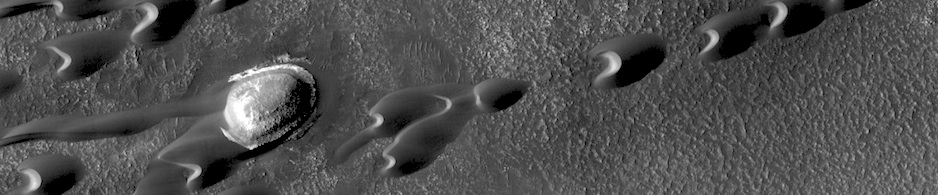
Located west of the big Hellas impact basin in Mars’ southern hemisphere, Russell Crater spreads 135 kilometers (84 miles) wide. A notable feature within it is a broad dune field with a “megadune” heaped up toward the east. The megadune rises about 500 meters (1,600 feet) high and the dune field extends 40 km (25 mi) long. It appears to have been built by winds blowing from the northeast.

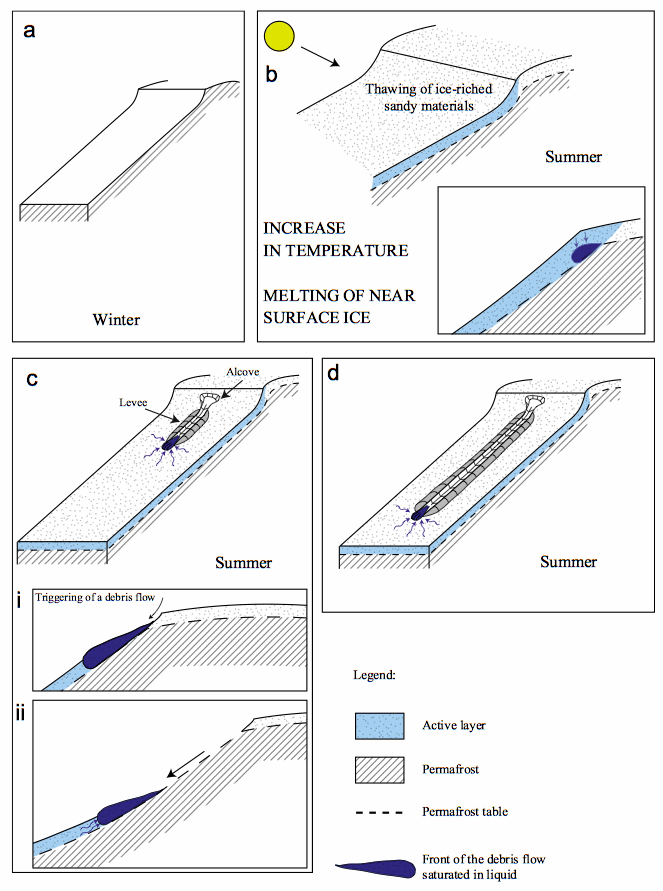
FLOW AND GO. A warm surface layer on a permanently frozen dune could produce the leveed channels and gullies seen on the Russell Crater megadune. As debris flows descended, their most heavily water-saturated parts led the way down the slope. When the flow ceased, the water evaporated (or sank into the dune), leaving only a small terminal "bump" of debris at the gully's end. (Image taken from Figure 9 in the paper.)

What makes the Russell megadune interesting are approximately 300 long and narrow gullies that have formed on it. Running straight downslope for about 2 kilometers (1.2 mi) and largely parallel, these were the focus of research by a team of geologists led by Gwenaël Jouannic (Université Paris-Sud). Reporting in Planetary and Space Science (July 14, 2012), the scientists write, “The presence of gullies on Martian dunes is rare, and the processes, as well as the origin of the fluid necessary for their formation, currently remain poorly understood.”

Detailed mages from orbit using the HiRISE camera on NASA’s Mars Reconnaissance Orbiter show that the gullies are not simply ditches running down the dune’s slopes. Instead, the gully channels have elevated levees along their edges. In addition, most of them lack a pileup of debris, as might be expected at the downslope end of the gully.

Looking at terrestrial examples, the geologists found that debris flows offered the best analog. “Debris flows on Earth consist of a mixture of solid detritus with a significant proportion of liquid water moving under gravity in a state of general flow.” Flows normally start on slopes exceeding 10° and once moving, they can flow on slopes of 1° to 2°.

“On Mars,” the team explains, “the Mars Exploration Rovers determined a regolith friction angle (very fine sand) ranging from 30° to 37°. On the Russell Crater dune, only a small area located under the dune crest presents a slope higher than 25°. It would be difficult for dry granular flows to slide more than 2 km on such a low slope.”

The levees flanking the gullies led the team to examine wet debris flows rather than dry flows. To erode a single typical Russell Crater gully, they calculated that water would have to make up at least 30 to 40 percent of the flow’s volume. Given the average size of each gully, this amounts to “the volume of water contained in about two or three Olympic swimming pools.” Thus some 600 to 900 Olympic pools would be needed to form all the gullies observed on the Russell megadune.

Sand dunes are highly porous, so the next question the team tackled was how to keep water flowing at the dune surface while not sinking deep into the dune. The answer, they decided, was permafrost. The dune remains wholly frozen during winter, but the upper meter or two thaws during summer. It is this layer that water can move downslope.

Complicating the picture is the fact that the Russell gullies reflect two stages of development. “The Russell megadune is well known to be influenced by seasonal flow activities during the past three years due to the presence of CO2 ice and H2O ice. Consequently, the Russell crater dune morphologies are a superimposition of present flow activities and older erosion features.”

They explain that this recent seasonal activity generates numerous small interconnected and sinuous rills, making a pattern shorter and narrower than the gullies. The presence of bedforms within the older channel also indicates the wind is blowing fine particles on the dune in the recent past.

Present-day temperatures in Russell Crater in early spring are so cold that only a limited melting of water ice can occur. However, calculations of Martian climate change suggest that an active dune layer was possible about 5 to 10 million years ago. In addition, snow melt could be a possible secondary source of water for eroding the gullies.

“In such conditions,” say the scientists, “the formation of debris flows by melting of near-surface ground ice was possible in some favored areas.”

Posted in Reports | Tagged , , , , , | 1 Comment

Dikes: key link between Thaumasia Planum, Tharsis, and Valles Marineris?

The area called Syria-Thaumasia is a big triangular block of Mars just east of three giant Tharsis volcanos: Arsia, Pavonis, and Ascraeus Montes. Valles Marineris bounds the block on the north, while its southwest and southeast sides are defined by two large highlands that converge toward the south.

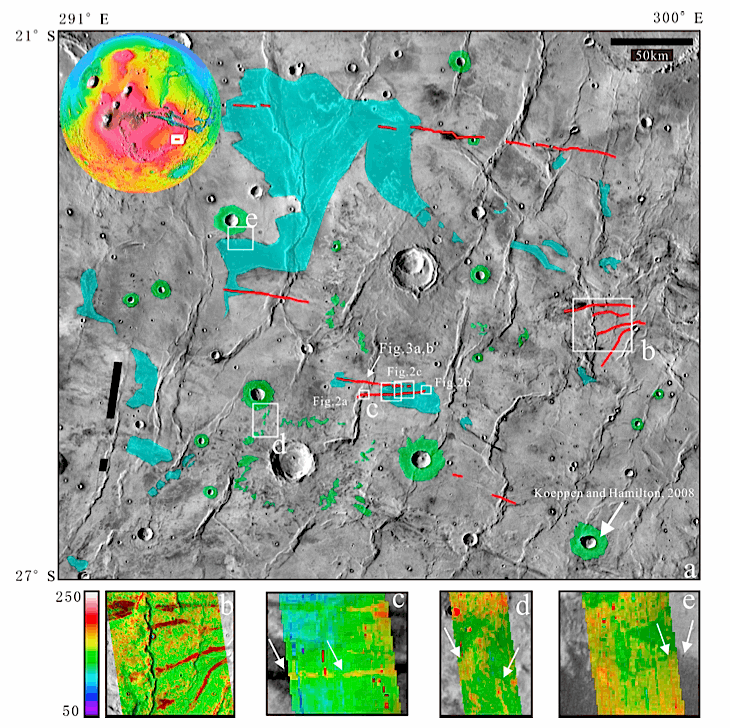
PUSH, THEN CRACK. Volcanic dikes (red lines) slice across compression-made wrinkle ridges in Thaumasia Planum. The dikes show a texture and composition different from the lavas that form the surface of Thaumasia Planum, and scientists suggest they offer clues to the evolution of the area. (Image taken from Figure 1 in the paper.)

As one of the most unusual pieces of terrain on Mars, the Syria-Thaumasia region and its origin have long presented a geological puzzle. After studying its features in detail, a team of researchers led by Jun Huang (China University of Geosciences in Wuhan) reports that a network of volcanic dikes offers clues to the origins of Thaumasia Planum, at the eastern end of the big triangle. Their report was published in Geophysical Research Letters (September 6, 2012).

“We have identified several exposed dikes in Thaumasia Planum,” the team writes. “These dikes extend from tens of kilometers to about 100 kilometers [about 6 to 60 miles] in length with average widths of about 50 meters [160 feet].” Volcanic dikes form when molten magma pushes upward into cracks and fissures in the crust. The dikes in Thaumasia Planum extend generally east-west and cut across pre-existing geologic features. These include many large wrinkle ridges produced by horizontal compression. When seen in high-resolution images, both the dikes and the erupted material next to them appear very blocky. Their surfaces also appear substantially harder and more solid than the surface materials elsewhere in the surrounding area.

“We propose that these dikes might have served as feeders for the olivine-enriched flood basalts found in the region,” the scientists write. They add that the basalts may have come from the same magma source that fed the whole Tharsis area, a hypothesized “plume” of molten rock rising from deep in the Martian mantle.

They explain that a geologic history for Thaumasia Planum begins with the rise of volcanism in Tharsis. This compressed Thaumasia Planum. Then sheets of olivine-rich basalt from the mantle flooded over the landscape. This was followed by the formation of wrinkle ridges from compression and dikes from extension, all driven by the forces from still-growing Tharsis. The dikes, they note, could have helped to feed the lava flows. Then dust and volcanic ash covered the region, while impacts and wind erosion exposed the olivine-rich basalts here and there.

The dikes run generally parallel to Valles Marineris, the scientists remark, so “it is plausible that the fractures associated with Valles Marineris provided the path for dike emplacement.” Thus the dikes “provide further evidence that the opening of Valles Marineris was facilitated by tectonic stresses following paths of preferential weakness along preexisting structures, such as fractures and faults like those indicated by these dikes.”

Posted in Reports | Tagged , , , , , , , , , , | 2 Comments

Steam jets made pits in crater floors

At first glance, the floors of many large impact craters on Mars have areas that appear smooth and flat. But a closer look at some of these flat floors shows a much more rugged landscape, where one small cuplike pit adjoins another so tightly they share a common wall. These pits partly resemble the secondary craters produced by the fall of debris from the original impact — but not quite.

GETTING STEAMY. Tooting Crater is 27 kilometers (17 miles) wide. Its impact created large pools and splashes of impact-melted rock, water, and fragments. Closeup views reveal a number of choppy, deeply pitted areas. These contained water trapped in the hot debris; it flashed into steam and blasted pathways to the surface where it erupted and left pits. (Image taken from Figure 1 in the paper.)

A team of geologists led by Joseph Boyce (University of Hawaii) offers a different explanation. Writing in Icarus, they attribute the pits instead to violent steam jets and blasts: “Our model predicts the explosive degassing of water from this pitted material.”

The water, they explain, came almost entirely from the impact target material. In the immediate aftermath of the impact, this water-rich material (which could also include ice) became violently mixed with broken rocky fragments of the impacting meteorite, pieces of deeper rock layers, and rock that was liquified by the heat and shock of the impact.

This hot mixture (about 750°C or 1400° F) collapsed into the crater and onto its rim, and started to cook. Water turned quickly into steam, creating a myriad of small “vent pipes” in this mixture, through which it blasted and jetted its way to the surface at speeds of 300 meters per second (1,000 feet/sec) or more. On its way, the steam snatched up and carried fragments from the walls of the vent pipes leading upward through the impact debris and flaring at the surface. These pipes opened the way for still-deeper steam to escape.

The whole process wouldn’t have ended until the water was gone and the impact melt had cooled and solidified, which could be decades to a century in the deepest part of the crater. But the main show, they say, was over in few days to a month.

Because the pitted areas are produced by the escape of steam from the mixture of impact debris, the presence of the pits indicates the target material was water/ice-rich.

“If this model is correct,” says the team, “it provides a new method for investigating the distribution of subsurface volatiles at the time of crater formation.”

Posted in Reports | Tagged , , , , | Comments Off

Methane in a flash

Martian methane is a hot topic because of its potential origin in biological, as well as geological processes. Observations (Earth-based and from Mars orbit) have found only a small quantity of the greenhouse gas in the atmosphere of Mars — some 10 to 50 parts per billion by volume — and it may vary from place to place on the planet in the form of “plumes.”

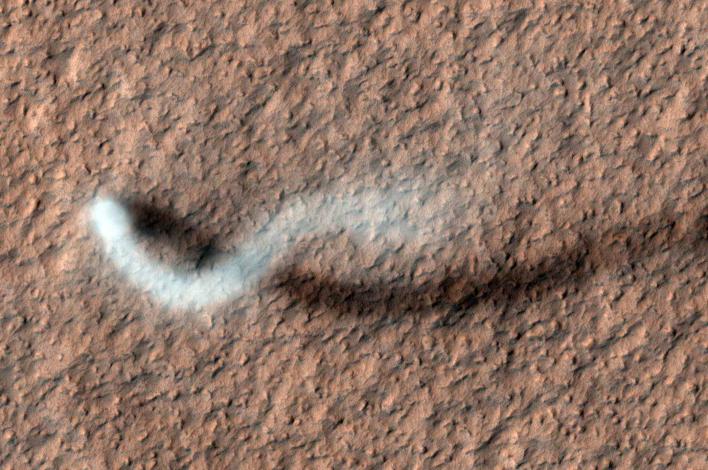
SNAP, CRACKLE, ZAP! Electrical discharges occuring within sand and dust storms and dust devils can break down water and CO2 molecules, and the byproducts may recombine to prpduce methane. (NASA/JPL-Caltech/University of Arizona image of a dust devil in Amazonis, captured by the HiRISE camera on the Mars Reconnaissance Orbiter)

Stoking the interest is the fact that because methane cannot survive more than a few hundred years under Martian conditions, its presence today implies continuing replenishment through some method.

A new report on laboratory experiments suggests that in addition to potential biological and geological sources for methane, electrical discharges can also produce methane. The report appears in Geophysical Research Letters (September 8, 2012).

“We propose a new production mechanism for methane based on the effect of electrical discharges over iced surfaces,” say the researchers, led by Arturo Robledo-Martinez (Universidad Autónoma Metropolitana, Azcapotzalco, Mexico). They reached their conclusions through laboratory experiments.

As the team notes, “The discharges, caused by electrification of dust devils and sand storms, ionize gaseous CO2 and water molecules and their byproducts recombine to produce methane.”

Their experimental work also revealed that the microscopic structure of the surface helped. “The electrical field produced by a dust devil can not only overcome the weak dielectric strength of the Martian atmosphere, but also penetrate into cracks on the soil and so reach the ice lying at the bottom, with added strength, due to the topography of the terrain.”

The scientists add that, “The present mechanism may be acting in parallel with other proposed sources but its main advantage is that it can generate methane very quickly and thus explain the generation of plumes.”

Posted in Reports | Tagged , , , , , , , , | Comments Off

Touching Mars from Earth

Remote sensing of Mars usually happens when spacecraft sensors look down from orbit around the Red Planet. But sensors on Earth can also get in on the fun, especially when they actively reach out to the planet via radio waves.

Mars by radar

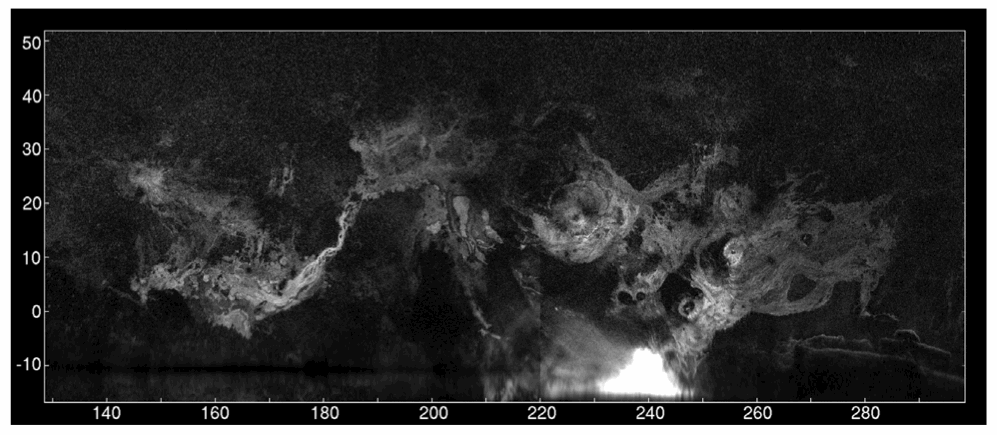
RADAR VOLCANICS. As seen by the Arecibo Observatory's radar, the major volcanic regions of Mars stand out in a radar-roughness map as swirling bands of gray. Figures on the left and bottom are degrees of latitude and east longitude, respectively. Elysium Mons stands near 145° east and 25° north, while Olympus Mons is at about 230° east and 20° north. (Image taken from Figure 1 in the paper.)

A team of radar astronomers and planetary scientists led by John Harmon (National Astronomy and Ionosphere Center, Arecibo Observatory) reported recently in Icarus (June 25, 2012) about improved observations made from October 2005 to February 2012. The team used the 300-meter (1,000 foot) dish at Arecibo, Puerto Rico, with the upgraded S-band radar at a wavelength of 12.6 centimeters (about 5 inches). The observations have a resolution at Mars of about 3 kilometers (2 miles).

The team’s mapping covered the major volcanic provinces of Tharsis, Elysium, and Amazonis, showing depolarized radar reflectivity. This serves as a proxy for surface roughness on scales about the size of the radar wavelength.

“We find that vast portions of these regions are covered by radar-bright lava flows exhibiting circular polarization ratios close to unity, a characteristic that is uncommon for terrestrial lavas and that is a likely indicator of multiple scattering from extremely blocky or otherwise highly disrupted flow surfaces,” they report.

The researchers found that all of the major volcanos have radar-bright features on their slopes. But the bright areas on Olympus Mons are very patchy, and the summit plateau of Pavonis Mons is entirely radar-dark. Minor volcanos also appear mostly radar-dark, suggesting mantling by dust or explosively erupted (pyroclastic) materials.

In addition, they say, several areas away from volcanos also show as radar-bright, indicating rough-surface lava flows. The team notes, “South Amazonis shows perhaps the most complex radar-bright structure on Mars.” It includes features that correspond to platy-ridged flows similar to those seen in the Cerberus region of Elysium.

Posted in Reports | Tagged , , , , , , , , , , | 1 Comment

Cloudburst rains needed to make Mars valley networks

In many regions, Mars has branching networks of valleys and channels that were carved by flowing water. A great many previous studies have tried to date when they were active and for how long, while others have looked in detail at the form and shape of the channels.

channel in Hawaii

HAWAIIAN MARS CHANNEL. A channel cut into the tephra of the Kau Desert shows, in small scale, features seen in Mars channels. When a flood is progress, water flow is toward the camera. Gully headwalls form where a tougher layer makes a caprock (arrow, A) over which the water drops and digs out a plunge pool. (Red scale bar is 5 cm/2 inches long.) Downstream (B), headwalls and pools grow in size and height. (Image taken from Figure 4 in the paper.)

A new study by a team of geologists led by Robert Craddock (National Air and Space Museum), tackles the question of how the rocky nature of the Martian surface affected the channels’ formation and growth. A conclusion the team arrives at is that heavy rainfalls were likely necessary to kickstart the networks forming and probably also to keep them going. Their report appears in the Journal of Geophysical Research (August 22, 2012).

The geologists examined an area known as the Kau Desert, part of Kilaeua volcano on the Big Island of Hawaii. The ground surface there is a geologic unit called the Keanakakoi tephra. This is a basaltic, pyroclastic deposit that occurs mainly in the Kilauea summit area and in the Kau Desert.

Tephra is volcanic material that erupted violently enough to fly into the air and blow downwind. It is commonly porous and made of fine-grain angular fragments. Besides being found on Earth, tephra is also expected on Mars, a heavily volcanic planet. Water tends to soak into tephra rather than run off across its surface — unless the flow is fast and heavy and it encounters a harder, less permeable layer at a relatively shallow depth.

“The Keanakakoi tephra is up to about 10 meters [33 feet] thick and largely devoid of vegetation,” say the researchers. “This makes it a good analog for the Martian surface.”

On Mars, valley systems typically cover an area many times larger than this one area on Kilauea. Yet despite the difference in scales, the researchers note, “the drainage networks that have incised the Keanakakoi tephra share many of the same morphologic characteristics as Martian valley networks.”

These similarities include amphitheater-shaped headwalls and knickpoints along the channels, variable channel widths downslope, and channel floors that have little relief and are generally flat. Previous researchers have suggested that undermining (or sapping) by groundwater caused these features. Instead, the team says, the soft nature of the surface materials coupled with strong floods caused by brief, heavy rains better explains how the channels form.

The Kau Desert, they note, gets about 130 centimeters (50 inches) of rain a year, but most of its erosion occurs during winter storms, which can dump more than a meter of rain in 24 hours. “Recent climatic models indicate that similar cyclones may have formed early in Martian history if an ocean in the northern hemisphere was present,” they note.

“The morphology of many Martian valley networks may be strongly influenced by local lithology,” the scientists conclude. “And large, slow-moving storms capable of delivering precipitation at rates of tens to hundreds of centimeters a day may have been necessary to generate the runoff necessary to carve the valley networks.”

Posted in Reports | Tagged , , , , , | Comments Off

When Gale was young

With Mars rover Curiosity safely down on Mars, scientists are set to explore the geology and history of Gale Crater, searching for evidence of habitable environments, ancient or modern.

Gale Crater

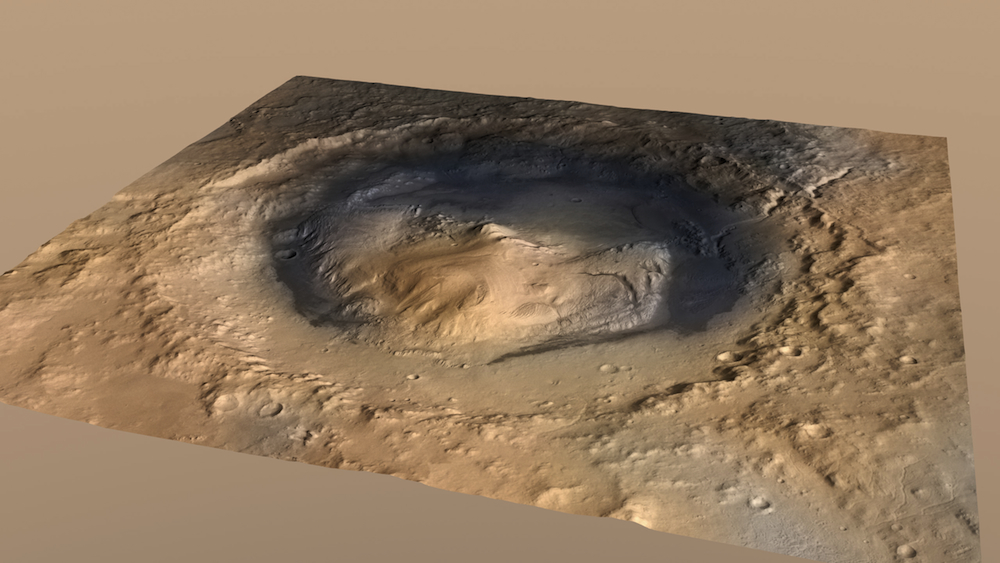
RIM, MOAT, MOUND. Gale Crater, seen in a composite image that looks toward the southeast, was a big enough impact to have had a vigorous hydrothermal system. During the few hundred thousand years this probably lasted, it might have offered refuges for some forms of primitive life. Image credit: NASA/JPL-Caltech/ESA/DLR/FU Berlin/MSSS.

Gale Crater has attracted much study since it became a candidate landing site for Curiosity. A new paper in Planetary and Space Science by Susanne Schwenzer (Lunar and Planetary Institute) and a team of scientists looks at a relatively unexamined part of the Gale story. This is its formation by impact, and the role of water, especially groundwater heated by the impact, during its earliest history.

The impact that blasted the 155-km (96-mile) crater came late in the Noachian period, the oldest in Martian geohistory, roughly 3.5 billion years ago. The Schwenzer team calculates that the initial cavity caused by the impact was 90 km (56 mi) in diameter and it would have dug 10 to 15 km (6 to 9 miles) deep into Mars. As uplifted wall materials collapsed and subsided, the cavity widened to reach its final size, about 150 km (96 mi) wide. In the crater center, the floor rebounded and thrust up a central peak, which today lies buried within the mound, dubbed Mt. Sharp.

“The mound is clearly an erosional remnant of a more extensive sediment pile,” the team writes. “Its original extent is not clear, but may have entirely filled Gale.”

Debris ejected in the impact landed on older Noachian craters in Gale’s vicinity, such as Lasswitz and Wein to the south. Close to the crater, the scientists estimate the blanket of ejected debris was about 600 meters (2,000 feet) thick.

The heat of impact would have produced a large volume of molten rock, with about half of it being retained inside the crater. The zone of melting likely reached 17 to 30 km (11 to 19 miles) deep. The impact melt that remained, they calculate, had a volume of at least 1,800 cubic km (430 cubic mi) and formed a sheet of molten rock that ringed the central peak like a moat.

The scientists note, “Impact-deposited heat at Gale, concentrated in the melt-sheet and central uplift, would have been capable of generating intense hydrothermal activity.” In Gale-size craters, they explain, “Rocks in and near the central peak would be heated to about 1,500° C [2,700° F], with temperatures declining away from the center.”

Provided water is present, they say, “this heat will produce a hydrothermal convection system in which groundwater would be drawn toward the central peak, channelled by fractures, and discharged as hot water or steam.”

If water were unable to penetrate the hot melt sheet, it would be concentrated in the central peak and the crater-rim areas where fractures would offer pathways to the surface. “Much of this discharge would end up in the crater’s moat, forming a crater lake, before evaporating or infiltrating back into the ground.”

The hydrothermal system could be active for roughly 300,000 years, they say.

The team then examines the way minerals will be altered by the hot water, and the way the hydrothermal systems will evolves. “Mars’ climate changed to cold and dry conditions around the time Gale Crater formed,” they note. “This makes impact sites important places for survival, if life had existed at that time.”

Moreover, the scientists add, “Impact-generated hydrothermal systems are likely to have provided refugia of liquid water in a progressively icy environment.” These would offer a broad range of long-lived aqueous and thermal environments, potentially linked by deep aquifers and evolving slowly with time.

Posted in Reports | Tagged , , , , , | 1 Comment